AI in Space Exploration: The Next Frontier
14 March 2026
Space—the final frontier. We’ve been fascinated by the vast expanse of the universe for centuries, sending probes, satellites, and rovers to uncover its mysteries. But now, artificial intelligence (AI) is taking space exploration to a whole new level. From self-learning robots on Mars to AI-powered space telescopes, we’re witnessing a revolution that’s making the impossible possible.
But how exactly is AI changing the game? And what does this mean for the future of space travel? Let’s dive in. 
The Role of AI in Space Exploration
AI is no longer just a concept from sci-fi movies—it’s actively shaping space missions. Traditional space exploration has always had its limitations: signal delays, human errors, and the sheer complexity of deep space navigation. But with AI, we're now tackling these challenges head-on.1. Autonomous Navigation and Decision-Making
Spacecraft are traveling farther than ever before, often to places where real-time human control isn't possible due to communication delays. AI helps spacecraft think for themselves—processing data, analyzing surroundings, and making crucial decisions without waiting for instructions from Earth.For example, NASA’s Perseverance rover on Mars uses AI to navigate tricky terrains, avoid obstacles, and determine the best scientific targets. Without AI, it would take hours—even days—for human operators to analyze and send commands.
2. AI-Powered Robotics in Space Missions
What if astronauts had robotic assistants that could help with risky tasks? Well, they already do. AI-driven robots like Robonaut 2 (developed by NASA) assist crew members at the International Space Station, performing dangerous or tedious tasks so humans can focus on more critical missions.Then there’s Astrobee, a free-flying AI robot designed to help astronauts with research, maintenance, and logistics. Imagine having an AI-driven helper floating around in a spacecraft—science fiction is quickly becoming reality. 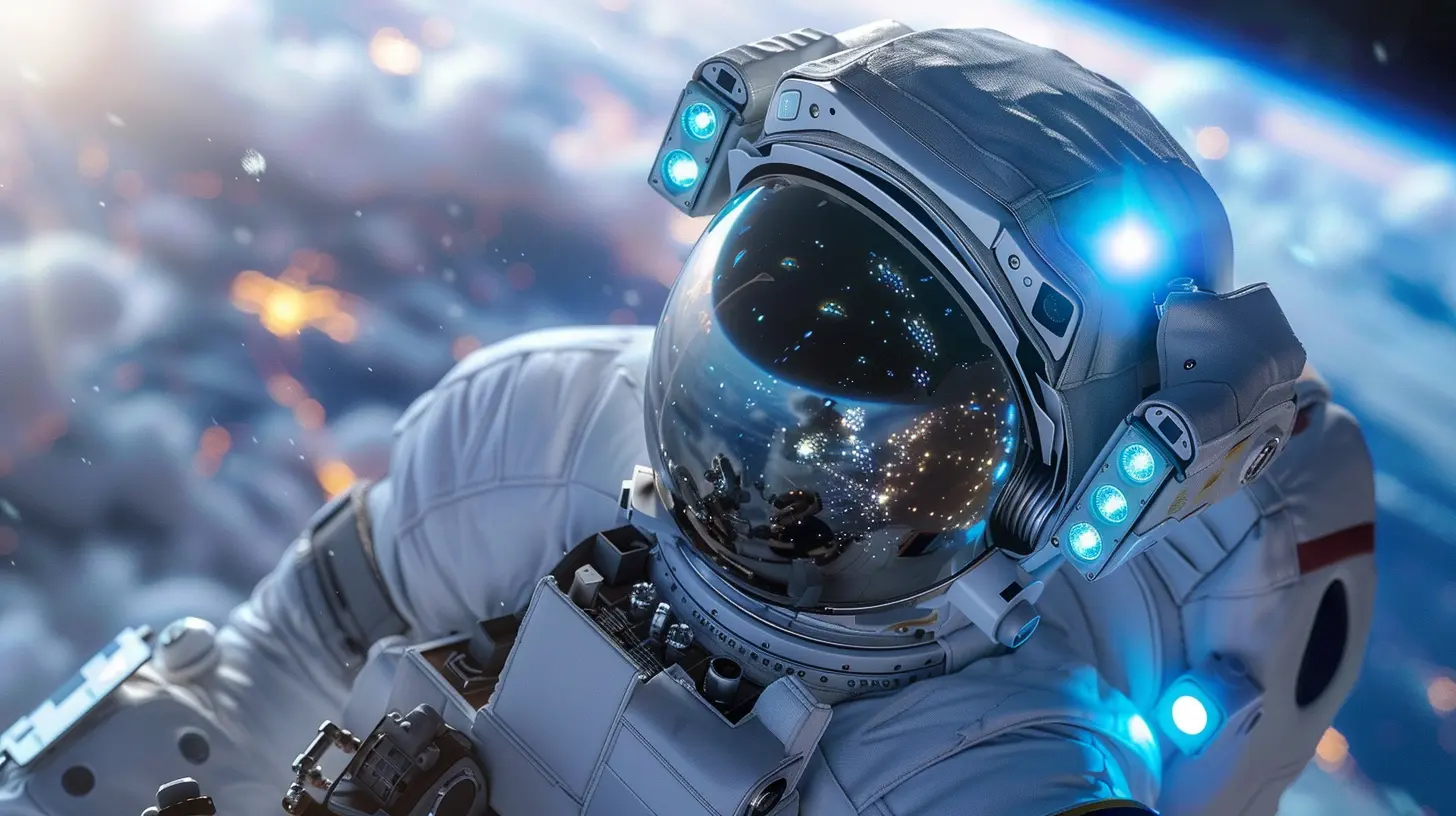
AI and the Search for Extraterrestrial Life
We’ve been searching for alien life for decades, but AI is making that search smarter and faster.1. AI in Exoplanet Discovery
Humans have discovered thousands of exoplanets, but identifying them in massive datasets can be like finding a needle in a cosmic haystack. AI algorithms, however, can sift through data collected by telescopes like Kepler and TESS, spotting planets that human eyes might overlook.In 2017, neural networks trained by Google AI helped identify two new exoplanets in Kepler’s data. If AI can detect planets on its own, imagine what it could do in the future—perhaps even finding the first signs of life beyond Earth.
2. AI and the Search for Alien Signals
Organizations like SETI (Search for Extraterrestrial Intelligence) rely on AI to analyze radio signals from space, searching for potential extraterrestrial communications. AI filters out human-made interference and finds anomalies faster than any human ever could. Who knows? The next big cosmic discovery might just be made by an AI system.
AI’s Role in Long-Distance Space Travel
Interplanetary—and one day, interstellar—travel isn’t just a dream anymore. AI is playing a crucial role in making it happen.1. AI-Assisted Spacecraft Maintenance
Imagine you're on a mission to Mars, and something goes wrong with the spacecraft. There’s no mechanic around, and communication delays with Earth could be life-threatening. This is where AI-driven self-repair systems come into play.AI-powered diagnostics can predict mechanical failures before they happen and even troubleshoot issues autonomously. Think of it as an advanced version of the "check engine" light in your car—but for spaceships.
2. AI in Space Farming and Sustainability
If we’re serious about colonizing other planets, we’ll need sustainable food sources. AI is helping develop autonomous greenhouses for space, where machine learning systems monitor plant growth, adjust light and water levels, and even detect diseases.Projects like NASA’s Veggie experiment on the ISS have already shown that AI-assisted plant growth is possible in space. In the future, AI-controlled ecosystems could help sustain life on long-duration space missions. 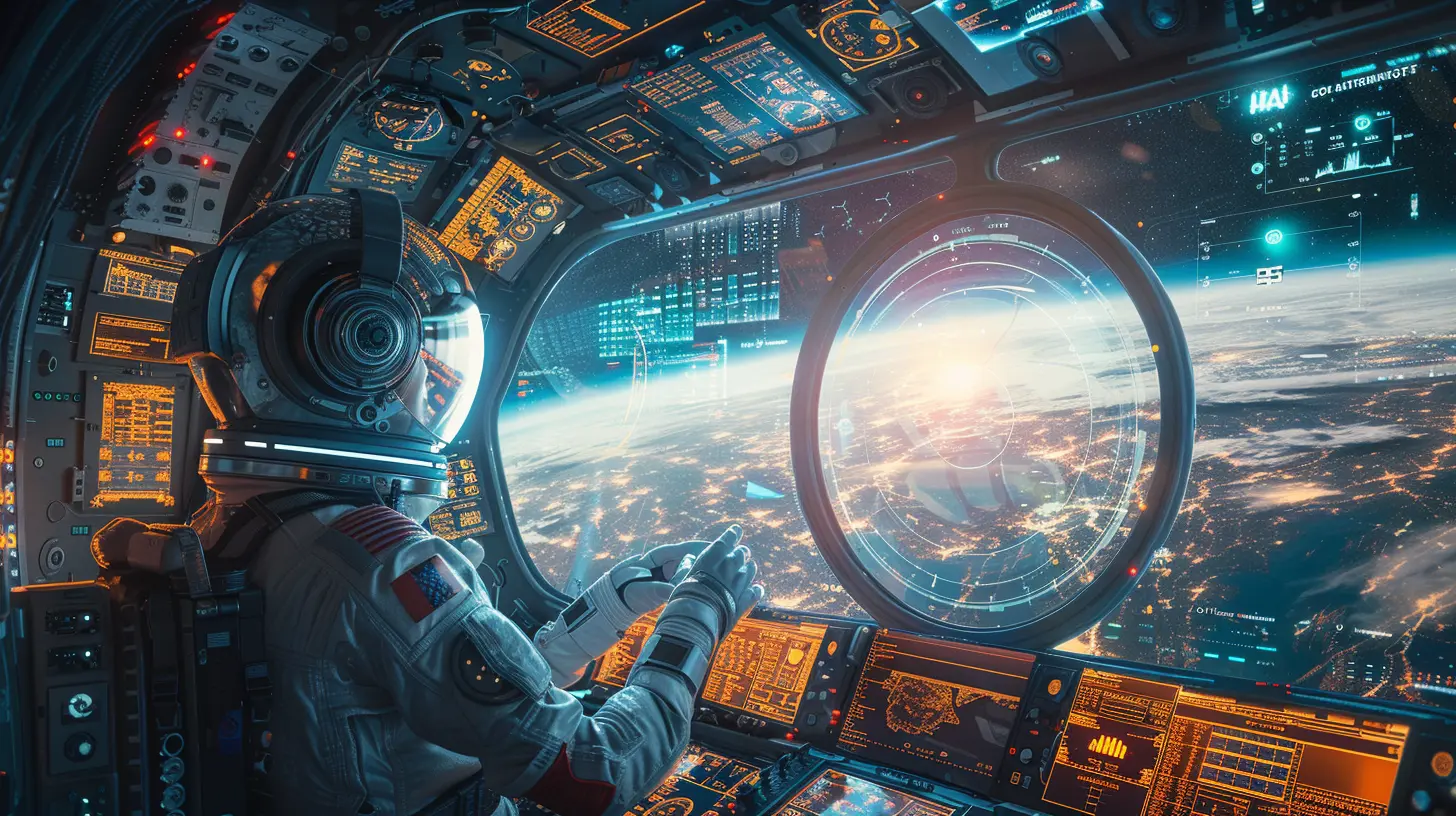
Challenges and Ethical Concerns
As exciting as AI in space exploration is, it’s not without its challenges.1. The Risk of AI Making Critical Errors
AI is smart, but it’s not perfect. If an AI system miscalculates a spacecraft’s trajectory or malfunctions during a mission, the consequences could be catastrophic. Unlike on Earth, where we can shut down faulty AI systems, in space, options are limited.2. Ethical Concerns in AI Decision-Making
Should AI be allowed to make life-or-death decisions for astronauts? What happens if AI determines that sacrificing one astronaut could save an entire mission? These are difficult questions that space agencies must address as AI becomes more integrated into missions.3. AI Dependence and Human Redundancy
As AI takes on more responsibilities, could human astronauts eventually become unnecessary? While AI can handle routine tasks, it lacks human intuition, creativity, and problem-solving abilities—qualities that are still irreplaceable in space exploration.The Future of AI in Space Exploration
AI is still in its early stages when it comes to space exploration, but the possibilities are endless. Here are some exciting prospects for the future:- Fully Autonomous Space Missions – Imagine a spacecraft that leaves Earth, completes its mission, and returns—all without human intervention.
- AI-Driven Space Mining – With the growing potential of asteroid mining, AI could play a huge role in analyzing resources and creating automated extraction processes.
- AI-Assisted Human Colonization of Other Planets – From AI-guided city planning to robotic construction on Mars, artificial intelligence could help humans establish permanent settlements beyond Earth.
One thing is clear—AI is no longer just supporting space exploration; it’s becoming a key player.
Final Thoughts
AI in space exploration isn’t just about robots and algorithms—it’s about pushing the boundaries of human curiosity. From discovering new planets to sustaining life beyond Earth, AI is proving to be the ultimate co-pilot in our journey to the stars.While challenges remain, one thing is certain: AI is transforming space exploration in ways we could have never imagined. And as technology continues to evolve, our dreams of exploring deep space might just become reality sooner than we think.
all images in this post were generated using AI tools
Category:
Artificial IntelligenceAuthor:

Jerry Graham
Discussion
rate this article
2 comments
Holden Matthews
Exciting possibilities ahead! How will AI reshape our understanding of the cosmos? Curious!
March 17, 2026 at 12:27 PM
Jerry Graham
Thank you for your enthusiasm! AI will enhance data analysis, improve mission planning, and enable autonomous exploration, leading to deeper insights into the cosmos. Stay tuned!
Quentin Benton
As we venture deeper into the cosmos, AI may hold secrets beyond our understanding. Could these intelligent algorithms unlock not only new worlds, but also reveal truths about humanity's place in the universe?
March 16, 2026 at 1:55 PM
Jerry Graham
Absolutely! AI's potential in space exploration could transform our understanding of the cosmos and humanity's role within it.