How to Build the Ultimate Productivity Stack for the Years Ahead
13 October 2026
Most productivity advice fails for the same reason diet advice fails. It hands you a rigid plan built for someone else's body, schedule, and goals, then acts surprised when it does not fit yours. The productivity stack you build should work the same way a good investment portfolio does. It should reflect your actual life, absorb shocks, and compound over time instead of collapsing the moment your circumstances change.
This article is not a list of apps to install this weekend. It is a framework for designing a system that survives job changes, new tools, shifting attention spans, and the slow creep of complexity that kills most setups within a year. We will cover the architecture of a durable stack, the trade-offs behind common choices, and the mistakes that quietly sabotage even well-intentioned systems.

What a Productivity Stack Actually Is
A productivity stack is the collection of tools, habits, and decision rules you use to capture information, decide what matters, do the work, and review what happened. The word "stack" matters here. It implies layers that depend on each other, not a random pile of apps you heard about on a podcast.Think of it like a building. The foundation is your capture system, where ideas and tasks land before they disappear. The frame is your task and project management layer, which decides priority and sequence. The interior is your execution environment, where focused work actually happens. The roof is your review and reflection layer, which protects everything underneath from slow decay.
If any layer is missing, the whole structure leaks. A brilliant task manager means nothing if you have no reliable way to capture a thought before it vanishes. A flawless capture habit means nothing if you never review what you collected. This is why copying someone else's app list rarely works. You are copying their roof without their foundation.

Start With Constraints, Not Tools
Before you open a single app store page, answer four questions honestly.First, how many contexts do you operate in? A freelance designer juggling five clients has different needs than a salaried engineer with one team and one codebase. More contexts demand stricter separation between projects and clearer boundaries between work and personal life.
Second, what is your actual failure mode? Some people lose ideas. Others lose track of commitments. Others start strong and abandon projects halfway. Your stack should target your specific leak, not a generic one.
Third, how much maintenance can you tolerate? Every tool you add demands attention. A system that requires thirty minutes of daily grooming will collapse the first week you get sick or travel. Be brutally honest about your tolerance for upkeep.
Fourth, what is your budget in both money and cognitive load? Paid tools often reduce friction, but a subscription you resent paying creates its own friction. Free tools often cost you in setup time and workarounds. Neither is automatically better.
Answering these four questions usually eliminates half the tools you were considering. That is the point. A smaller stack you actually use beats a larger stack you admire.
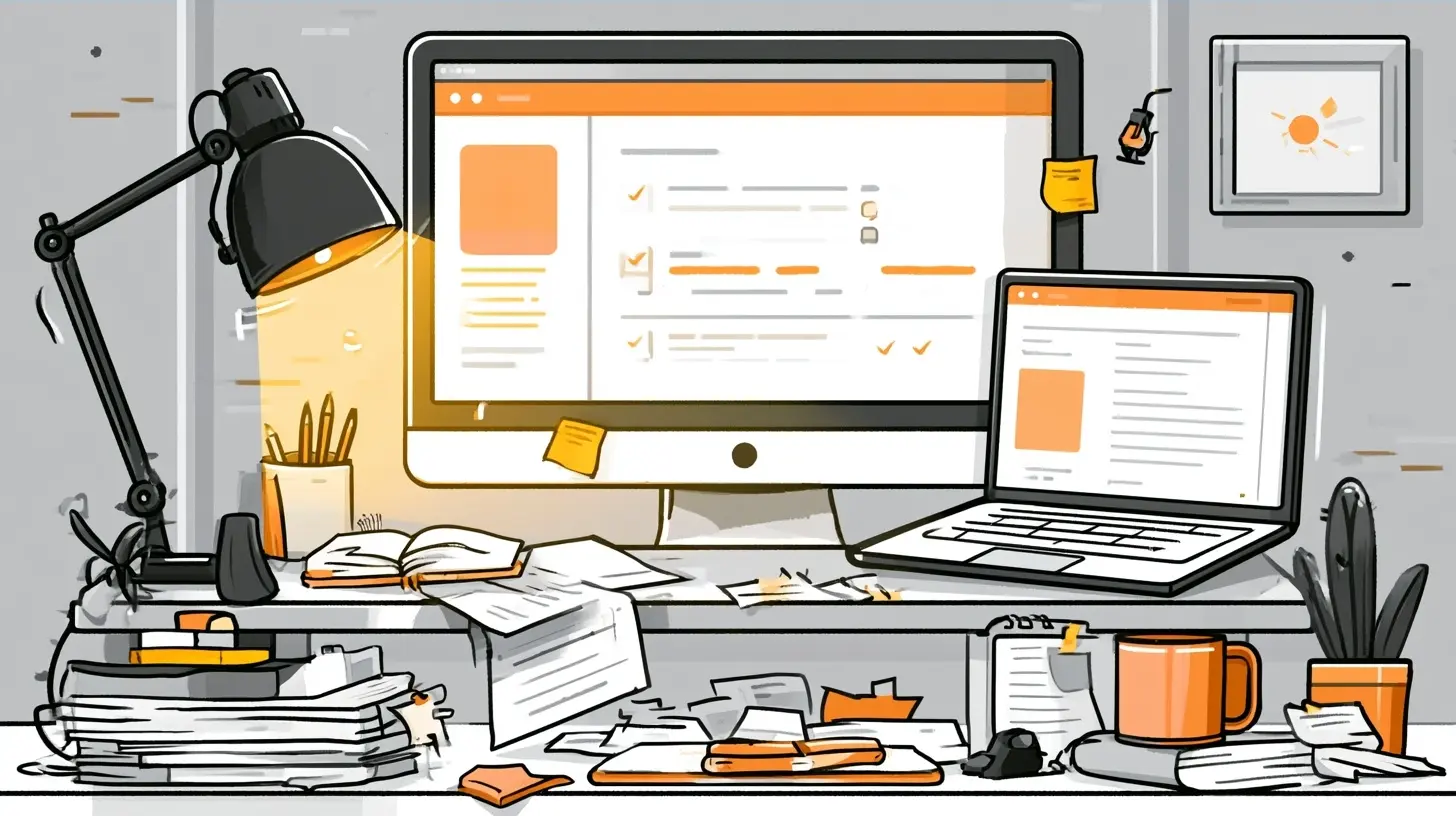
The Capture Layer: Where Ideas Land Before They Vanish
Capture is the most underrated layer because it feels too simple to matter. It matters enormously. The average knowledge worker has dozens of thoughts per day that never get written down, and a meaningful fraction of them were worth keeping.The core principle is low friction. Capture must take seconds, not minutes. If your capture method requires choosing a folder, tagging a project, and setting a due date, you will skip it when you are walking, driving, or mid-conversation.
A practical capture setup usually includes two or three entry points. A phone-based quick note for on-the-go thoughts. A desktop scratchpad for work-in-progress fragments. Possibly a voice memo option for when typing is impractical. The key is that all of them funnel into one inbox you process regularly, not five separate silos.
Common mistake: treating capture as organization. Capture is not filing. It is catching. You organize later, during a dedicated processing session. Mixing the two slows capture and guarantees you will stop doing it.
Another mistake is over-capturing. Some people record everything and drown in their own notes. The goal is not a perfect archive of your mental life. It is a reliable net for the thoughts that actually matter. If you cannot remember why you saved something a week later, it probably did not need saving.

The Task and Project Layer: Deciding What Deserves Attention
This is where most productivity stacks become bloated. Task managers multiply like rabbits because each new one promises to solve the shortcomings of the last. In practice, the differences between major task managers matter far less than how consistently you use one.There are two broad philosophies here, and the right choice depends on how your brain works.
The first is list-based. You maintain projects, each containing tasks, and you work through them in priority order. This suits people who think in clear deliverables and enjoy seeing progress accumulate. Tools in this category range from simple to elaborate, but the underlying model is the same.
The second is time-based. You block time on a calendar and work within those blocks, treating tasks as secondary to the schedule. This suits people whose work is meeting-heavy or whose priorities shift daily. It also suits anyone who has tried list-based systems and found themselves endlessly rearranging tasks instead of doing them.
Many effective stacks combine both. Lists hold the backlog. The calendar holds the commitments. Tasks flow from list to calendar as they become real.
A crucial design decision is where projects live versus where tasks live. Some people keep everything in one tool. Others separate reference material, active projects, and daily actions. Neither is wrong, but mixing them carelessly creates confusion. If your task manager also holds your meeting notes and your reading list, it will eventually become unusable.
The best practice is to define a single source of truth for commitments. One place where, if a task is not there, it does not exist. Everything else can be reference, archive, or scratch. This rule alone prevents most of the anxiety that comes from a fragmented stack.
The Execution Layer: Protecting Focus in a Distracted World
Tools do not do the work. They only make it easier or harder to start. The execution layer is about removing friction between deciding to work and actually working.Three elements matter most.
The first is a defined workspace, physical or digital. A clean desk, a browser profile with no social tabs, a dedicated machine or user account for deep work. The specifics matter less than the consistency. Your brain learns to associate that context with focus.
The second is a time structure. Some people use fixed blocks, others use flexible sprints, others use a simple rule like "no meetings before noon." The structure itself matters less than having one. Without it, urgent but unimportant tasks expand to fill the entire day.
The third is a distraction barrier. This is where most people underinvest. Willpower is unreliable. Environmental design is reliable. If your phone is on your desk, you will check it. If notifications are on, you will respond to them. The fix is not discipline. It is removing the option.
A useful analogy: think of focus like a clean audio signal. Every notification, every open tab, every half-finished task in the background adds noise. You do not need perfect silence. You need a signal-to-noise ratio high enough that the work gets through. Reducing noise is almost always easier than increasing signal.
The Review Layer: The Part Everyone Skips
If there is one habit that separates people with durable systems from people who rebuild their setup every six months, it is the review. A weekly review, done consistently, catches the small problems before they become large ones.A good review answers four questions. What did I commit to that I did not finish? What did I finish that I never planned? What is coming next week that I have not prepared for? What in my system is not working?
That last question is the one people avoid. It forces you to confront tools that are not earning their place. A task manager you dread opening is not a tool. It is a tax. A note system you never search is a graveyard. The review is where you prune.
There is also a longer cycle worth adopting. Once a quarter, step back further. Look at your goals, not just your tasks. Ask whether the work you are doing actually moves you toward what you said mattered. Systems drift. Reviews correct the drift.
Choosing Tools Without Getting Trapped
Now to the part everyone wants to skip to, and the part that matters least in isolation. Tools are commodities. The way you use them is the differentiator.That said, some tool choices do matter more than others. Here is how to think about them.
Prefer tools that do one thing well over tools that do everything adequately. An all-in-one workspace sounds appealing until you realize that its task manager is mediocre, its notes are clunky, and its calendar is an afterthought. You end up fighting the tool instead of using it.
Prefer tools with strong export options. Lock-in is real. If you cannot get your data out in a usable format, you do not own your system. You are renting it. This matters more than any feature comparison.
Prefer tools that work offline or degrade gracefully. Cloud outages happen. Internet access is not guaranteed. A system that stops working when the network does is a fragile system.
Prefer tools you will still want to use in three years. Novelty fades. Boring, reliable tools outlast exciting, fragile ones almost every time.
Avoid switching tools as a form of procrastination. Rebuilding your system feels productive. It is often just a sophisticated way to avoid the actual work. If you find yourself researching alternatives more than once a quarter, the problem is probably not the tool.
Common Mistakes and Misconceptions
The most common mistake is building the stack before understanding the workflow. People pick apps first, then try to force their work into them. The better sequence is to map your actual workflow on paper, identify the friction points, then choose tools that address those specific points.Another mistake is optimizing for the ideal week instead of the real one. Your system should survive a bad week, not just a good one. If it only works when you have three uninterrupted hours a day, it will fail most weeks.
A persistent misconception is that more structure equals more productivity. Past a certain point, structure becomes overhead. The goal is the minimum viable structure that keeps you oriented without consuming your attention.
Another misconception is that productivity is about doing more. It is not. It is about doing what matters and letting the rest go. A stack that helps you complete ten unimportant tasks is worse than a stack that helps you complete two important ones.
Finally, many people believe they need to find the "right" system before they can start. This is backwards. You find the right system by starting with a decent one and refining it through use. The perfect setup does not exist in advance. It emerges from iteration.
A Practical Blueprint You Can Adapt
Here is a starting structure that works for a wide range of knowledge workers. Adjust it to your constraints, not the other way around.Capture: one quick-capture tool on your phone, one on your desktop, both feeding a single inbox.
Tasks: one task manager, chosen for how you think, not for its feature list. Keep active projects here. Keep reference material elsewhere.
Calendar: one calendar, treated as sacred. If it is not on the calendar, it is not a commitment.
Notes: one note system for reference and long-form thinking. Keep it separate from tasks to avoid clutter.
Focus: one defined workspace, one time structure, one distraction barrier. These are habits, not apps.
Review: one weekly session, thirty to sixty minutes, same time each week. One quarterly session, longer, focused on direction rather than tasks.
That is the entire stack. It fits on an index card. The hard part is not designing it. The hard part is running it consistently for years while resisting the urge to rebuild it every time a new tool appears.
Why This Stack Survives the Years Ahead
Tools will change. AI assistants will absorb some tasks. Interfaces will shift. Pricing models will evolve. None of that invalidates the underlying architecture, because the architecture is about human attention, not software features.The layers stay the same. Capture still needs to be fast. Tasks still need a single source of truth. Execution still needs protected time. Review still needs to happen on a schedule. The specific apps may change. The principles will not.
Build for that. Choose tools that are easy to replace. Keep your data portable. Invest in habits, not subscriptions. And review often enough that your system reflects your actual life, not the life you imagined when you set it up.
That is how you build a productivity stack that lasts. Not by chasing the newest thing, but by designing something sturdy enough that you do not have to.
all images in this post were generated using AI tools
Category:
Productivity AppsAuthor:

Jerry Graham