The Evolution of Graphics in Mobile Games
28 May 2026
Mobile gaming has come a long way. Remember the pixelated days of Snake on those old Nokia phones? Fast forward to today, and we have games like Genshin Impact and Call of Duty: Mobile delivering console-quality graphics right in the palm of our hands. But how did we get here? What technological advancements made this possible?
In this article, we’re diving deep into the incredible evolution of graphics in mobile games, from the early monochrome pixels to today’s jaw-dropping photorealistic visuals. 
The Early Days (Pre-2000s) – Monochrome and Pixels
If we roll back the clock to the ‘90s, mobile game graphics were barebones at best. The first mobile games were extremely simple, mostly consisting of black-and-white pixelated graphics on tiny LCD screens.Snake – The Game That Started It All
One of the most iconic mobile games ever, Snake, debuted in 1997 on Nokia phones. It featured nothing but a moving black line representing the snake and dots representing food. That was it! And yet, it was insanely addictive.At this stage, mobile game graphics were incredibly limited by hardware constraints—low-resolution monochrome displays and weak processing power meant there wasn’t much room for improvement. 
The Color Era and Java Games (Early 2000s – 2010)
As mobile technology improved, color screens became the next big thing. Phones like the Nokia 3310 and Sony Ericsson T68i introduced rudimentary color displays, paving the way for more visually appealing games.Java Games – The Real Game Changer
By the mid-2000s, Java-based games (J2ME) became popular. This allowed developers to create richer, more complex games with sprites, animations, and basic 2D graphics. Titles like:- Bounce (Nokia)
- Prince of Persia Mobile
- Snake II (an upgrade with better visuals and smoother movement!)
These games had a noticeable visual upgrade but were still far from today’s standards. Limitations in storage, processing power, and display quality kept things simple.
Then came flip phones and early smartphones, which introduced slightly larger screens, better color depth, and more advanced pixel rendering. This was just the beginning. 
The Rise of Smartphones and Touchscreens (2010-2015) – 3D Enters the Scene
The launch of the iPhone in 2007 and Android-powered devices shortly after brought a massive shift in mobile game graphics. Touchscreens replaced physical buttons, leading to more immersive experiences.The Birth of 3D Mobile Gaming
As processing power increased, 3D graphics started making their way into the mobile gaming scene. Games like:- Angry Birds (2009) – A mix of 2D and physics-based animations
- Temple Run (2011) – Fully 3D gameplay on mobile
- Infinity Blade (2010) – One of the first mobile games to showcase console-like visuals
Graphics engines like Unity and Unreal Engine became accessible to mobile developers, allowing them to create detailed textures, realistic lighting, and smoother animations.
Retina Displays and HD Graphics
Apple introduced Retina Display with the iPhone 4 in 2010, bringing sharper visuals and better resolution. Android manufacturers followed suit, making high-resolution screens the norm.This era marked the real start of mobile games looking visually impressive, but we were still far from today’s console-like experiences. 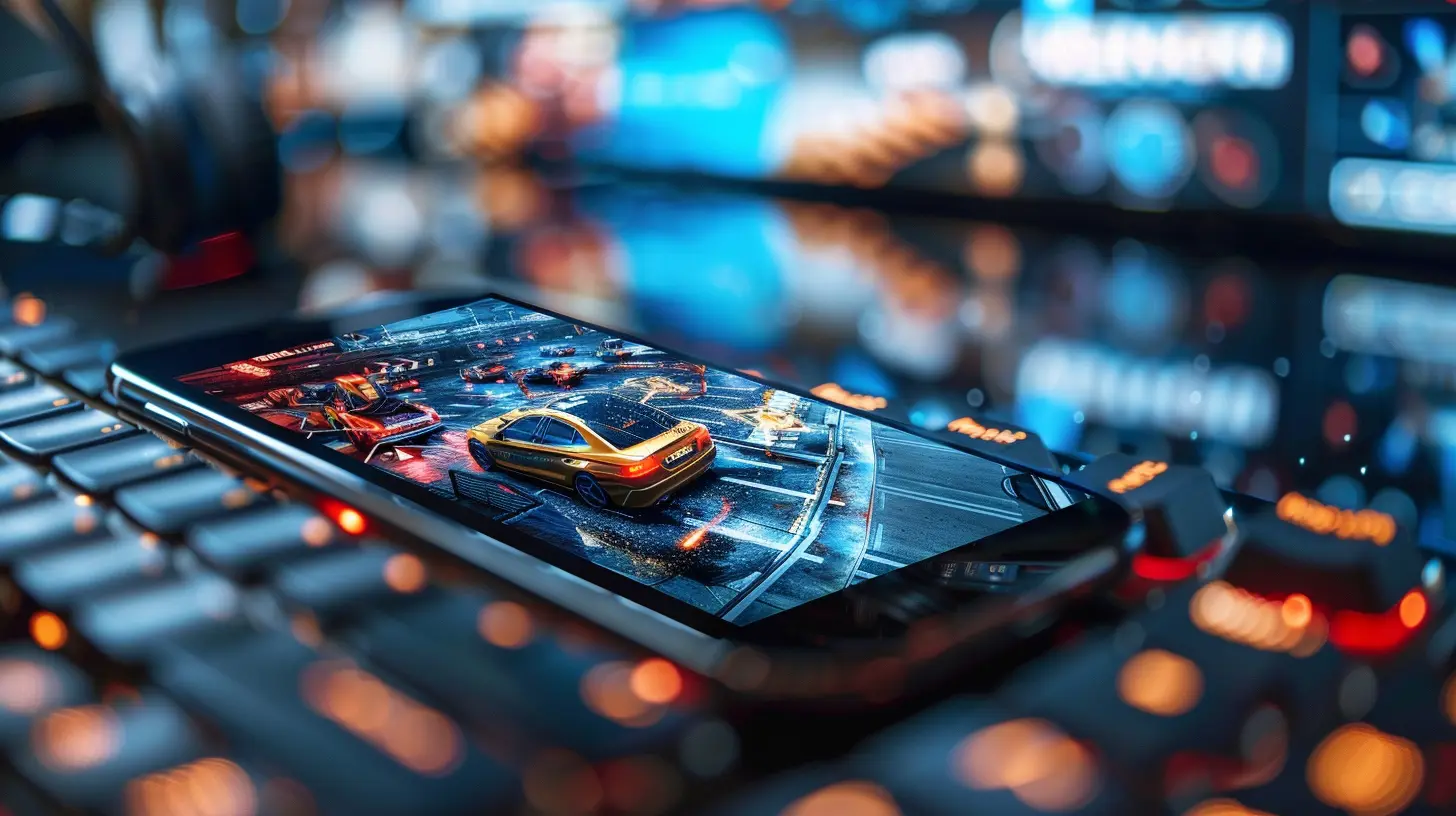
The Golden Age of Mobile Graphics (2015-2020) – Near-Console Quality
By 2015, things started getting serious. Mobile chipsets became more powerful with multi-core GPUs, and developers began pushing the boundaries of what mobile graphics could achieve.Games That Changed the Industry
Some games during this period showcased next-level graphics, such as:- Asphalt 9: Legends – Stunning lighting effects, realistic car details
- PUBG Mobile (2018) – Console-like battle royale experience
- Call of Duty: Mobile (2019) – Brought high-end FPS graphics to mobile
With real-time shadows, dynamic reflections, and detailed environments, mobile games began to rival older console generations like the PS3/Xbox 360.
The Impact of GPU Advancements
GPUs like Adreno (Qualcomm) and Mali (ARM) became more powerful, allowing for advanced shaders, smoother frame rates, and improved anti-aliasing. Mobile gaming was no longer just a casual pastime—it was becoming a serious competitor to traditional gaming platforms.The Present & Future (2020-Present) – Photorealistic Mobile Gaming
We’re now in an era where some mobile games look just as good as PC and console titles, thanks to advanced graphics technology.Ray Tracing and Real-Time Rendering
With the introduction of ray tracing in mobile GPUs, lighting and reflections in games have become incredibly realistic. Games like:- Genshin Impact
- Diablo Immortal
- Fortnite Mobile
…are prime examples of mobile titles that could easily pass as console or PC counterparts.
Cloud Gaming – The Next Big Leap
Services like Xbox Cloud Gaming (xCloud), NVIDIA GeForce Now, and Google Stadia (before it shut down) allow players to stream high-end AAA titles on their phones. This means we’re not even limited by hardware anymore. If you have a strong internet connection, you can play high-end games on a basic smartphone!AI-Driven Graphics Enhancements
AI is being integrated into mobile game graphics to enhance textures, upscale resolutions, and improve performance dynamically. Imagine AI filling in details in real-time to make mobile games look even better without taxing the hardware too much.Final Thoughts – What’s Next?
Looking back, the evolution of graphics in mobile games is nothing short of mind-blowing. From simple monochrome pixelated shapes in Snake to photorealistic, ray-traced environments in Genshin Impact, we’ve come a long way.With the rise of AI, 5G, and cloud gaming, who knows? In the next decade, we might see mobile graphics surpassing even the latest gaming consoles. One thing’s for sure: mobile gaming isn’t slowing down anytime soon.
So, the next time you fire up a visually stunning game on your phone, take a moment to appreciate just how far we’ve come.
all images in this post were generated using AI tools
Category:
Mobile GamingAuthor:

Jerry Graham
Discussion
rate this article
2 comments
Otis Oliver
The improvements in mobile game graphics are impressive, enhancing gameplay and overall player experience.
August 1, 2026 at 8:45 PM
Jerry Graham
I completely agree! The advancements in graphics truly elevate the gaming experience, making it more immersive and enjoyable for players.
Faryn Maddox
Great insights on how mobile game graphics have transformed over the years. It's fascinating to see the blend of creativity and technology, making gaming more immersive. Looking forward to what the future holds!
May 29, 2026 at 11:09 AM
Jerry Graham
Thanks for your feedback! It's exciting to explore how creativity and tech continue to shape mobile gaming. The future looks promising!