The Future of Virtual Collaboration: What Remote Teams Need to Know by 2027
10 May 2026
Let me paint you a picture. It's 2024, and you're staring at a grid of faces on a Zoom call. Someone's frozen mid-sentence. Another person is talking over everyone because their audio lagged. You feel that familiar drain, the one that makes you wonder if we've actually gotten better at working remotely, or if we've just gotten better at pretending it works.
Now fast forward to 2027. The grid is gone. The lag is a bad memory. Your team isn't just collaborating-they're coexisting inside a digital space that feels more like a real room than a window. That's the shift we're heading into. And if you're leading a remote team, you need to understand not just the tools coming, but the psychology behind them.
I've spent years watching the remote work landscape evolve. I've seen the hype cycles, the failed experiments, and the quiet wins. By 2027, virtual collaboration won't be about mimicking the office. It'll be about creating something better. Here's what you need to know to stay ahead.

The Death of the Flat Screen
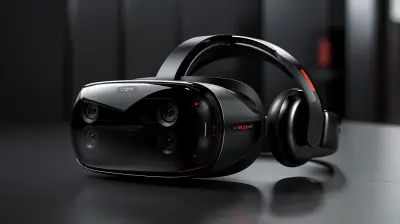
Right now, most remote work happens in 2D. You have a camera, a screen, and a chat box. It's like trying to cook a gourmet meal with a microwave-you can do it, but you're missing texture, smell, and timing. By 2027, that flat screen will feel as outdated as a flip phone.The big shift is spatial computing. Think of it as the difference between watching a concert on TV and standing in the crowd. Apple's Vision Pro, Meta's Quest series, and even lightweight smart glasses from companies like Xreal are already pushing this. But by 2027, these devices won't be bulky or expensive. They'll be as common as a laptop.
Imagine a meeting where you don't just see faces-you see a 3D whiteboard floating in front of you. You grab a virtual marker, scribble an idea, and watch a teammate across the world move that note to a different section. You hear their voice coming from where they're standing in the room, not from a speaker. That's not sci-fi. That's where the hardware is heading.
But here's the catch: hardware is useless without software that gets out of the way. The tools that win in 2027 will be the ones that reduce friction, not add more buttons. If your current collaboration stack requires three logins and a tutorial, you're already behind.

Async Becomes the Default, Not the Exception
One of the biggest lies of remote work is that everyone needs to be online at the same time. That's just office culture with a VPN. By 2027, the smartest teams will embrace asynchronous collaboration as their primary mode.Why? Because deep work doesn't happen in a chat window. It happens when you have two hours of uninterrupted focus. Real-time meetings kill that. Async tools like Loom, Twist, and Notion are already proving that recorded updates and written docs can replace 80% of stand-ups and status meetings.
But here's the nuance: async only works if your team has discipline. You can't just drop a video message and expect everyone to watch it. You need a culture of clear writing, concise updates, and trust that people will consume the information on their own time. By 2027, we'll see tools that automatically summarize async content, flag action items, and even predict who needs to see what.
Think of it like a well-organized library versus a chaotic group chat. In a library, you find the book you need, read it, and leave a note. In a group chat, everyone's shouting over each other. Async collaboration is the library model. And it's going to be the backbone of high-performance remote teams.

The Rise of AI as a Teammate
I know, AI is everywhere right now. But most people are using it as a crutch-writing emails, generating headlines, or summarizing meetings. By 2027, AI will stop being a tool and start feeling like a teammate. Not in the creepy robot-overlord way, but in the helpful-colleague-who-never-sleeps way.Imagine this: you're working on a project plan. An AI assistant, integrated into your collaboration platform, notices you're stuck on a timeline. It pulls data from past projects, identifies bottlenecks, and suggests a revised schedule. It doesn't interrupt you with a pop-up. It quietly leaves a note in your shared doc. You review it later, adjust, and move on.
Or consider real-time transcription that doesn't just write down words-it tags action items, assigns owners, and syncs with your task manager. That's already happening in tools like Otter.ai and Fireflies.ai. By 2027, these features will be baked into every major platform.
But here's the warning: AI can't replace human judgment. It can process data, but it can't understand nuance. The teams that win will be the ones that use AI to handle the boring stuff-scheduling, note-taking, data sorting-so humans can focus on creativity, empathy, and strategy. If you treat AI like a crutch, you'll limp. If you treat it like an amplifier, you'll soar.

Trust Over Surveillance
Let's talk about the elephant in the virtual room: monitoring. Some companies love tracking mouse movements, keystrokes, and screen time. It's a toxic approach that screams "I don't trust you." By 2027, that mindset will be a liability.The future of virtual collaboration is built on trust, not surveillance. Why? Because the best talent will simply refuse to work for companies that treat them like children. Remote work gives people autonomy. If you try to claw that back with spyware, you'll lose your best people to competitors who understand that output matters more than activity.
Instead, we'll see a shift toward outcome-based management. Tools will focus on measuring results, not hours. A designer might deliver three mockups in two hours and then go for a walk. That's fine, as long as the work is excellent. By 2027, collaboration platforms will integrate with project management tools to track progress, not presence. They'll ask "What did you ship?" not "How long were you at your desk?"
This requires a cultural shift. Managers need to let go of control. But if you can't trust your team to work without a digital leash, you probably hired the wrong people. By 2027, the companies that embrace trust will have lower turnover, higher morale, and better output. The ones that don't will be ghosted on LinkedIn.
The Hybrid Loop
Not everyone will be fully remote by 2027. Hybrid is here to stay, but it's broken right now. You know the problem: the people in the office have side conversations, grab coffee, and get spontaneous feedback. The remote folks are left watching a screen, feeling like second-class citizens.The fix isn't better cameras. It's redesigning the meeting itself. By 2027, hybrid meetings will use spatial audio and 360-degree cameras so remote participants feel like they're in the room. But more importantly, the etiquette will change. No more "Can you hear me?" No more talking over each other. Instead, meetings will be structured with clear turn-taking, digital hand-raising, and built-in pauses for remote input.
Think of it like a radio show. The host controls the flow, ensures everyone gets a chance to speak, and keeps the energy up. That's what a good hybrid facilitator does. By 2027, we'll see training programs specifically for this role. It won't be enough to be a good manager. You'll need to be a good conductor of a distributed orchestra.
The Emotional Cost of Constant Connection
Here's a truth that doesn't get enough airtime: virtual collaboration is exhausting. It's not just the screens. It's the lack of natural downtime. In an office, you walk to the break room, pass someone in the hall, share a laugh. Those micro-moments recharge you. In a virtual world, you go from one call to the next, with no buffer.By 2027, the best teams will prioritize "collaboration hygiene." That means scheduled no-meeting days, enforced lunch breaks, and even digital "quiet hours" where chat is muted. It means leaders modeling healthy behavior by not sending messages at 10 PM. It means recognizing that collaboration isn't about constant communication-it's about intentional communication.
We'll also see a rise in virtual co-working spaces. These aren't meetings. They're open rooms where people work silently, together. You can drop in, work on your own stuff, and leave when you're done. It recreates that feeling of being in a library or a coffee shop with colleagues. It's low-pressure but high-connection. By 2027, this will be a standard feature in every collaboration platform.
What You Need to Do Now
You don't have to wait until 2027 to start preparing. The seeds of this future are already planted. Here's what you can do today:First, audit your tools. Are they helping your team focus or fragmenting their attention? If you have more than five collaboration apps, you have too many. Consolidate.
Second, kill the pointless meetings. Replace them with async updates. If a meeting doesn't have a clear agenda and a decision to make, cancel it.
Third, invest in training. Not just for tools, but for soft skills. Teach your team how to write clear async messages, how to facilitate hybrid meetings, and how to set boundaries.
Fourth, experiment with spatial tools. You don't need to buy a $3,500 headset. Start with a free VR meeting app or a simple 3D whiteboard tool. Get your team comfortable with the idea that collaboration isn't tied to a screen.
Fifth, build trust. Stop tracking time. Start tracking outcomes. If you're afraid to let go, ask yourself why. The answer will tell you more about your leadership than your team's performance.
The Bottom Line
By 2027, virtual collaboration will feel less like a compromise and more like a superpower. We'll have tools that make distance irrelevant. We'll have rhythms that protect our energy. We'll have AI that handles the grunt work. But none of that matters if we don't change our mindset.The future isn't about better tech. It's about better habits. It's about recognizing that collaboration isn't a box to check-it's a living, breathing process that requires intention, trust, and a willingness to evolve.
So ask yourself: is your team ready for 2027, or are you still running on 2020 software and 1990 management? The answer will determine whether you thrive or fade in the next wave of remote work.
all images in this post were generated using AI tools
Category:
Remote Work ToolsAuthor:

Jerry Graham
Discussion
rate this article
2 comments
Ace Riggs
This article highlights crucial insights for remote teams navigating the future of virtual collaboration. As technology evolves, staying ahead of trends like AI integration and enhanced communication tools will be vital. Organizations that adapt early will foster stronger connections and boost productivity by 2027 and beyond.
July 1, 2026 at 3:53 AM
Jerry Graham
Thanks for the thoughtful comment! I completely agree that adapting to new technologies will be key for remote teams in the coming years. Exciting times ahead!
Oscar Spencer
Great insights on the evolution of virtual collaboration. It's fascinating to consider how technology will shape team dynamics in the coming years. Looking forward to seeing these trends unfold and their impact on remote work.
May 17, 2026 at 11:43 AM
Jerry Graham
Thanks for your thoughts! It's exciting to think about how these trends will redefine team interactions. Let's see what the future holds.