The Role of 5G in Accelerating E-Commerce Innovation
26 August 2026
Let me paint you a picture. You are standing in a physical store, holding a product, and you want to see how it looks in your living room. You pull out your phone, scan the QR code, and within two seconds, a 3D model of that sofa materializes in your actual space, rendered in full detail with correct lighting. You rotate it, you drop it next to your actual coffee table, and you buy it without a second thought. That demo has existed in trade show booths for years, but on 4G it feels like watching a slideshow in slow motion. On 5G, it just works. That is the difference, and it is not just about speed.
We have been hearing about 5G for so long that it has started to sound like background noise. But the truth is, 5G is not an incremental upgrade to your phone plan. It is a structural shift in how e-commerce handles data, latency, and device density. And if you run an online store, a marketplace, or a logistics operation, ignoring it is not an option anymore. Let me break down what actually changes, what does not, and where the hype has led people astray.

The Real Difference Between 4G and 5G Is Not What You Think
Most people think 5G just means faster downloads. That is like saying a Formula 1 car is just a faster sedan. Technically true, but completely missing the point. The three pillars that matter for e-commerce are latency, bandwidth, and connection density.Latency is the big one. On 4G, you are looking at a round-trip delay of roughly 50 to 100 milliseconds. On 5G, especially with standalone networks using millimeter wave spectrum, that drops to 1 to 10 milliseconds. For a human browsing a website, that difference is barely noticeable. Your brain cannot perceive 10 milliseconds. But for machines talking to each other, it is the difference between a conversation and a long-distance phone call with a bad connection.
Bandwidth is also not just about streaming video. It is about how much data you can push through a pipe simultaneously. 5G can handle several gigabits per second, but more importantly, it can handle thousands of devices per square kilometer without choking. That last part, connection density, is what makes the Internet of Things actually viable for commerce. Think about a warehouse with thousands of sensors, scanners, and autonomous robots. On 4G, they would fight for bandwidth. On 5G, they just talk.
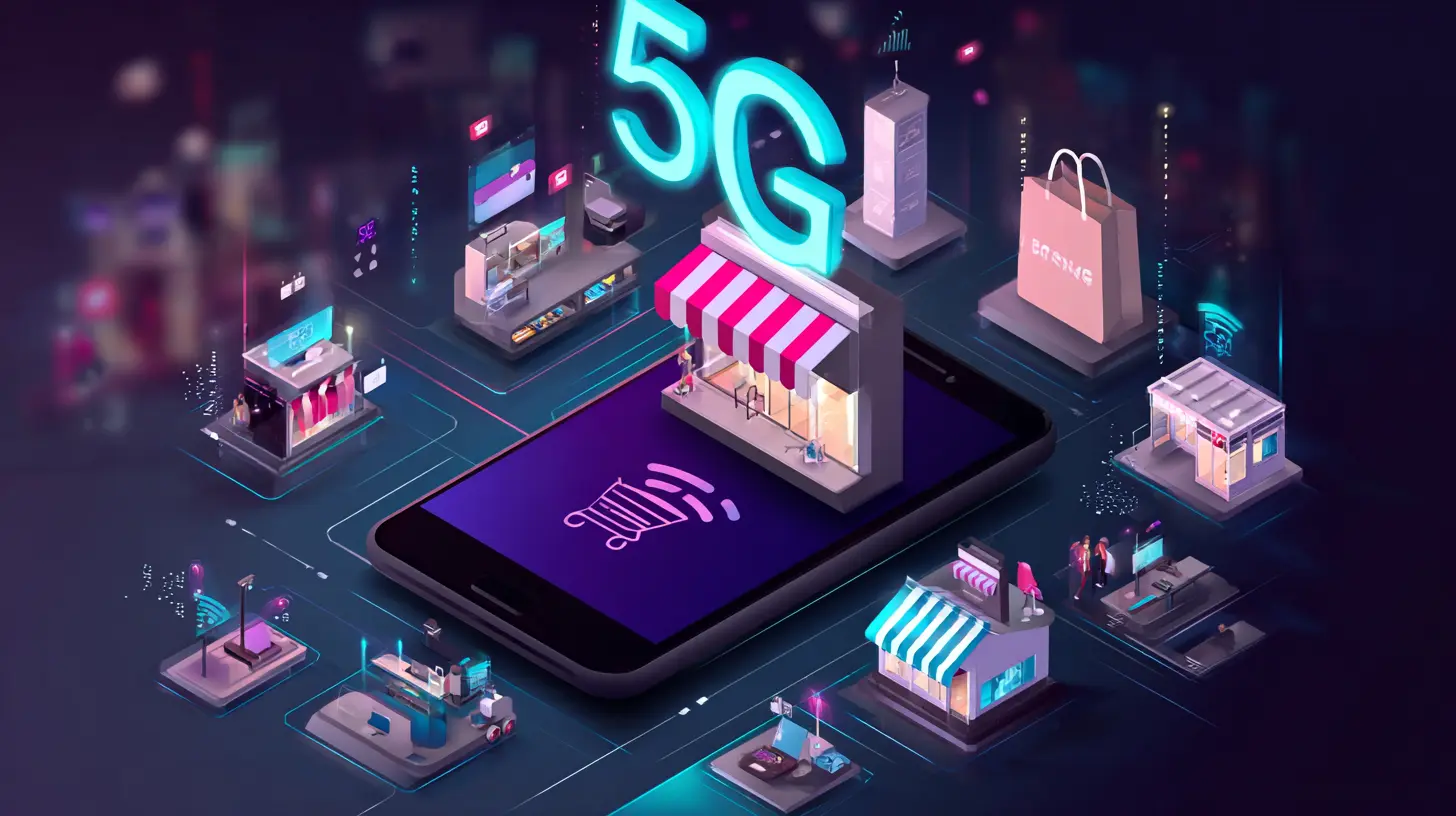
So when we talk about 5G accelerating e-commerce innovation, we are really talking about three distinct things: real-time interactivity, massive device coordination, and edge computing integration. Each of these changes a different part of the shopping and fulfillment experience.

Augmented Reality Shopping Finally Becomes a Real Tool, Not a Gimmick
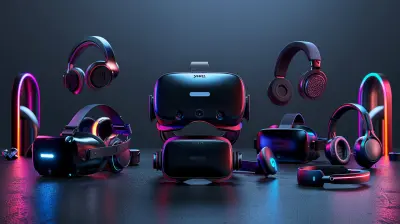
AR in e-commerce has been the punchline of tech conferences for a decade. Every year, someone shows a virtual try-on for glasses or a furniture placement app, and every year it works just well enough to be impressive but not well enough to be useful. The problem was never the software. It was the network.AR requires streaming high-resolution 3D models, tracking your camera position in real time, and overlaying virtual objects onto a live video feed. That means sending a constant stream of data from your phone to a server and back, dozens of times per second. On 4G, the latency makes the virtual object lag behind your actual movement. You move your phone, and the sofa takes a quarter second to catch up. That is enough to make you nauseous and to make you abandon the app.
With 5G, the round trip is so fast that the virtual object appears glued to your real-world space. You can walk around it, look at it from different angles, and it stays anchored. That is a completely different user experience. It stops being a tech demo and starts being a decision-making tool.
The practical implication is huge for certain product categories. Furniture, home decor, eyewear, makeup, and apparel all benefit from spatial context. But here is the nuance: 5G alone is not enough. You also need edge computing, which we will get to in a minute. And you need a well-designed 3D asset pipeline, because if your product model looks like a low-poly game from 2005, no network speed is going to save you.
My advice for merchants: do not wait for 5G to be everywhere before you build AR experiences. Start building now, test on 5G networks where available, and optimize your 3D assets for progressive loading. The merchants who have the AR experience ready when 5G coverage reaches critical mass will have a massive advantage. The ones who wait will be playing catch-up.
Live Commerce and Interactive Shopping: The Latency Factor
Live shopping, where influencers or brand representatives sell products in real-time video streams, is already massive in China and is slowly gaining traction in the West. The problem with live commerce on 4G is that the interaction is one-directional. The host talks, you watch, and if you want to ask a question, there is a noticeable delay before the host sees it.5G changes this to something closer to a real conversation. With sub-10-millisecond latency, a viewer can ask a question and the host can respond almost instantly. This enables a level of interactivity that feels personal, which is exactly what drives impulse purchases. You can also have multiple hosts, multiple camera angles, and real-time product overlays without the stream buffering.
There is also the concept of synchronized shopping experiences. Imagine a group of friends watching the same live stream, each on their own device, and they can collectively decide to buy something together. That is not possible on 4G because the synchronization lag creates a disjointed experience. On 5G, the shared state is consistent across all devices, so it feels like you are in the same room.
But here is the trade-off. Live commerce is expensive to produce. It requires a host, a production team, a stable high-quality stream, and now, with 5G, the expectation of instant interactivity. If you are a small brand, you do not need to jump into live commerce tomorrow. But you should understand that when you do, the technical bar will be higher because viewers will have experienced the snappy, low-latency version elsewhere. Their patience for lag will be zero.

Edge Computing: The Silent Partner That Makes 5G Work
Nobody talks about edge computing enough when they discuss 5G. The two are inseparable. 5G provides the fast pipe, but edge computing provides the fast brain. Edge computing means running computation and data storage closer to the user, instead of in a centralized data center hundreds of miles away.For e-commerce, this is critical for anything that requires real-time decision making. Consider a recommendation engine. On 4G, when you click on a product, your request goes to a central server, the recommendation algorithm runs, and the response comes back. That takes time. With 5G and edge computing, the recommendation model can run on a server that is physically close to you, cutting the response time dramatically.
The same applies to personalized pricing, dynamic inventory updates, and fraud detection. For example, if you are running a flash sale and you need to prevent bots from buying all the stock, you need to analyze traffic patterns in real time. On 4G, the latency means a bot can slip through before your system reacts. On 5G with edge computing, the decision is made locally, in milliseconds, and the bad actor is blocked before they even complete the request.
The practical advice here is to think about your infrastructure architecture now. If your e-commerce platform is running on a traditional centralized cloud, you will not automatically benefit from 5G just because the network is faster. You need to design for edge deployment. That means containerized applications, microservices, and a content delivery network that supports compute, not just caching.
This is a significant engineering investment. Do not underestimate it. But also do not overengineer it. Start with one or two high-latency-sensitive functions, like personalized product recommendations or real-time inventory checks, and move those to the edge. Measure the improvement. Then expand.
The Internet of Things and Smart Warehousing
E-commerce does not stop at the checkout button. The fulfillment side is where 5G has perhaps the most tangible impact. Warehouses are becoming increasingly automated, with robots moving shelves, drones scanning barcodes, and sensors tracking temperature, humidity, and location. All of these devices need to communicate with each other and with a central control system.On 4G or Wi-Fi, you run into interference and bandwidth limitations. A warehouse with hundreds of robots and thousands of sensors can quickly saturate a Wi-Fi network. 5G, with its ability to handle a million devices per square kilometer, is designed for exactly this scenario. It also provides more predictable latency, which is essential for coordinating robot movements. If two robots are approaching each other, a 100-millisecond delay could mean a collision. A 5-millisecond delay gives the system time to reroute.
The result is faster order processing, fewer errors, and lower labor costs. But the investment is not trivial. You need 5G infrastructure in your warehouse, which means either working with a carrier to install a private 5G network or relying on public coverage, which is not always reliable indoors. Private 5G networks are becoming more accessible, but they are still a significant capital expenditure.
My recommendation is to do a cost-benefit analysis based on your order volume and error rate. If you are shipping a few hundred orders a day, the ROI on private 5G is hard to justify. If you are shipping tens of thousands, the reduction in errors and the increase in throughput will pay for the infrastructure within a year or two. Start with a pilot in one area of your warehouse, measure the metrics, and then scale.
Personalization and Real-Time Data Processing
Personalization has been a buzzword for years, but the reality is that most e-commerce personalization is batch-based. Your site tracks what you browse, and the next time you visit, it shows you recommendations based on that data. That is not real-time personalization. That is delayed personalization.With 5G, real-time personalization becomes feasible. Your site can analyze a user's behavior as they navigate, adjust the product order, change the pricing or the promotional message, and even modify the layout of the page, all within the time it takes for the next page to load. This is not science fiction. It is just a matter of having low enough latency to make the decision and act on it before the user moves to the next interaction.
The challenge is that real-time personalization requires a lot of computing power and a lot of data. You need to process clickstream data, session data, and contextual data like location and time of day, all within milliseconds. This is where edge computing and 5G combine to create something that was previously only possible for the largest tech companies.
For smaller merchants, this is not something you need to build yourself. Platforms like Shopify and Adobe Commerce are already integrating these capabilities into their offerings. Your job is to understand what is possible and to ask your platform provider about their 5G and edge computing roadmap. If they do not have one, that is a red flag.
The Misconception That 5G Will Replace Wi-Fi
A common misconception is that 5G will make Wi-Fi obsolete. That is unlikely. Wi-Fi 6 and Wi-Fi 7 are also evolving, and for indoor, fixed-location devices, Wi-Fi is often more cost-effective and provides higher bandwidth at close range. 5G is better for mobility, for outdoor coverage, and for connecting a massive number of devices that move around.In a warehouse, you might use Wi-Fi for fixed sensors and 5G for robots and handheld scanners. In a retail store, you might use Wi-Fi for the point-of-sale systems and 5G for customer-facing AR experiences that need to work outside the store. The two will coexist. Do not rip out your Wi-Fi infrastructure just because 5G is shiny.
What 5G Does Not Fix
Let me be clear about something. 5G will not fix a bad user experience. If your website is slow because your server code is poorly optimized, 5G will not save you. If your product images are low resolution, 5G will not make them look better. If your checkout process has too many steps, 5G will not reduce your cart abandonment.The network is the pipe. It does not change what is inside the pipe. You still need good content, good products, and good customer service. 5G amplifies what you already have. If you have a great experience, 5G makes it faster and more immersive. If you have a mediocre experience, 5G just delivers that mediocrity faster.
This is the biggest mistake I see in the industry. Companies invest in 5G-enabled features without first fixing the fundamentals. They build an AR app for a product that has terrible reviews. They enable live commerce for a brand that has no personality. They implement real-time personalization but their product catalog is a mess. None of this works.
The Cost and Coverage Reality Check
5G coverage is not uniform. In dense urban areas, you have excellent coverage, especially with millimeter wave. In suburban and rural areas, you are likely on low-band 5G, which is not much faster than 4G in practice. The difference between mid-band and millimeter wave is enormous, but mid-band requires more cell towers, and millimeter wave only works over short distances and can be blocked by walls.This means that if you are building an e-commerce feature that depends on 5G, you need to consider the user's actual connection. A shopper in downtown Manhattan will have a different experience than a shopper in rural Nebraska. If your AR experience requires high bandwidth and low latency, you need to have a fallback for users on 4G. That might mean lower-quality 3D models, or a 2D photo instead of an AR overlay.
The practical approach is to design for the lowest common denominator and progressively enhance for 5G. Build the basic experience that works on 4G. Then, detect the user's connection quality and offer the enhanced experience only when the network can support it. This is called progressive enhancement, and it is the only sane way to handle a heterogeneous network landscape.
Security and Privacy Implications
5G introduces new security considerations. The increased number of connected devices expands the attack surface. More sensors, more robots, more edge servers. Each one is a potential entry point for a hacker. You need to think about device authentication, encryption, and network segmentation.Also, edge computing means that data is processed closer to the user, which has privacy implications. On one hand, it can reduce the amount of data sent to central servers, which is good for privacy. On the other hand, edge servers might be operated by third parties, and you need to ensure they comply with your data protection obligations. If you are in Europe, GDPR applies. If you are in California, CCPA applies. Do not assume that edge computing automatically solves your compliance problems.
Practical Steps to Prepare for 5G Today
You do not need to wait for 5G to be ubiquitous to start preparing. Here is a practical checklist.First, audit your current infrastructure. Identify the parts of your e-commerce experience that are latency-sensitive. That includes product search, checkout, payment processing, and any interactive features like AR or live chat.
Second, start moving to a microservices architecture if you have not already. Monolithic applications are hard to deploy at the edge. You need small, containerized services that can run independently.
Third, work with your cloud provider to understand their edge offerings. AWS has Wavelength, Azure has Edge Zones, and Google has Distributed Cloud. These are designed to work with 5G networks. You can start deploying test workloads on these platforms now.
Fourth, build a test lab. Get a 5G-enabled device and a developer account with a carrier. Test your website and your apps on a real 5G network. Measure the latency and see where the bottlenecks are. You will likely be surprised by what you find.
Fifth, train your team. 5G is not just a networking topic. It affects front-end development, backend architecture, UX design, and security. Make sure your developers understand the constraints and opportunities of low-latency, high-density networks.
The Future: What Comes After the Hype
The next few years will separate the businesses that use 5G as a genuine competitive advantage from those that just use it as a marketing buzzword. The winners will be the ones who understand that 5G is not about speed. It is about the ability to create experiences that were previously impossible due to latency and density constraints.Think about remote-controlled robots for inspecting goods in a warehouse. Think about real-time translation in a live shopping event, where a customer in Japan watches a host in Brazil and hears their own language with no delay. Think about dynamic pricing that adjusts based on real-time demand, inventory, and traffic, all computed at the edge.
These are not speculative ideas. They are technically feasible today, and they will become commercially viable as 5G coverage expands. The question is not whether they will happen. The question is whether you will be ready when they do.
Start small. Pick one use case that makes sense for your business. Build a prototype. Test it on a real 5G network. Measure the business impact. Then expand. That is how you turn a network upgrade into an innovation engine. Otherwise, 5G is just a faster way to load the same old website.
all images in this post were generated using AI tools
Category:
E Commerce TechnologyAuthor:

Jerry Graham
Discussion
rate this article
2 comments
Maverick Blevins
This article highlights the transformative impact of 5G on e-commerce. The speed and connectivity it offers are game-changers, enabling new innovations that enhance customer experience. It's exciting to see how technology continues to shape the retail landscape and drive business growth. Great read!
September 15, 2026 at 4:50 AM
Jerry Graham
Thanks for your thoughtful comment! I'm glad you found the article insightful. 5G truly is reshaping how we approach e-commerce. Exciting times ahead!
Harper Bowman
This article offers valuable insights into how 5G technology is transforming the e-commerce landscape. It's fascinating to see how faster connections and improved data exchange are driving innovation and enhancing customer experiences. I look forward to seeing how this evolves in the coming years.
August 30, 2026 at 4:01 AM
Jerry Graham
Thank you for your thoughtful comment! I'm glad you found the insights valuable. The evolution of 5G in e-commerce will indeed be exciting to follow.