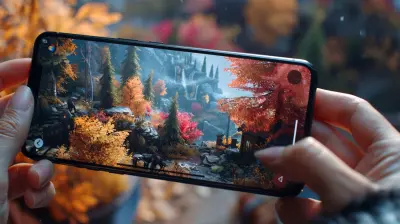
The Ultimate Guide to Mobile Gaming in 2027
6 September 2026
Mobile gaming has stopped being the "casual cousin" of console and PC gaming. It is the largest sector of the entire games industry, and by 2027, the lines between platforms have blurred to the point where asking "phone or console?" feels like asking "couch or chair?" when you just want to sit down. The hardware in your pocket now rivals dedicated handhelds from just a few years ago, and the business models, technology, and player expectations have shifted in ways that most guides still fail to address.
This is not a list of the top ten games to download. This is a practical, no-nonsense examination of how mobile gaming actually works in 2027, what you should buy, how you should play, and where the industry is quietly tricking you. Whether you are a returning player, a parent trying to understand the ecosystem, or a competitive player looking to squeeze every frame out of your device, the information below will save you money, time, and frustration.
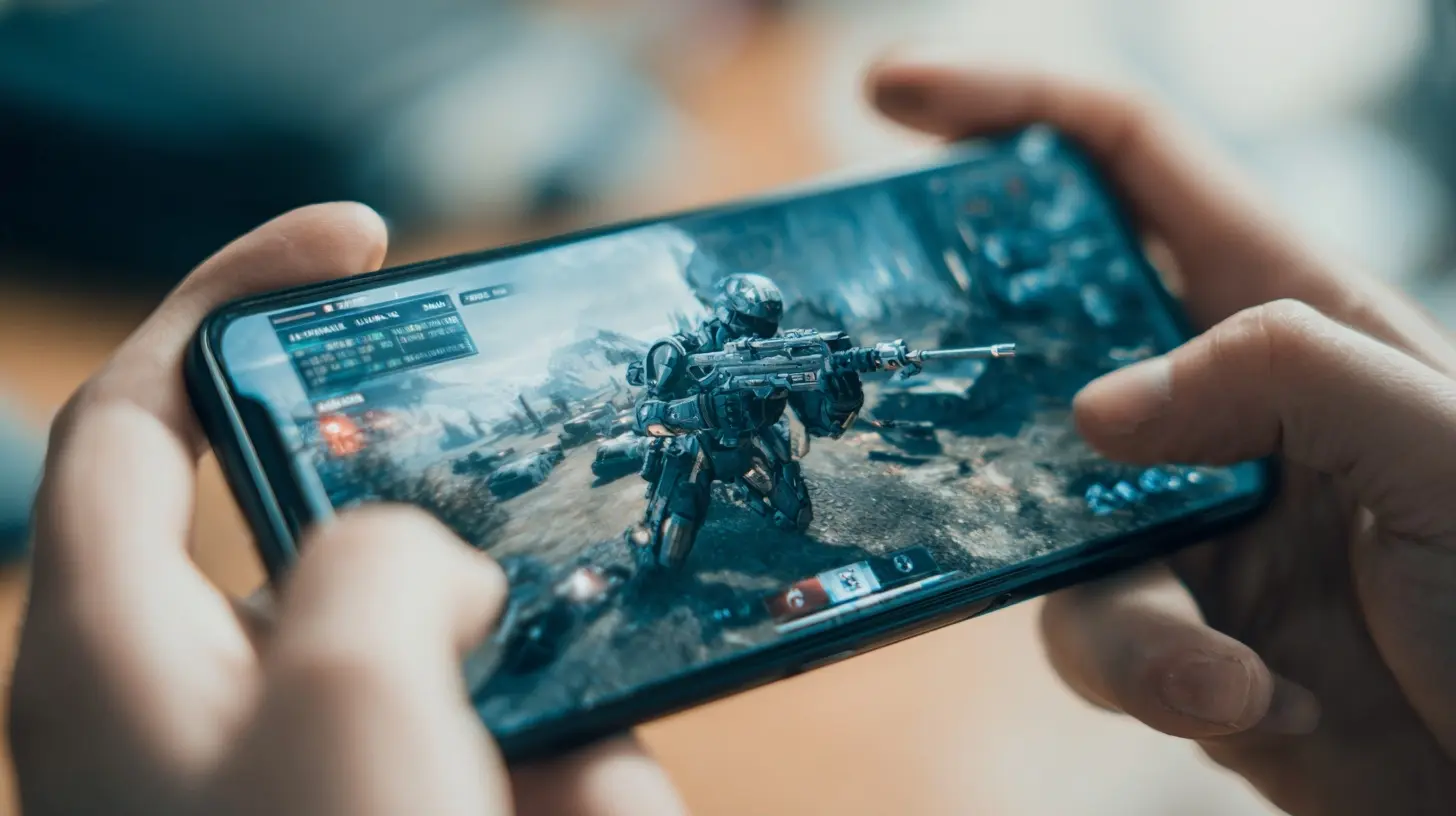
The State of Hardware in 2027: What Actually Matters
Let us start with the elephant in the room: your phone. You do not need a thousand-dollar flagship to enjoy mobile gaming, but you also cannot expect a budget device from three years ago to handle modern titles smoothly. The gap between low-end and high-end Android devices has widened, while Apple has consolidated its lineup around a single silicon architecture that performs uniformly well across its range.The Case for Flagship Phones
If you play graphically intense games like Genshin Impact sequels, Warzone Mobile, or any of the new Unreal Engine 5 titles, the flagship chipsets from Qualcomm and Apple are not a luxury; they are a requirement for a stable 60 frames per second at high settings. The thermal management in these devices has improved dramatically. In 2027, vapor chambers and graphene pads are standard on upper-midrange devices, not just flagships. However, sustained performance is still the differentiator. A phone that hits 120 frames per second for five minutes and then drops to 40 due to overheating is worse than a phone that locks at a steady 60.Do not buy a phone purely for its benchmark score. Look for sustained performance tests. Many reviewers now run a twenty-minute stress test that simulates a gaming session. If a device drops below 80 percent of its peak performance after ten minutes, avoid it for serious gaming.
The Midrange Sweet Spot
Here is the nuance that most tech reviewers miss: the midrange market in 2027 is spectacular for mobile gaming, but only if you prioritize the right components. A phone with a Snapdragon 7-series or Dimensity 8300-class chip, 8 gigabytes of RAM, and a 120-hertz OLED display will handle 90 percent of the Play Store and App Store library flawlessly. The visual difference between high and ultra settings on a six-inch screen is often imperceptible, especially when you are moving quickly.The real bottleneck on midrange phones is storage speed. Many budget devices still use slower UFS 2.2 storage, which causes long loading times and texture pop-in. Look for UFS 3.1 or newer, even if it means sacrificing a slightly better camera. For gaming, storage speed matters more than the camera sensor you will rarely use.
Controllers and Accessories
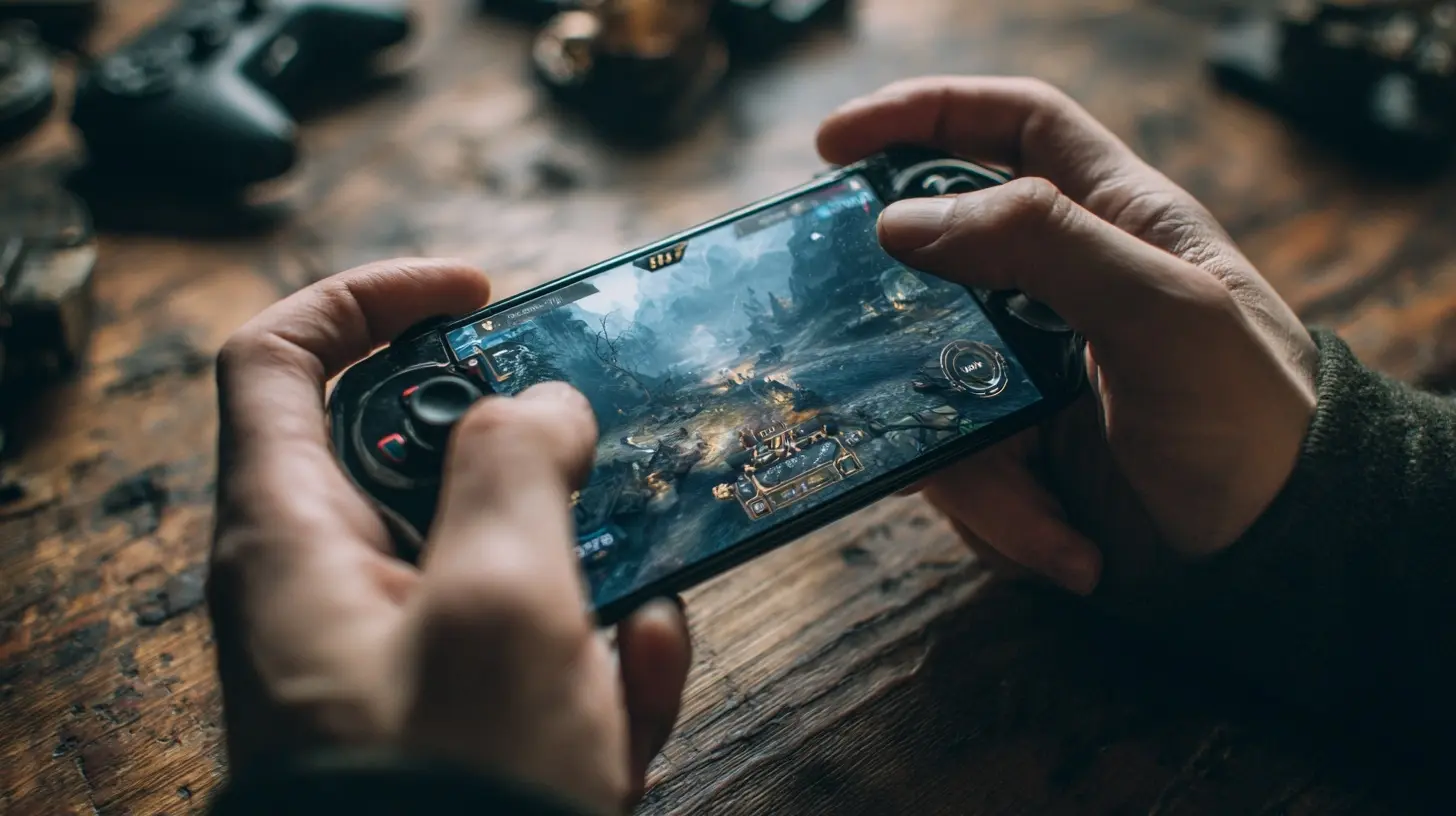
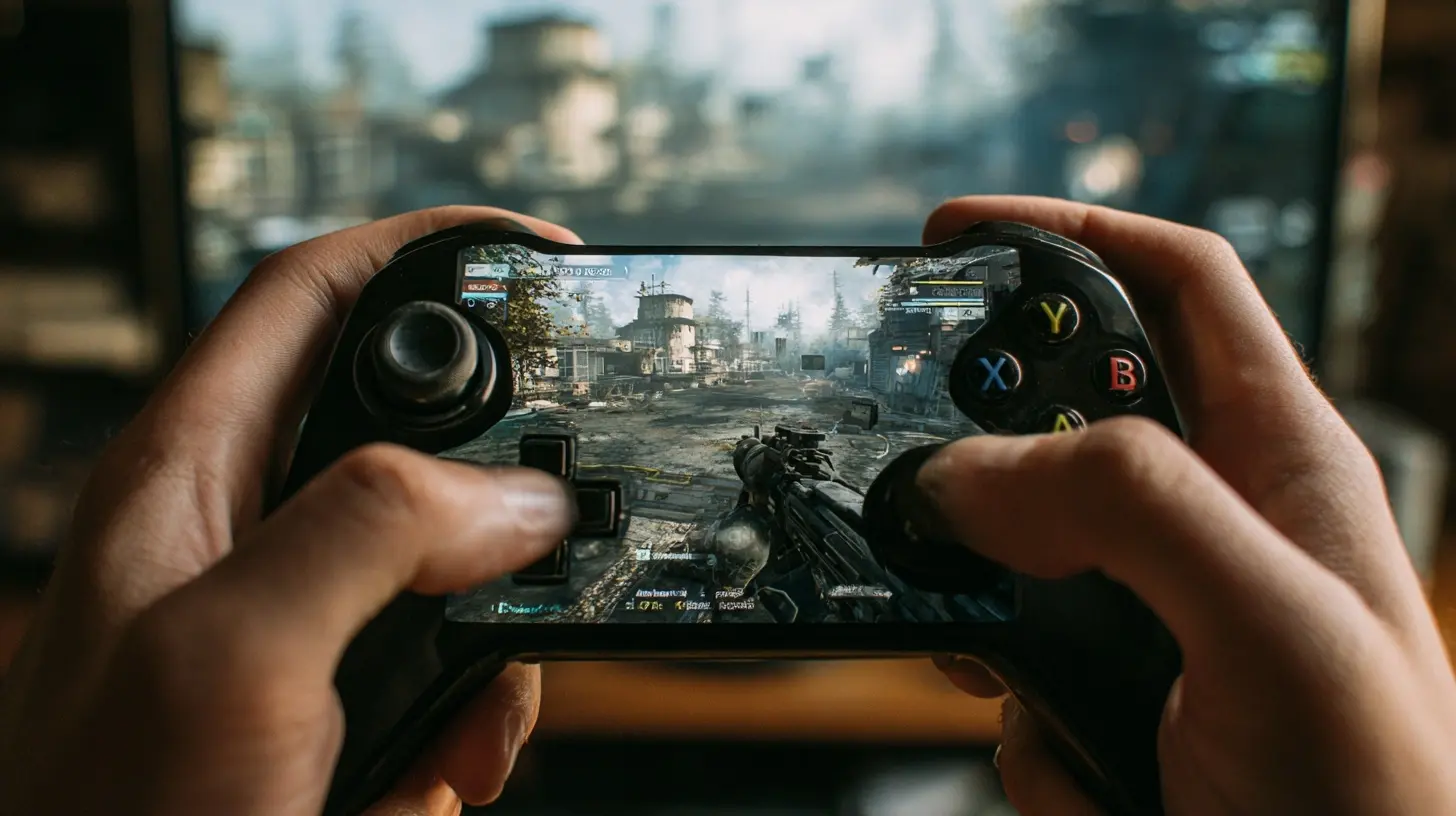
In 2027, touch controls have improved, but they still cannot match the precision of physical input for competitive shooters or fighting games. The good news is that mobile controllers have matured. The Backbone and Razer Kishi style of telescopic controllers are now the standard, with hall-effect analog sticks and low-latency connections over USB-C or Lightning.However, do not rush out to buy a controller unless you genuinely play genres that demand it. For turn-based strategy games, card battlers, or puzzle games, a controller adds bulk without benefit. For fast-paced shooters like PUBG Mobile or Apex Legends Mobile, a controller is almost mandatory if you are serious about ranking up. One caveat: matchmaking in many competitive games separates controller players from touch players. This is a deliberate design choice to keep the playing field fair. If you use a controller, expect longer queue times and tougher opponents.
The Cloud Gaming Question: Boon or Distraction?
Cloud gaming has been "the future" for a decade. By 2027, it is finally a legitimate option for certain players, but it is not the universal solution that tech companies keep pushing. Services like Xbox Cloud Gaming and GeForce Now have expanded their libraries and improved latency, but physics still applies. The speed of light is not getting faster, and the distance between you and the data center is the fundamental constraint.When Cloud Gaming Makes Sense
If you travel frequently and own a cheap tablet or a laptop with a weak integrated GPU, cloud gaming is a revelation. You can play Cyberpunk 2077 on a device that cannot even run Minecraft at medium settings. The key metric is not your internet speed, but your latency to the nearest server. A stable 20-millisecond ping to the cloud server feels almost native. A 60-millisecond ping makes fast-paced games feel like you are wading through mud.Another scenario where cloud gaming shines is game discovery. Instead of downloading a 40-gigabyte file to test a game, you can stream it instantly. This has changed the demo culture entirely. Many major publishers now offer free one-hour cloud trials of their premium titles, hoping you will buy the full download afterward.
The Hidden Costs
Cloud gaming is not free. The subscription fees are reasonable, but the real cost is data. If you do not have an unmetered home internet connection, streaming games at 1080p will consume roughly 10 gigabytes per hour. That is unsustainable on most mobile data plans. Also, cloud gaming on a phone drains the battery rapidly because the device is constantly decoding video streams, which is surprisingly power-intensive.The biggest misconception is that cloud gaming will replace local hardware. It will not, at least not in this decade. Local rendering still offers lower latency, better image quality, and no dependency on network conditions. Treat cloud gaming as a complement to local gaming, not a replacement.
The Economics of Mobile Games in 2027
Here is where most players get burned. The mobile gaming economy has shifted dramatically from the early days of pay-to-win gacha schemes. Regulation in several major markets, especially in Europe and parts of Asia, has forced publishers to be more transparent about loot boxes and odds. But the core monetization models remain aggressive, and understanding them is essential to keeping your wallet intact.The Rise of the Hybrid Model
The old binary of free-to-play versus premium is gone. In 2027, the dominant model is the hybrid: a game that is free to download, offers a complete single-player campaign, but sells cosmetic items and battle passes. The clever part is that the best games now gate their post-game content behind a subscription or a one-time expansion purchase.Take the example of major racing titles. You can play the career mode for free, but the monthly live-service events, new car packs, and ranked seasons require a "Season Pass" that costs roughly the equivalent of a movie ticket per month. Is this fair? It depends on your perspective. The developers need recurring revenue to fund ongoing content. The alternative, which is a full-price game with no updates, dies within months because the player base moves on.
The Trap of Sunk-Cost Spending
The most dangerous psychological trap in mobile gaming is the sunk-cost fallacy. You have invested two hundred hours and fifty dollars into a free-to-play game. The game introduces a new character that requires another fifty dollars to unlock within a limited-time event. You feel compelled to spend because you have already invested so much.This is a deliberate design pattern. The industry calls it "event-driven monetization," and it is engineered to exploit your fear of missing out. The best defense is a simple rule: set a monthly gaming budget, treat it like any other entertainment expense, and never exceed it. If you cannot enjoy a game without spending, the game is not designed for you to enjoy; it is designed to extract money from you.
Premium Games Are Not Dead
There is a healthy market for premium mobile games in 2027, but it is niche. Games like Dead Cells, Slay the Spire, and various remastered console classics sell for fifteen to twenty-five dollars and offer a complete, no-strings-attached experience. The trade-off is that these games rarely receive major content updates after launch. The developers have already been paid, so they have no financial incentive to continue working on the title.If you value completion and ownership over endless live-service grind, premium games are the ethical choice. They also tend to be better optimized because they do not need to track your behavior for ad targeting.
Competitive Mobile Gaming: The Esports Reality
Mobile esports has exploded in Southeast Asia, India, and Latin America, where mobile is the primary gaming platform. By 2027, prize pools for games like Mobile Legends and PUBG Mobile rival traditional PC esports events. If you are considering taking competitive mobile gaming seriously, you need to understand the landscape.The Skill Ceiling Is Real
Many PC gamers dismiss mobile esports as low-skill because of touch controls. They are wrong. The precision required for advanced techniques like claw grip aiming, quick-scoping, and finger-dancing across a touchscreen is genuinely difficult. Top mobile players have reaction times comparable to professional PC players. The difference is the interface, not the cognitive ability.The problem with competitive mobile gaming is the hardware disparity. In PC esports, everyone plays on similar settings. On mobile, a player with a 120-hertz screen and a dedicated gaming phone with shoulder buttons has a distinct advantage over a player on a standard 60-hertz device. This is why official tournaments often use identical loaner devices, but ranked ladder play is inherently unbalanced.
Practice Routines Beat Talent
If you want to climb the ranked ladder, you need a practice routine. Playing ten matches in a row without reflection is worse than playing three matches with deliberate analysis. Record your gameplay, watch your deaths, and identify patterns in your decision-making. Most mobile players plateau because they keep making the same mistakes at the same moments in the match.Use the training modes that games provide. Spend fifteen minutes daily on aim training or movement drills before you start playing ranked. This is not fun, but neither is lifting weights. It is the price of improvement.
The Social and Psychological Dimensions
Gaming on your phone is often a solitary activity, but the social aspects are powerful. Clans, guilds, and friend lists create a sense of belonging that keeps players engaged long after the gameplay itself becomes repetitive. This is both a strength and a weakness.The Guild Grind
Joining an active guild or clan can dramatically improve your experience. You get access to cooperative content, shared resources, and experienced players who can teach you the game's mechanics. The downside is the obligation. Many guilds require daily participation and minimum contribution scores. If you cannot commit to that schedule, you will either get kicked out or feel guilty for letting your teammates down.Before joining a guild, read their requirements. Some are casual and only ask that you log in weekly. Others demand daily play and will message you on social media if you disappear for two days. Choose a guild that matches your actual availability, not your ideal availability.
Gaming and Mental Health
There is a fine line between passionate gaming and problematic gaming. The mobile format is particularly insidious because the games are always in your pocket. Waiting in line, sitting on the bus, or lying in bed becomes an opportunity to "just play one more match." That one match turns into thirty minutes, and suddenly your sleep schedule is ruined.Set physical boundaries. Do not play in bed. Do not play during meals. Use the built-in screen time tools on your phone to limit your daily gaming app usage. These tools are not a gimmick. They are the only effective defense against the infinite scroll and infinite matchmaking that these games are designed to provide.
The Technical Side: Settings and Optimization
You have a good phone and a great game. Now you need to optimize your settings to get the best experience. The default settings in most games are a compromise that favors visual fidelity over performance. For competitive games, you want to prioritize frame rate and visibility over shadows and particle effects.Frame Rate Versus Resolution
In a fast-paced shooter, 120 frames per second is more important than 1440p resolution. The human eye perceives motion smoothness more readily than pixel density on a small screen. If your game offers a choice between "High Resolution at 60 FPS" and "Medium Resolution at 120 FPS," choose the higher frame rate every time, provided your phone can sustain it without overheating.Lower your graphics settings in competitive games to reduce visual clutter. Grass, shadows, and reflections can hide enemies or make it harder to spot movement. Professional players often run games at the lowest graphical settings to maximize visibility and frame rate. This is not because their phones cannot handle high settings; it is because competitive advantage trumps visual beauty.
Thermal Throttling: Your Invisible Enemy
Every phone throttles when it gets hot. The question is how quickly and how severely. When your phone reaches its thermal limit, the processor reduces clock speeds to prevent damage. This causes stuttering and frame drops at the worst possible moment.To mitigate thermal throttling, remove your phone case while gaming. The case insulates heat and prevents dissipation. Play in a cool environment. Do not charge your phone while gaming, as charging generates additional heat. If your phone has a performance mode, enable it, but be aware that it will make the phone run hotter and drain the battery faster.
The Battery Dilemma
High-performance gaming is a battery killer. A modern game at 120 frames per second can drain a 5000-milliamp-hour battery in under three hours. If you are a serious gamer, invest in a high-quality power bank that supports fast charging. But be careful about playing while charging, as this combination generates the most heat and degrades battery health over time.Battery health is a real concern. Lithium-ion batteries lose capacity with each charge cycle. If you play heavy games for two hours daily, you will likely need a battery replacement after two years. This is a hidden cost of mobile gaming that most people do not consider when they buy a phone.
Cross-Platform Play: The Great Equalizer
One of the most significant developments of the past few years is the normalization of cross-platform play between mobile and PC. Games like Fortnite, Call of Duty, and Rocket League allow you to play against PC players while on your phone. This is technically impressive, but it raises a critical question: are you at a disadvantage?The Answer Is Yes, Usually
A PC player with a mouse and keyboard has a fundamental advantage in aiming precision over a touchscreen player. The developers attempt to balance this through aim assist on mobile, but aim assist is not a perfect equalizer. In close-range fights, the mobile player often wins because the aim assist locks on faster than a human can flick a mouse. At long range, the PC player has the advantage because they can make micro-adjustments that touch controls cannot replicate.If you are playing cross-platform casually, this imbalance is irrelevant. If you are playing competitively, you should know that the top-ranked players in most cross-platform games are PC players. Mobile players can reach high ranks, but the ceiling is lower.
When to Disable Cross-Platform Play
Most games offer the option to match only with other mobile players. If you are not playing with friends on PC, disabling cross-platform play will give you a more balanced experience. The matchmaking pool will be smaller, so queue times will be longer, but the quality of matches will be more consistent. This is the right choice for players who want a fair fight based on skill rather than hardware.
The Future Trends You Should Watch
Looking beyond 2027, several trends will shape mobile gaming. The first is the integration of AI-driven non-player characters that adapt to your play style. This is already appearing in single-player RPGs where enemies learn your tactics and counter them. The second is the expansion of spatial computing. With headsets like the Apple Vision Pro becoming more common, expect mobile games to offer companion experiences that project your phone screen into a virtual space.The third and most important trend is the regulatory environment. Governments are increasingly scrutinizing loot boxes and gacha mechanics as forms of gambling. If you are in a jurisdiction that has banned or restricted these mechanics, you will see fewer of them in games. If you are not, you will continue to see aggressive monetization. Support regulations that protect consumers, even if they make games slightly more expensive upfront.
Practical Recommendations for Different Player Types
Let me give you concrete advice based on who you are.If you are a parent buying a phone for a teenager, do not buy the most expensive gaming phone. Buy a solid midrange device and set up parental controls that restrict in-app purchases. The games are free, but the in-game stores are designed to extract money from young players who do not understand the value of money. Talk to your teenager about gaming budgets and the psychology of microtransactions before they learn it the hard way.
If you are a casual player who just wants to unwind for twenty minutes a day, stick to premium puzzle games or single-player titles. Avoid any game that has a daily login reward or a battle pass. These systems are designed to create obligation, not relaxation. A good casual game respects your time and does not punish you for not playing.
If you are a hardcore player, accept that mobile gaming requires the same dedication as PC or console gaming. You need a good device, a stable internet connection, a comfortable chair with good posture, and a realistic schedule. Do not let mobile gaming interfere with your work or relationships. The games will still be there tomorrow.
The Bottom Line
Mobile gaming in 2027 is mature, complex, and rewarding. It offers experiences that were impossible even five years ago. It also contains more commercial traps and psychological manipulations than any other entertainment medium. The key to enjoying it is not to play more, but to play smarter. Know your hardware, understand the business model, set boundaries for your spending and time, and choose games that respect you as a player.The best mobile game in the world is the one you can play without resentment, put down without anxiety, and return to with genuine excitement. Everything else is just noise.
all images in this post were generated using AI tools
Category:
Mobile GamingAuthor:

Jerry Graham
Discussion
rate this article
2 comments
Oriel Fisher
Excited to see what mobile gaming holds for us!
October 6, 2026 at 3:50 AM
Jerry Graham
Thanks for your enthusiasm! The future looks bright for mobile gaming. Stay tuned for some exciting developments!
Rivera Carrillo
Exciting insights on mobile gaming trends for 2027-can't wait to see advancements!
September 6, 2026 at 12:10 PM
Jerry Graham
Thanks! I'm just as excited to see where mobile gaming takes us in 2027. The future looks bright!