How AI plotted an interstellar journey to Alpha Centauri
September 2, 2026 - 02:09

The dream of sending a probe to another star system has moved a step closer to reality, thanks to a new mission design that leans heavily on artificial intelligence. The Fermi Explorer Mission, currently in its planning phase, aims to launch a spacecraft toward Alpha Centauri, our closest stellar neighbor, before the end of 2029. The key breakthrough is not in propulsion, but in navigation. Engineers have used machine learning algorithms to sift through millions of possible gravitational assists and flight paths, finding a route that was previously overlooked.
Traditional trajectory calculations for interstellar travel often rely on direct burns or slingshots around the Sun. The AI, however, identified a complex sequence of planetary flybys within our own solar system that can give the probe a significant boost without extra fuel. This path is not a straight line. It loops around Jupiter and then Saturn, using their gravity to fling the craft outward at a velocity that would have been impossible with chemical engines alone. The mission team says the AI also accounted for the motion of Alpha Centauri's binary stars, allowing for a more precise arrival window.
The spacecraft itself would be small, likely a few hundred kilograms, carrying a suite of sensors and a high-bandwidth laser communicator. The journey will take decades, not years, but the data it could return about the exoplanets in that system would be unprecedented. Scientists are already planning how to handle the long signal delay, which will be over four years. The launch date is ambitious, but the team believes that with the AI-optimized route, the technical hurdles are now manageable. The next step is securing funding for the final build, with a full mission review scheduled for early next year.
MORE NEWS
October 8, 2026 - 12:07
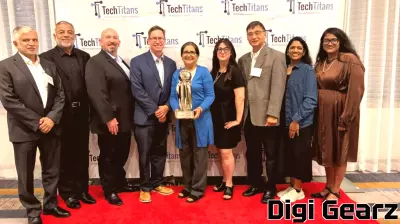
Collin College Electronic Engineering Technology Program and Dean of Academic Affairs and Workforce Programs Receive 2026 Tech Titans AwardThe Electronic Engineering Technology program at Collin College has received recognition from Tech Titans, a regional technology association. The organization presented the Tech Titans of the...
October 7, 2026 - 18:31
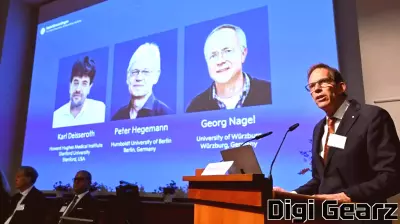
How a Brainless Alga Led to a Nobel-Winning Method for Controlling Neurons With LightThe ability to switch specific neurons on and off with a flash of light did not begin in a neuroscience lab. It began in a pond. Researchers studying a single-celled alga noticed it swam toward...

October 7, 2026 - 08:56
Micron Technology Is Not At Its Peak, At Least Not YetMicron Technology has secured long term commitments for a substantial share of its future production. More than 75 percent of the company`s calendar year 2027 output is already locked in through 26...
October 6, 2026 - 18:02
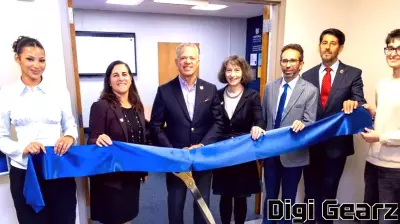
Hofstra University law school opens new legal technology hub through lawyer’s $1 million endowmentHofstra University`s law school has established a new center focused on legal technology, funded by a one million dollar endowment from an attorney. The institute will expand the school`s existing...