Participation in society shouldn’t require a smartphone — America needs offline accessibility
March 22, 2026 - 22:12

The assumption that everyone has a smartphone is creating a new barrier to participation in American society. As services from banking to boarding a plane migrate exclusively to apps and digital wallets, a significant portion of the population is being left behind. This shift risks disenfranchising the elderly, low-income individuals, and those in areas with poor connectivity, for whom a smartphone is an unaffordable luxury or an impractical tool.
The demand for offline accessibility is a demand for basic equity. Essential functions of civic and economic life—paying for parking, accessing government benefits, verifying identification, or simply viewing a restaurant menu—should not be gated behind a several-hundred-dollar device and a monthly data plan. Requiring a smartphone for daily tasks effectively creates a two-tiered system, where those who cannot or choose not to adopt the latest technology are relegated to second-class status.
Advocates argue that mandating digital-only access is not just an inconvenience but a violation of fundamental principles. It excludes citizens from the public square and everyday commerce. The call is for parallel systems: maintaining and improving in-person, phone-based, and paper-based pathways alongside digital innovations. Ensuring equal access for all, regardless of their digital footprint, is not a technological setback but a necessary step to preserve an inclusive society where participation isn't contingent on the brand of phone in your pocket.
MORE NEWS
October 8, 2026 - 12:07
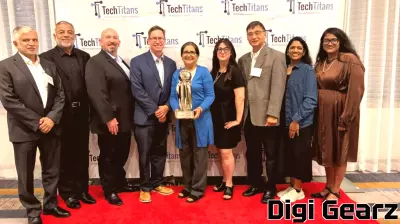
Collin College Electronic Engineering Technology Program and Dean of Academic Affairs and Workforce Programs Receive 2026 Tech Titans AwardThe Electronic Engineering Technology program at Collin College has received recognition from Tech Titans, a regional technology association. The organization presented the Tech Titans of the...

October 7, 2026 - 18:31
How a Brainless Alga Led to a Nobel-Winning Method for Controlling Neurons With LightThe ability to switch specific neurons on and off with a flash of light did not begin in a neuroscience lab. It began in a pond. Researchers studying a single-celled alga noticed it swam toward...

October 7, 2026 - 08:56
Micron Technology Is Not At Its Peak, At Least Not YetMicron Technology has secured long term commitments for a substantial share of its future production. More than 75 percent of the company`s calendar year 2027 output is already locked in through 26...

October 6, 2026 - 18:02
Hofstra University law school opens new legal technology hub through lawyer’s $1 million endowmentHofstra University`s law school has established a new center focused on legal technology, funded by a one million dollar endowment from an attorney. The institute will expand the school`s existing...