Sponsored: Why Security Systems Fail in Operations, Not Demos
August 1, 2026 - 23:30

Most security products look flawless in a controlled demonstration. A vendor walks into a boardroom, runs a scripted attack, and the system catches it instantly. The dashboard lights up, the alert fires, and everyone nods. But the same system, deployed across a real network with messy traffic, legacy software, and understaffed teams, often stumbles within the first month.
The gap is not in the technology's core capability. It is in the operational reality. Demos run on clean data, with pre-configured policies and no competing priorities. Production environments have noisy logs, shadow IT, and constant changes. A detection rule that works perfectly on a test laptop fails when it sees encrypted traffic from a random IoT device or a developer's unpatched test server.
Another common issue is alert fatigue. In a demo, one alert is a success. In operations, the same system generates thousands of alerts a day, most of them false positives. Analysts start ignoring them, and the one real threat slips through. The system did not fail to detect it. It failed to be trusted.
Also, integration is rarely tested. A demo shows a standalone tool. In real life, it must talk to a SIEM, a ticketing system, and a patch management tool. If those integrations are brittle, the whole workflow breaks. The security team ends up copying and pasting data between consoles, losing time and context.
The fix is not buying a better product. It is testing the product under operational stress before purchase. Run it on your own traffic for 30 days. Let your analysts use it without vendor support. See what happens when a false positive floods the queue. That is the only demo that matters. Because security is not about what happens in a clean room. It is about what happens at 3 a.m. on a Tuesday, with a tired engineer and a half-broken network.
MORE NEWS
October 8, 2026 - 12:07
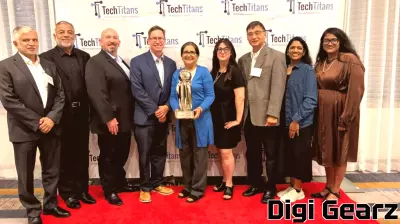
Collin College Electronic Engineering Technology Program and Dean of Academic Affairs and Workforce Programs Receive 2026 Tech Titans AwardThe Electronic Engineering Technology program at Collin College has received recognition from Tech Titans, a regional technology association. The organization presented the Tech Titans of the...

October 7, 2026 - 18:31
How a Brainless Alga Led to a Nobel-Winning Method for Controlling Neurons With LightThe ability to switch specific neurons on and off with a flash of light did not begin in a neuroscience lab. It began in a pond. Researchers studying a single-celled alga noticed it swam toward...

October 7, 2026 - 08:56
Micron Technology Is Not At Its Peak, At Least Not YetMicron Technology has secured long term commitments for a substantial share of its future production. More than 75 percent of the company`s calendar year 2027 output is already locked in through 26...

October 6, 2026 - 18:02
Hofstra University law school opens new legal technology hub through lawyer’s $1 million endowmentHofstra University`s law school has established a new center focused on legal technology, funded by a one million dollar endowment from an attorney. The institute will expand the school`s existing...