The next China shock will come from open-source AI
August 17, 2026 - 04:34

For years, the phrase "China shock" described the flood of manufactured goods that reshaped Western supply chains. That era was about physical exports. The next shock, however, may not arrive in a shipping container. It is coming through open-source artificial intelligence, and it carries more than just code.
Chinese AI labs have quietly become the largest producers of open-weight models. Unlike proprietary systems from American giants, these models can be downloaded, modified, and embedded into local products without a licensing fee. For startups, government agencies, and developers in emerging markets, the appeal is obvious: full control over the model, no data leaving the country, and a price tag of zero.
But the software is never neutral. The training data, the safety rules, and the default answers all reflect the environment where the model was built. When a country adopts a Chinese model as the backbone of its local chatbot or its medical diagnostic tool, it is also adopting a set of assumptions about how the world works. That includes views on censorship, social stability, and the role of the state.
This is not a conspiracy. It is simply how technology spreads. The United States did the same thing for decades with its own software and internet platforms. The difference is that China's open-source push is happening at a moment when global trust in American tech is also declining, and when many governments are desperate for alternatives that do not come with strings attached to Washington.
The result is a slow but steady alignment. Countries that build their digital infrastructure on Chinese AI will find it easier to integrate with Chinese standards for data exchange, cloud computing, and even hardware. Over time, the line between using a tool and adopting a governance model will blur. The next shock may not be a sudden event. It will be a quiet migration of technical dependencies, with long-term consequences that are only beginning to show.
MORE NEWS
October 8, 2026 - 12:07
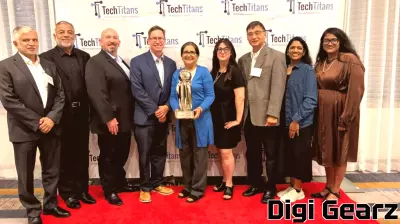
Collin College Electronic Engineering Technology Program and Dean of Academic Affairs and Workforce Programs Receive 2026 Tech Titans AwardThe Electronic Engineering Technology program at Collin College has received recognition from Tech Titans, a regional technology association. The organization presented the Tech Titans of the...

October 7, 2026 - 18:31
How a Brainless Alga Led to a Nobel-Winning Method for Controlling Neurons With LightThe ability to switch specific neurons on and off with a flash of light did not begin in a neuroscience lab. It began in a pond. Researchers studying a single-celled alga noticed it swam toward...

October 7, 2026 - 08:56
Micron Technology Is Not At Its Peak, At Least Not YetMicron Technology has secured long term commitments for a substantial share of its future production. More than 75 percent of the company`s calendar year 2027 output is already locked in through 26...

October 6, 2026 - 18:02
Hofstra University law school opens new legal technology hub through lawyer’s $1 million endowmentHofstra University`s law school has established a new center focused on legal technology, funded by a one million dollar endowment from an attorney. The institute will expand the school`s existing...