US Asks Anthropic to Restrict Global Access to Advanced AI Models: Here's Why It Matters
June 15, 2026 - 03:29

The United States government has formally requested that Anthropic, the AI company behind the Claude chatbot, block international users from accessing its most powerful artificial intelligence models. This move highlights the Trump administration's ongoing push to tighten export controls on cutting-edge technology, treating advanced AI as a strategic asset that must be kept out of foreign hands.
According to sources familiar with the matter, the request targets Anthropic's frontier models, which are considered among the most capable AI systems currently available. The directive would effectively bar users outside the United States from accessing these tools, unless they meet specific security or licensing criteria. The reasoning centers on national security: the fear that hostile nations could weaponize AI for cyberattacks, disinformation campaigns, or military applications.
This is not an isolated incident. The administration has previously imposed restrictions on semiconductor exports to China and limited access to advanced chips used in AI training. Now, the focus has shifted to the software layer itself. By asking Anthropic to restrict access, the US aims to create a digital fence around its most valuable AI capabilities.
Critics argue that such measures could backfire. They warn that blocking global access may push other countries to develop their own AI ecosystems, accelerating fragmentation of the industry. Some also question the practicality of enforcement, given that open-source models and workarounds exist. Supporters, however, say the risks of unfettered access outweigh the costs, especially as AI capabilities grow more powerful and unpredictable.
For now, Anthropic has not publicly confirmed whether it will comply. The company faces a delicate balance between cooperating with government requests and maintaining its reputation as a responsible, globally accessible AI provider. The outcome could set a precedent for how the US controls the spread of its most advanced technologies in the years ahead.
MORE NEWS
October 8, 2026 - 12:07
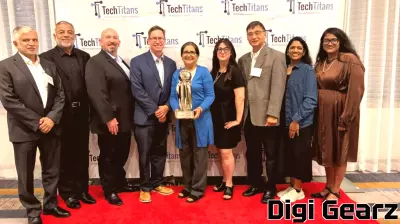
Collin College Electronic Engineering Technology Program and Dean of Academic Affairs and Workforce Programs Receive 2026 Tech Titans AwardThe Electronic Engineering Technology program at Collin College has received recognition from Tech Titans, a regional technology association. The organization presented the Tech Titans of the...

October 7, 2026 - 18:31
How a Brainless Alga Led to a Nobel-Winning Method for Controlling Neurons With LightThe ability to switch specific neurons on and off with a flash of light did not begin in a neuroscience lab. It began in a pond. Researchers studying a single-celled alga noticed it swam toward...

October 7, 2026 - 08:56
Micron Technology Is Not At Its Peak, At Least Not YetMicron Technology has secured long term commitments for a substantial share of its future production. More than 75 percent of the company`s calendar year 2027 output is already locked in through 26...

October 6, 2026 - 18:02
Hofstra University law school opens new legal technology hub through lawyer’s $1 million endowmentHofstra University`s law school has established a new center focused on legal technology, funded by a one million dollar endowment from an attorney. The institute will expand the school`s existing...