How AR Glasses Are Redefining the Concept of Smart Homes
30 January 2026
Smart homes used to be the stuff of science fiction, right? The idea that you could control your lights, thermostat, or even coffee maker using your voice or a smartphone seemed unreal not too long ago. Fast forward to today, and that’s pretty much standard. Now, a new player is shaking things up — Augmented Reality (AR) glasses.
Yep, those futuristic-looking wearables are no longer reserved for gamers or tech-nuts. AR glasses are stepping into the smart home arena, offering a completely immersive and hands-free way to interact with the spaces we live in. So, how exactly are these smart specs changing the game? Let’s geek out together and take a deeper dive.
What Are AR Glasses Anyway?
Before we leap into the smart home stuff, let’s clear up what AR glasses are.Think of AR glasses as a blend between your regular specs and Iron Man’s fancy helmet display. They overlay digital information – like images, text, or even 3D interactive elements – onto the real world. This means you can still see your surroundings, but with added data right in front of your eyes.
Unlike virtual reality (VR), which totally blocks out the real world, AR builds on it. That’s a game-changer for smart homes because it allows you to interact with your devices in a way that's way more natural and intuitive.
The Evolution of Smart Homes: From Static Control to Dynamic Interaction
Smart homes started with a simple premise: automation. Set your lights to turn on at sunset, have your coffee ready at 7 AM, or get notifications when someone rings the doorbell. Cool, right?But here’s the thing — traditional smart home interfaces rely heavily on smartphones, tablets, or voice assistants like Alexa or Google Assistant. These are great tools, but they pull your attention away from your surroundings and dump it onto a screen or disembodied voice.
AR glasses flip that script completely. They allow you to stay engaged with your environment while interacting with your smart devices. It’s no longer about controlling your home through a phone — it’s about being inside a home that responds to you, visually, in real-time.
How AR Glasses Are Transforming Smart Home Interactions
Let’s get into the good stuff. What exactly can AR glasses do in a smart home context? Here are some real-world examples.1. Visual Control Panels, Anywhere You Look
Instead of opening an app on your phone to adjust the thermostat, imagine just looking at your heating unit and seeing a floating temperature dial appear above it. You adjust it with a glance or a hand gesture. Boom — your room's getting toastier, no phone required.AR glasses can place these virtual control panels right on top of physical devices. So, rather than remembering where to go in an app or yelling “Hey Google” across the room, your controls are right where they make sense — in your line of sight.
2. Guided DIY Repairs and Maintenance
Ever tried to fix your smart bulb or reconfigure your router, and just ended up Googling blurry diagrams? With AR glasses, say goodbye to that frustration.Picture this: you're staring at your smart washing machine that’s blinking some error code. Instead of dragging out a manual or looking up a YouTube video, your glasses display step-by-step instructions directly over the machine. Arrows point to parts, text explains what to do, and you're walked through it like a pro.
Honestly, it’s kind of like having a tech-savvy ghost guiding your every move. Spooky? No. Super helpful? Oh yeah.
3. Enhanced Security Monitoring
AR glasses integrate directly with smart security systems. When someone rings your smart doorbell, you don’t just get an audio notification or pull out your phone. Instead, a live video feed pops up in your glasses.You’re cooking dinner, and without missing a beat, you check who's at the door, unlock it if it's a friend, or blast a pre-recorded warning if it’s a stranger. Total control, hands-free.
Plus, when checking on your backyard cameras or pet cam, AR overlays can provide real-time motion tracking, time stamps, or even AI-powered face recognition. Talk about peace of mind.
4. Personalized, Context-Aware Environments
This is where things start to geek out in the best way possible.With AR glasses, your smart home can recognize you specifically. Walk into a room, and your preferred lighting settings activate. Your favorite Spotify playlist starts playing gently in the background. And your daily calendar pops up as a floating window, reminding you of that dentist appointment you forgot about.
Because the glasses are always with you and aware of your context — like where you are, what time it is, and even your mood — your home isn’t just “smart,” it’s borderline psychic.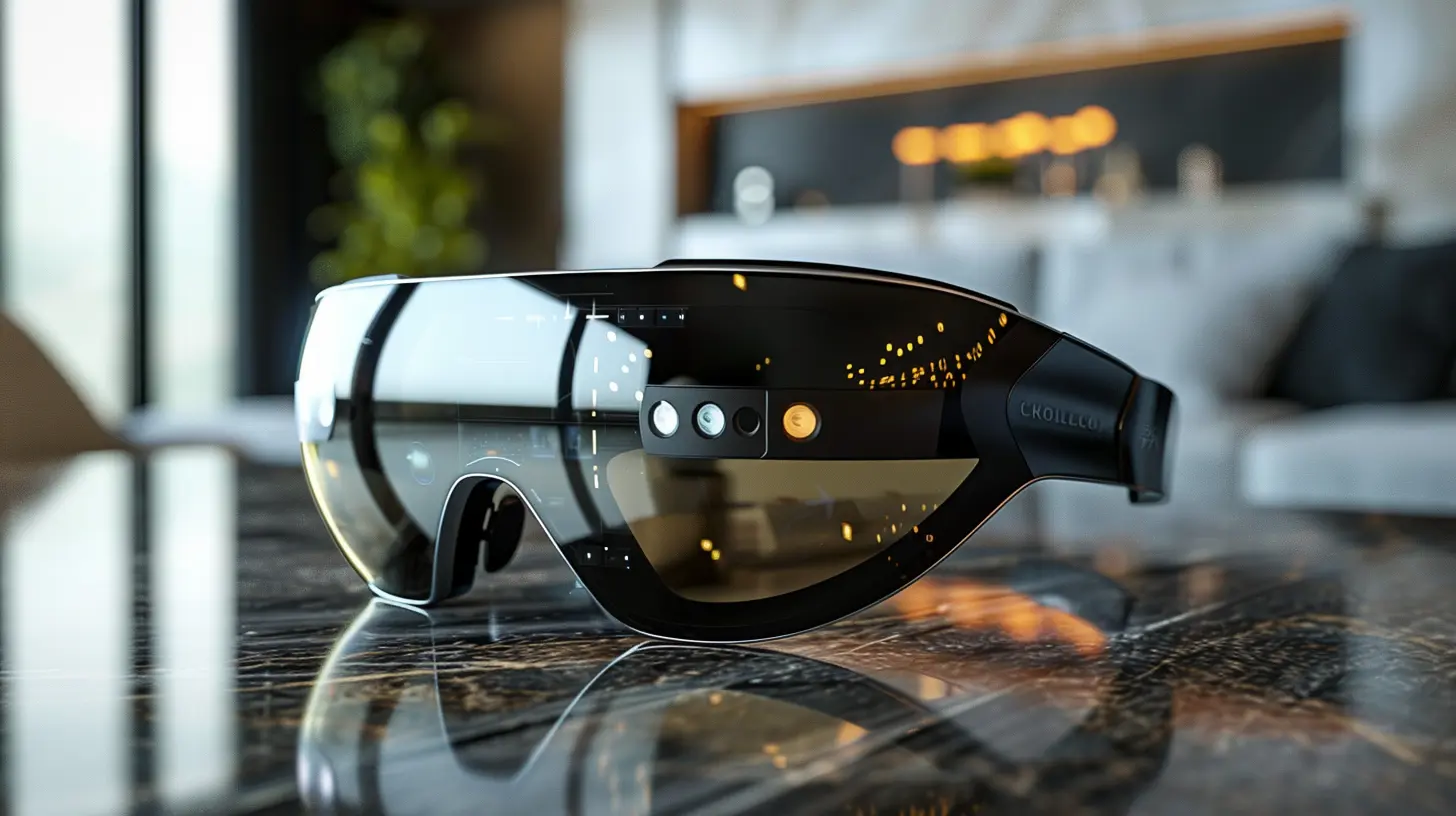
AR Glasses + IoT: A Match Made in Smart Heaven
IoT (Internet of Things) is the backbone of any smart home. It's what connects your light bulbs, thermostats, speakers, cameras, and kitchen appliances into one big, harmonious network.Throw AR glasses into the mix, and it's like giving that network a visual and interactive interface that goes wherever you go. Instead of being buried in a labyrinth of apps and menus, your smart home becomes visual, tactile, and intuitive.
It’s one thing to know your fridge is connected to the internet. It’s another to look at it through AR glasses and see a live inventory of what’s inside without even opening the door.
Insane convenience? Absolutely.
The Hands-Free Lifestyle: Why It Matters
Let’s be real: smart homes are supposed to make life easier, right? But juggling 8 different apps or shouting commands that sometimes get misheard isn’t exactly what we signed up for.AR glasses bring us closer to that effortless vision. Hands full of laundry? No problem — glance at the thermostat and adjust the temp. Cooking a complicated recipe? AR can overlay step-by-step cooking instructions directly in your field of view while recognizing your ingredients.
In a world where we’re constantly multitasking, the value of being hands-free is priceless. It’s not just about convenience; it's about reclaiming mental energy and time.
Accessibility: A Quiet Yet Powerful Revolution
Here’s something that doesn’t get talked about enough — accessibility.For people living with disabilities, AR glasses can make smart homes way more user-friendly. Visual cues can replace spoken commands for those with hearing impairments. For people with mobility issues, controlling their home visually and with minor gestures (instead of physically interacting with devices) can make a huge difference.
By bringing visual interfaces directly into the user's view, AR glasses offer a more inclusive smart home experience. And that’s a win for everyone.
Challenges to Consider
Okay, let’s pump the brakes a little. While there’s a lot to be excited about, it’s not all sunshine and rainbows just yet.- Battery Life: Most AR glasses today don’t last a full day without charging. That limits their usage in a 24/7 smart home setting.
- Price Tag: These aren't your $100 Bluetooth earbuds. Good AR glasses can cost anywhere between $500 to $3,000.
- Privacy Concerns: As with any connected tech, there are always concerns about data collection and surveillance.
- Learning Curve: Not everyone’s ready to wear glasses that make them look like they stepped out of a sci-fi movie. Some folks just want to keep it simple.
Still, the potential far outweighs the roadblocks. And as the tech improves (which it will), these challenges will become less of a dealbreaker.
The Future of AR in Smart Homes
So, where’s all this heading?Right now, we’re in the early innings of AR’s integration into smart homes. But fast forward a few years, and AR glasses could replace smartphones as the main hub of your connected life.
Think about it — your glasses could control your home, act as your phone, replace your laptop, and even become your personal assistant. Developers are already working on AR operating systems specifically designed for home environments.
Companies like Apple, Meta, and Google are all diving deep into AR hardware and software. That means more user-friendly design, lower prices, and better functionality are just around the corner.
Final Thoughts: AR Is Making Smart Homes Smarter
AR glasses aren’t just another fancy gadget — they’re a shift in how we interact with our spaces. They turn your home from a place with smart devices into an environment that visually responds, reacts, and predicts your needs.Once you experience what it’s like to control your lights, security, music, or even your oven with just a glance or a gesture… it’s hard to go back.
Bottom line? AR glasses are redefining what it means to live in a smart home. And if you ask me, we’re only scratching the surface of what's possible.
all images in this post were generated using AI tools
Category:
Ar GlassesAuthor:

Jerry Graham
Discussion
rate this article
2 comments
Finnian McMahan
AR glasses enhance smart home interaction, merging digital convenience with seamless real-world integration.
February 15, 2026 at 4:05 AM
Jerry Graham
Absolutely! AR glasses truly bridge the gap between the digital and physical worlds, making smart home interaction more intuitive and immersive.
Sarah McCray
This article brilliantly highlights how AR glasses are transforming smart homes by enhancing interactivity and functionality. The integration of augmented reality offers users intuitive control and immersive experiences, paving the way for a more connected and efficient living environment.
February 3, 2026 at 11:22 AM
Jerry Graham
Thank you for your insightful comment! I'm glad you found the article highlights the transformative role of AR glasses in enhancing smart home experiences.