How Virtual Reality is Transforming the World of Competitive Sports Training
19 March 2026
Competitive sports training has come a long way from simple drills and practice sessions. With technology advancing at breakneck speed, elite athletes are now leveraging Virtual Reality (VR) to enhance their skills and gain an edge over their competition.
But how exactly is VR shaping the future of sports training? Let’s take a deep dive into this game-changing technology and how it is revolutionizing the way athletes train, strategize, and improve their performance. 
What is Virtual Reality in Sports Training?
Virtual Reality, commonly known as VR, is a computer-generated simulation that immerses users in a realistic digital environment. Athletes can use VR headsets, motion-tracking sensors, and specialized software to train in dynamic virtual environments without ever stepping onto a real field or court.Unlike traditional training methods, VR allows athletes to experience realistic game scenarios, improve decision-making skills, and fine-tune their techniques—all while reducing the risk of injuries caused by overtraining. 
How Virtual Reality is Enhancing Competitive Sports Training
From football to Formula 1, VR is making waves across various sports by offering data-driven insights, real-time performance analysis, and immersive training experiences. Let’s break down some of the key benefits:1. Mental Training and Decision-Making
In sports, split-second decisions can make or break a game. VR helps athletes sharpen their reactions by simulating high-pressure situations.- Quarterbacks in the NFL can practice reading defenses and making quick throws without needing real opponents.
- Soccer players can train in penalty kick scenarios where they learn to stay composed under pressure.
- Basketball players can practice free throws and three-pointers in a stress-free yet immersive setting.
By engaging the brain in these lifelike situations, athletes build confidence and improve their on-the-spot thinking—which is critical for winning at the highest level.
2. Injury Prevention and Recovery
One of the biggest challenges in sports is managing injuries. Overtraining can lead to serious injuries, setting back an athlete’s career. VR provides a safer alternative by allowing athletes to train their minds and muscles without putting excess strain on their bodies.- For recovering athletes, VR can simulate high-intensity game plays without the physical toll.
- Physical therapists use VR for rehabilitation exercises, making recovery more effective and engaging.
- VR-guided training helps athletes identify and correct bad posture or movement patterns, reducing future injury risks.
Instead of spending months off the field, VR allows athletes to stay mentally engaged and ease back into training without pushing their bodies too hard.
3. Perfecting Technique and Skill Development
VR brings precision training to the next level by breaking down movements, techniques, and mechanics into fine details.- Baseball players can analyze batting angles and swing mechanics in slow motion.
- Golfers can refine their putting and driving techniques with real-time feedback.
- Tennis players can focus on their serve speed, positioning, and stroke mechanics.
Coaches can track and analyze performance metrics, making it easier to fine-tune techniques with scientific accuracy rather than relying on gut instinct.
4. Simulating Real Game Scenarios
Imagine preparing for a high-stakes championship game without even stepping onto the field. VR allows athletes to simulate full-game conditions, helping them strategize and prepare for real-world challenges.- Skiers and snowboarders can experience race tracks before competition day.
- NASCAR and Formula 1 drivers can learn circuits and refine their racing lines through VR simulations.
- Boxers and MMA fighters can train against virtual opponents programmed to mimic real-world fighters.
This level of preparation reduces anxiety, builds muscle memory, and enhances reaction times, helping athletes step into real matches with a psychological and tactical advantage.
5. Data-Driven Performance Analysis
Data is king in modern sports, and VR provides insightful analytics and performance tracking that go beyond traditional training methods.- Motion sensors and VR headsets track movements, speed, accuracy, and strategy execution.
- AI-powered systems analyze training sessions and offer detailed reports on areas needing improvement.
- Coaches can compare an athlete’s performance against top competitors, giving them a roadmap to improvement.
Unlike regular video playback, VR lets athletes relive moments from a first-person perspective, making analysis far more immersive and engaging. 
Real-World Applications of VR in Sports
VR isn't just a futuristic concept—it’s already being used by major sports teams and organizations worldwide. Let’s look at some real-world examples:- NFL and VR Training
The Dallas Cowboys and New England Patriots use VR to train quarterbacks, helping them improve decision-making without needing a full squad on the field.- Formula 1 Racing
Teams like Mercedes-AMG Petronas and Red Bull Racing rely on VR simulators to train drivers in race conditions, braking points, and tire management.- NBA and Basketball VR Training
Basketball players, including those in the NBA, use VR to improve shooting accuracy, defensive reactions, and game IQ. Players can practice free throws in a virtual stadium with crowd noise to simulate real-game pressure.- Soccer and Tactical Training
European soccer clubs like Manchester United and FC Barcelona employ VR to train players in positioning, passing accuracy, and tactical decision-making.- Boxing and MMA Training
VR is being used in combat sports, where fighters train against simulated opponents to analyze footwork, defense, and offensive strategies.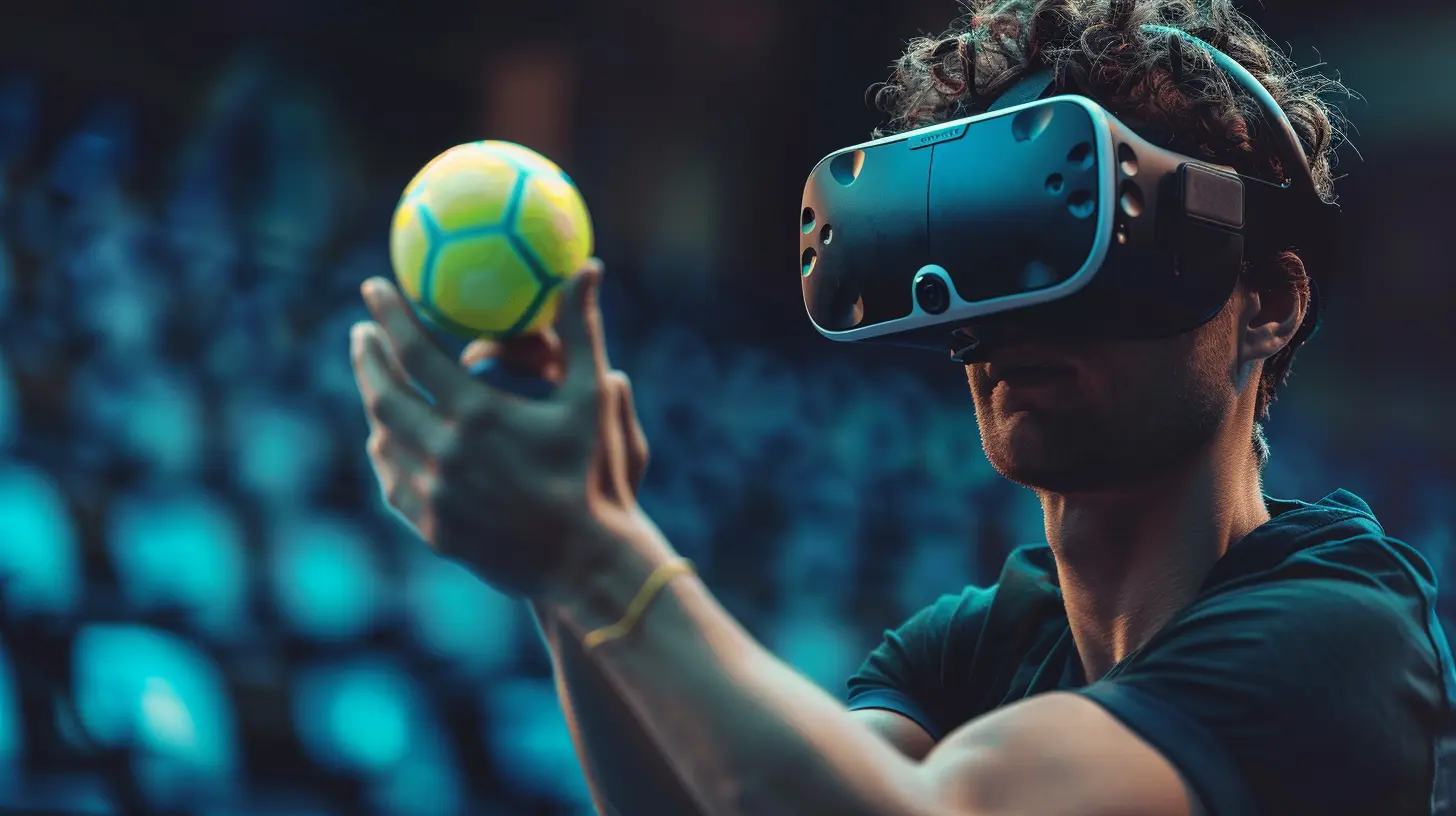
The Future of Virtual Reality in Sports Training
VR technology is evolving rapidly, and its potential in sports training is limitless. Some exciting future possibilities include:- Full-body motion tracking suits, allowing athletes to train with even more precision.
- Artificial Intelligence (AI) coaches that provide real-time feedback and suggest in-depth improvements.
- Haptic feedback technology, where athletes can "feel" the impact of virtual objects, adding an extra layer of realism.
- More advanced VR stadiums, allowing teams to compile full-game simulations for training.
As VR hardware becomes more affordable and widely available, we may see high schools and local sports teams integrating VR training into their programs—making the technology accessible to the next generation of athletes.
Conclusion
Virtual Reality is no longer just for gaming—it’s fundamentally changing the world of competitive sports training. From improving mental focus and decision-making to simulating lifelike game scenarios, VR provides an unprecedented advantage for athletes looking to push their limits.With major sports teams already integrating VR into their training routines, it’s only a matter of time before even amateur athletes start embracing this cutting-edge technology. Who knows? The future of sports might be as much about mastering virtual simulations as it is about practicing on the field.
all images in this post were generated using AI tools
Category:
Virtual RealityAuthor:

Jerry Graham
Discussion
rate this article
2 comments
Gunner Myers
This article highlights an exciting shift in sports training through virtual reality. By immersing athletes in realistic scenarios, VR not only enhances skills but also reduces injury risk. However, it’s essential to balance technology with traditional training methods to ensure well-rounded development. Looking forward to seeing how this evolves in sports!
March 25, 2026 at 5:43 AM
Jerry Graham
Thank you for your insightful comment! I completely agree—the integration of VR with traditional methods can truly elevate athletes' training experiences. Exciting times ahead!
Lincoln Carrillo
Fascinating insights! It's intriguing to see how virtual reality is reshaping athletic training—imagine the potential for enhancing skills and strategy in ways we’ve never considered!
March 24, 2026 at 1:38 PM
Jerry Graham
Thank you! I'm glad you found the insights fascinating. The potential of VR in athletic training truly is exciting and opens up new avenues for skill development and strategy.