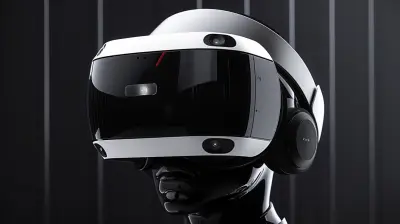
Next-Gen Operating Systems Built for the Metaverse
4 October 2026
Most conversations about the metaverse fixate on headsets. That is a mistake. Hardware gets the headlines, but the harder problem sits underneath: the operating system. A headset without a capable OS is a pair of expensive lenses. The software layer decides what you can build, how it performs, who controls your data, and whether developers can make money. That is why the next few years of OS design matter far more than the next few months of gadget releases.
This article looks at what an operating system built for persistent, spatial, multi-user computing actually requires. Not marketing copy. Architecture, trade-offs, and the decisions that will separate platforms that last from those that fold.

Why Existing Operating Systems Do Not Fit
Android, iOS, Windows, and Linux were designed around a simple assumption: one person, one screen, one input method at a time. Even multitasking is a polite fiction. The OS pauses background apps, rations CPU cycles, and treats the display as a flat rectangle.Spatial computing breaks every one of those assumptions.
When a user wears a headset, the OS must track head pose, hand joints, and eye gaze dozens of times per second. It must render two slightly different images at high frame rates or the user gets sick. It must understand the physical room, not just the screen. And if the experience is social, the OS must synchronize state across multiple devices with latency low enough that avatars feel present rather than remote.
You can bolt these features onto Android, and companies have. But bolting produces friction. Latency budgets get eaten by layers that were never designed for them. Security models built for app sandboxes struggle with shared spatial anchors. Power management tuned for phones drains batteries in twenty minutes under continuous passthrough.
The result is a class of systems that work in demos and strain in daily use. That gap is where genuine next-gen OS design lives.
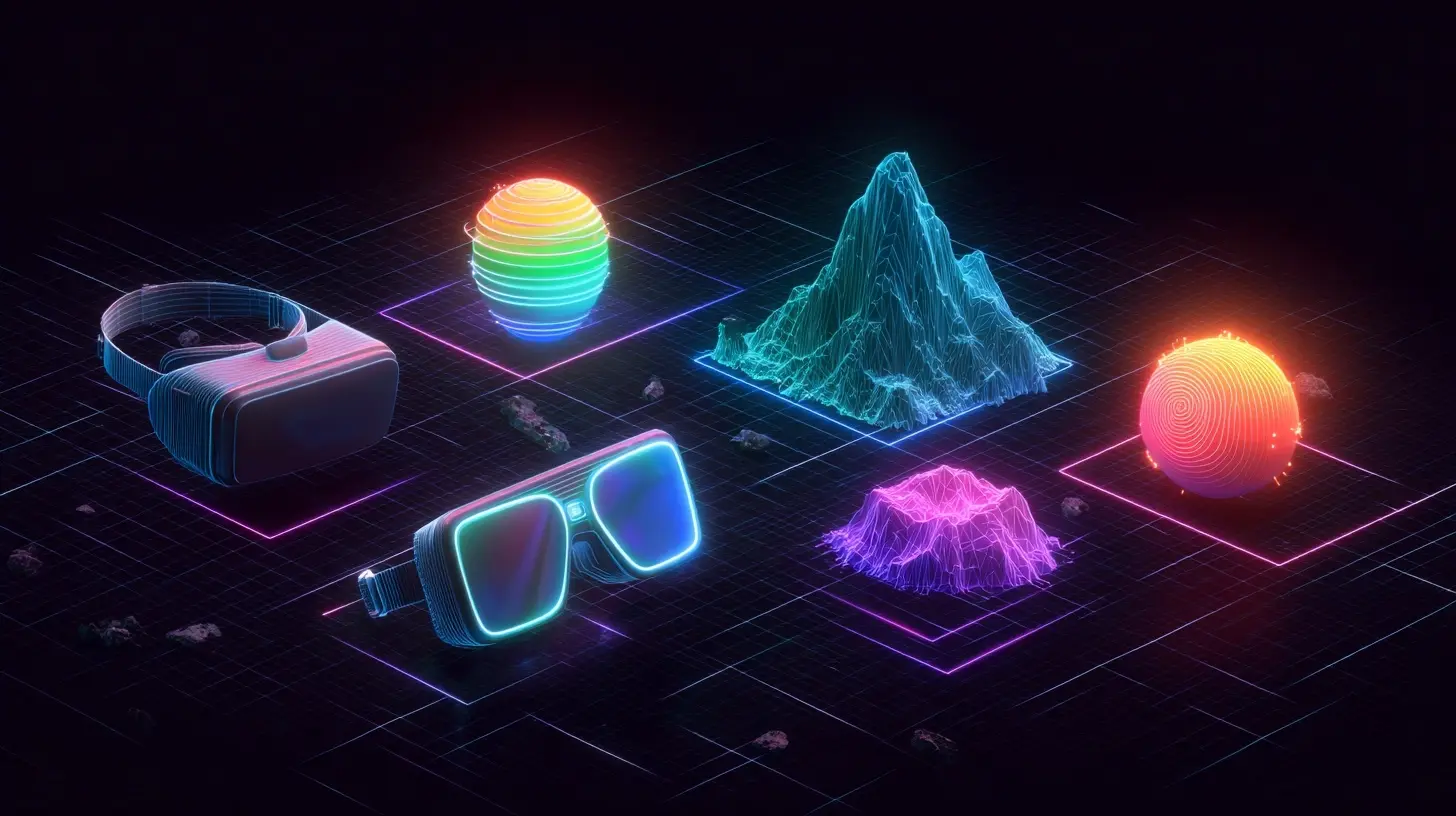
What Actually Defines a Metaverse-Native OS
It helps to separate marketing claims from engineering reality. A metaverse-native OS typically needs to solve five problems simultaneously, and the solutions interact in ways that make isolated optimization useless.1. Real-Time Perception as a Core Service
On a phone, camera access is an app permission. On a spatial OS, perception is infrastructure. The system continuously builds a map of the environment, recognizes surfaces, tracks hands, and estimates gaze. Apps subscribe to that stream rather than each running their own computer vision pipeline.Why does this matter? Because duplicated perception is wasteful and inconsistent. If two apps each estimate the position of your coffee table, they will disagree slightly, and virtual objects will jitter relative to each other. A shared spatial map fixes that. It also saves battery and reduces thermal load, which is the real constraint on wearable hardware.
The trade-off is centralization. A shared perception layer means the OS vendor sees everything the sensors see. That is a privacy question, not just a technical one, and it deserves a straight answer rather than a policy page nobody reads.
2. A Compositor That Understands Space
Traditional compositors stack windows in two dimensions. A spatial compositor arranges content in three, handles depth ordering, manages occlusion, and decides what renders at full fidelity versus what gets simplified.Good spatial compositors use foveated rendering: they render the small area you are looking at in high detail and everything else cheaply. This works because human vision is only sharp in a narrow central region. Done well, users cannot tell. Done poorly, the periphery looks blurry when they move their eyes, which feels wrong in a way people struggle to articulate but immediately notice.
3. Multi-User State as a First-Class Primitive
Here is where most current systems fall short. They treat networking as something apps handle. A metaverse OS should treat shared state the way a traditional OS treats the file system: as a managed resource with consistent semantics.That means built-in conflict resolution, authority models for who owns which object, and predictable latency behavior. If two users grab the same virtual object at the same moment, the OS should have a defined answer. Right now, every app reinvents this, usually badly.
4. Identity, Presence, and Avatars
Your avatar is not a profile picture. It is an interface. It carries your gestures, your voice, your personal space preferences. A metaverse OS needs a persistent identity layer that travels across apps without forcing you to recreate yourself each time.The hard part is not the avatar. It is the consent model. Who can see your face tracking data? Can an app infer your emotional state from gaze and micro-expressions? Should it be allowed to? These are OS-level policy decisions, and getting them wrong poisons the platform.
5. Power and Thermal Discipline
A headset is a battery, a computer, and a heater strapped to your face. Every architectural choice has to respect that. Aggressive perception, high refresh rates, and continuous networking all compete for the same thermal budget.Systems that win here tend to be ruthless about scheduling. They predict what you will need and precompute it. They degrade gracefully when the battery drops. They know that a stable 72 frames per second beats an unstable 120.

The Architectural Divide: Monolithic Versus Modular
There are two broad philosophies, and the choice shapes everything downstream.Monolithic spatial OS. One vendor controls the kernel, perception stack, runtime, and store. Apple's visionOS sits closest to this model. The advantage is tight integration: latency is predictable, the perception pipeline is consistent, and developers get a coherent API surface. The disadvantage is a single gatekeeper and slower experimentation.
Modular or open spatial OS. The kernel and perception layers are separable, and multiple runtimes can coexist. Android XR and various open-source efforts lean this way. The advantage is competition and flexibility. The disadvantage is fragmentation, inconsistent performance, and a much harder security story.
Neither is obviously correct. If you are building a consumer product where reliability decides whether people keep wearing the device, integration wins. If you are building for enterprises with specific compliance or hardware needs, modularity matters more. The mistake is pretending one approach suits every context.

Practical Considerations Before You Commit
If you are evaluating a platform for a product or an internal deployment, here is what actually predicts success.Latency budgets, not peak numbers. Ask what the motion-to-photon latency looks like under load, not in a controlled demo. Anything above roughly 20 milliseconds starts to feel wrong for hand tracking. The threshold varies by task, but the principle holds: consistency beats peaks.
Perception accuracy in bad conditions. Dim rooms, reflective surfaces, and cluttered desks break many tracking systems. Test in real environments, not showrooms.
Data governance. Where does spatial mapping data go? Is it processed on-device or uploaded? Can you delete it? For enterprise deployments, this is often the deciding factor.
Developer economics. A platform with beautiful APIs and no revenue path attracts hobbyists, not studios. Look at store terms, payment splits, and whether the vendor competes with its own developers.
Upgrade path. Hardware cycles in this space are short. Will your software survive the next headset, or does it depend on sensors that will be replaced?
Common Mistakes and Misconceptions
A few beliefs keep causing trouble."The metaverse is VR." It is not. Spatial computing spans augmented reality, mixed reality, and flat-screen participation. Systems that assume a headset-only world cut themselves off from most users.
"More sensors solve everything." Sensors generate data, and data costs power and compute. A well-tuned system with fewer sensors often outperforms a sensor-heavy system with poor fusion. Quality of fusion beats quantity of input.
"Porting 2D apps is enough." Wrapping a phone app in a floating panel is a starting point, not a strategy. Spatial interfaces have different ergonomics. Text is harder to read at distance. Input is less precise. Apps that ignore this feel like visitors, not residents.
"Privacy can be patched later." Perception data is different from browsing history. It captures your home, your face, your attention. Retrofitting consent into a system that was built to collect everything is painful and usually incomplete.
Where This Is Heading
The most interesting work is happening at the seams. On-device AI models that run perception without a cloud round trip. Open standards for spatial anchors so objects persist across apps and vendors. Hybrid architectures where heavy rendering happens remotely and lightweight interaction happens locally.Nobody has solved this yet, and anyone claiming otherwise is selling something. What is clear is that the OS layer, not the headset, will determine which platforms feel like places and which feel like demos. That is where the real competition is, and it is only beginning.
all images in this post were generated using AI tools
Category:
Operating SystemsAuthor:

Jerry Graham
Discussion
rate this article
1 comments
Maggie Wheeler
Great insights on next-gen operating systems! Excited to see how they will shape the future of the metaverse.
October 7, 2026 at 2:47 AM
Jerry Graham
Thanks for the feedback! The future of operating systems is indeed exciting, especially with the metaverse in mind. Let's see where it takes us!