The Role of AR Glasses in Smart Cities
28 February 2026
Imagine walking down a bustling city street, and instead of digging your phone out every time you need a map, restaurant review, or translation, all the info floats right in front of your eyes. That’s not sci-fi anymore—it’s the magic of AR glasses. And when we talk about building smarter cities, these glasses could actually be a game-changer.
In this article, we're diving deep into the role of AR (Augmented Reality) glasses in smart cities. From helping emergency services respond faster to revolutionizing public transportation, AR glasses aren't just fancy gadgets anymore—they're becoming essential tools for urban living.
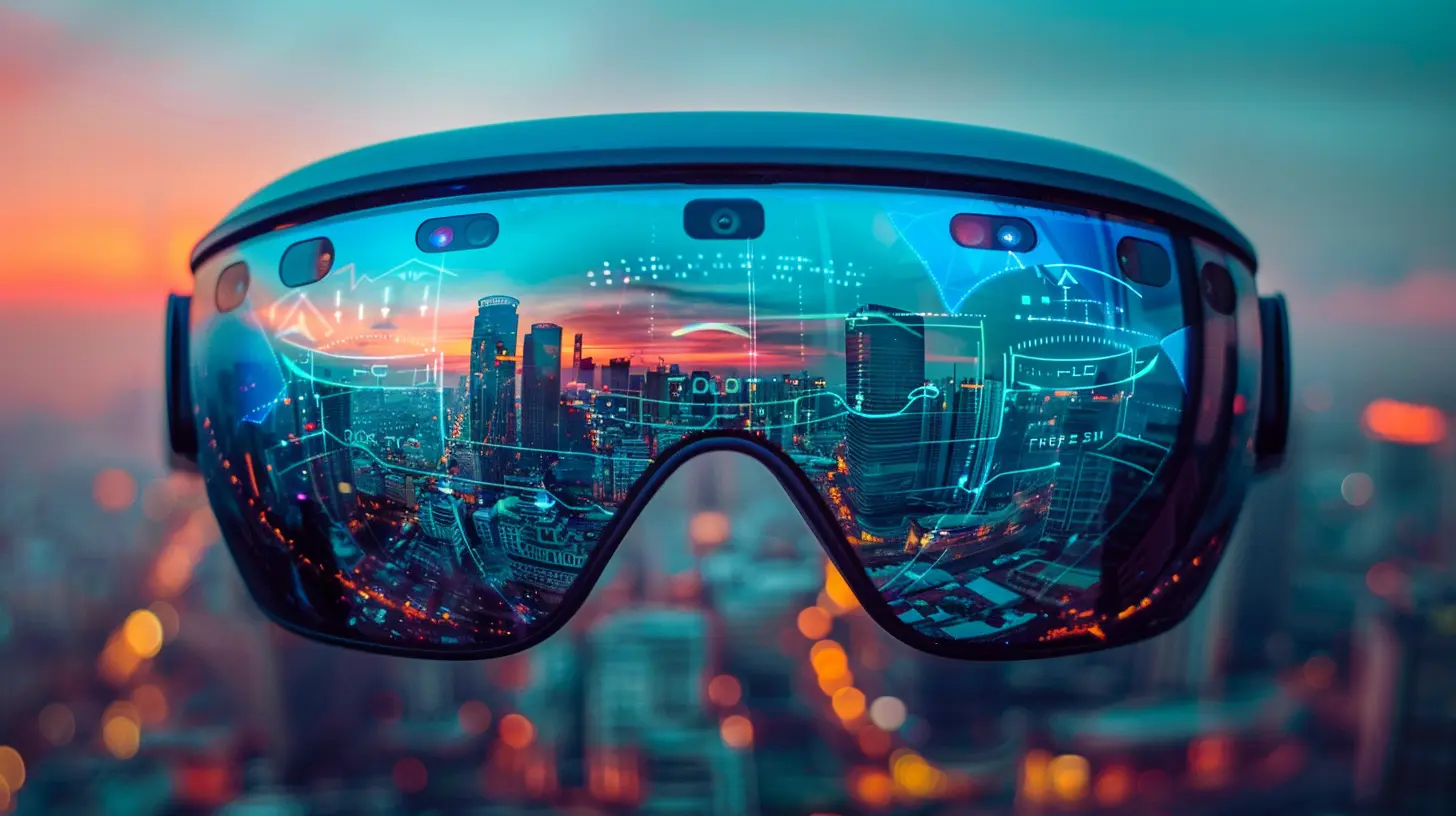
What Are AR Glasses, Really?
Let’s clear the air first—what are AR glasses?AR glasses are wearable devices that project digital information—like text, images, and navigation—right into your line of sight. Unlike VR (Virtual Reality) headsets that immerse you in an entirely digital world, AR glasses blend virtual elements with the real world. It's like adding a digital layer over what you’re already seeing.
Think of having a smart assistant whispering helpful facts into your eyes rather than your ears. Pretty cool, right?
Smart Cities and Why They Matter
Before we get into the nitty-gritty, let’s talk about smart cities.Smart cities use technology to improve infrastructure, services, and living standards. They rely on data, sensors, and automation to make cities more efficient, safe, and livable. Whether it's traffic management, energy use, or waste disposal, everything is optimized using tech.
Now, throw AR glasses into that mix, and suddenly, you’ve got a more connected and intuitive ecosystem where information is seamlessly accessible—when and where you need it the most.
AR Glasses: Bridging the Gap Between People and Tech
Ever feel overwhelmed by tech? Buttons, screens, apps, passwords—it can get exhausting.AR glasses can simplify all that. Instead of fiddling with your phone or laptop, AR glasses overlay the necessary info right in front of you—in real-time. They cut through the digital noise and serve up what’s relevant in the moment.
Here’s how that plays out in smart cities:
- Navigation made seamless: No more staring at your phone and bumping into things. Directions show up on the street in front of you.
- Instant translation: Foreign language signs? Done. AR glasses translate them instantly.
- Real-time city updates: Want to know why there’s a crowd ahead or which subway entrance is closed? You’ll see it live, right in your field of vision.
Enhancing Public Transportation
Let’s be real—navigating public transport in a large city can be a pain, especially if you're a tourist or new resident.AR glasses can display bus or train schedules, point out the nearest exits, show walking routes in large stations, or guide you through transfer points. Imagine a subway map appearing as you're walking through an underground station, with arrows showing where to go.
Better yet? These glasses can also factor in delays or disruptions, guiding you to alternative routes in real-time.
Supporting Emergency and Healthcare Services
In high-stress situations, every second matters. AR glasses can provide EMTs, firefighters, and even police officers with critical data on the go.Let’s take paramedics, for example. When they’re attending to a patient, AR glasses can display vital signs, medical records, or drug info without having to glance at any other device. It keeps their hands free and their attention exactly where it needs to be—on the patient.
Similarly, firefighters entering a burning building could use AR glasses to view a 3D layout of the structure, helping them avoid hazards and locate victims faster.
That’s not just cool tech—that's life-saving tech.
Empowering Urban Planners and Maintenance Crews
Urban development and maintenance work is tough. Whether it's laying down new fiber optic cables or checking water lines, these jobs are super detailed and often buried under paperwork (literally and figuratively).With AR glasses, workers can overlay infrastructure maps onto the real world. Need to find a specific pipe underground? AR can show you right where to dig—avoiding costly mistakes and wasted time.
Urban planners can also visualize changes in real time. Want to see how a new building would look on a corner block? AR can project that 3D structure into real space, letting decision-makers—and locals—actually see the future before it’s built.
Smart Retail and Commerce
If you’ve ever wandered through a mall trying to find one specific store, you know the struggle. AR glasses can guide shoppers, highlight sales or product info, and even let you virtually “try on” clothes without ever entering a fitting room.For smart cities that thrive on tourism and commerce, this could mean a major boost in local business engagement. Shoppers stay informed and entertained, while businesses get better visibility—literally.
Making Tourism Truly Interactive
Ever been on a tour but zoned out because the guide was hard to hear or you were just too tired to pay attention?Now imagine walking past a monument and having historical facts, archival footage, or 3D reconstructions pop up automatically. It’s like having a personal digital tour guide, minus the awkward group huddles.
Tourism boards in smart cities can harness AR glasses to offer immersive city experiences. Museums, heritage sites, art trails—everything becomes interactive and engaging. That’s next-level storytelling.
Improving Accessibility for All
This is one area where AR glasses can be truly transformative.For individuals with visual or hearing impairments, AR glasses can provide real-time subtitles during conversations or translate sign language into text. They can highlight obstacles for visually impaired users or even read out signs and menus.
In a smart city context, that means independence, confidence, and inclusion for everyone. Because hey, technology shouldn’t just work for the tech-savvy—it should work for everyone.
Boosting Safety and Security
AR glasses can serve as an extra set of eyes.City surveillance teams or police officers equipped with AR could receive real-time alerts, facial recognition data (with ethical oversight, of course), or get instant access to live camera feeds. This could help prevent crimes or respond to them more effectively.
They also help in disaster management. In the event of a flood, blackout, or public emergency, AR glasses can direct citizens toward safe zones, helping first responders manage evacuations or re-routes more smoothly.
The Role of AI in AR Glasses
AR glasses in smart cities are even more powerful when paired with AI.Imagine your glasses knowing your routine—like when you head to work or grab coffee—and then offering shortcuts, warnings about traffic, or even coffee shop recommendations based on crowd levels.
AI can personalize what shows up in your AR display, making it context-aware and proactive. It's like having a city that thinks on its feet—and never forgets anything.
Challenges We Still Need to Tackle
Of course, it’s not all sunshine and seamless tech.Here are some hurdles we’re still working through:
- Privacy concerns: AR glasses can record data, which raises surveillance and consent issues.
- Battery life: These things still need to last longer to be reliable day-to-day tools.
- Affordability: Currently, AR glasses aren’t cheap. Widespread use depends on accessibility.
- User adaptation: Not everyone is ready to strap on glasses every day. There’s a cultural shift required.
But just as smartphones started out clunky and expensive before becoming universal, AR glasses are on that same path. And with the speed at which technology evolves, we’re closer than ever to solving these issues.
So, What’s the Future Look Like?
The future? It’s wearable.AR glasses will likely become as commonplace as smartphones. As smart cities evolve and become more dynamic, having real-time info available in your line of sight won’t just be convenient—it’ll be expected.
Kids might one day wonder why we ever looked down at tiny screens to get our info, instead of just looking up.
Final Thoughts
We’re standing at the edge of something incredible.AR glasses have the potential to make cities smarter, lives easier, and interactions more meaningful. They bridge the digital and physical worlds in a way that feels natural and human—not intrusive.
As technology becomes more deeply woven into our environments, AR glasses could very well become the new lens through which we see the world—enhancing every step, every decision, every connection.
And honestly? We can’t wait to see what’s next.
all images in this post were generated using AI tools
Category:
Ar GlassesAuthor:

Jerry Graham
Discussion
rate this article
2 comments
Brittany Baker
AR glasses can revolutionize urban living by enhancing navigation, improving public safety, and providing real-time data overlays. As smart cities evolve, these devices will bridge the gap between digital and physical environments, fostering smarter, more connected communities.
March 2, 2026 at 1:18 PM
Jerry Graham
Absolutely, AR glasses have the potential to transform urban experiences. By integrating digital information into our physical surroundings, they can make navigating cities easier and improve overall safety. It's an exciting time for smart city development.
Ingrid Adkins
This article brilliantly highlights the transformative potential of AR glasses in shaping smart cities! Their ability to enhance navigation, improve public service delivery, and foster community engagement is truly exciting. Embracing this technology could lead to more connected, efficient, and vibrant urban environments. Great insights!
February 28, 2026 at 12:32 PM
Jerry Graham
Thank you for your thoughtful comment! I’m glad you found the potential of AR glasses in smart cities exciting. Their impact could indeed reshape urban living for the better!