VR Headsets: Breaking Boundaries in Virtual Reality
19 June 2026
Have you ever slipped on a VR headset and felt like you were instantly transported to another world? Like, one second you're standing in your living room—and the next, you're battling dragons, exploring Mars, or attending a virtual concert with friends from across the globe. That’s the magic of Virtual Reality (VR), and at the center of it all are the headsets that make it possible.
VR headsets are no longer just for gamers or tech geeks. They're changing the way we work, play, learn, and even heal. Let's dive deep into how VR headsets are breaking the boundaries of what's possible and reshaping our lives in ways that, honestly, feel straight out of a sci-fi movie.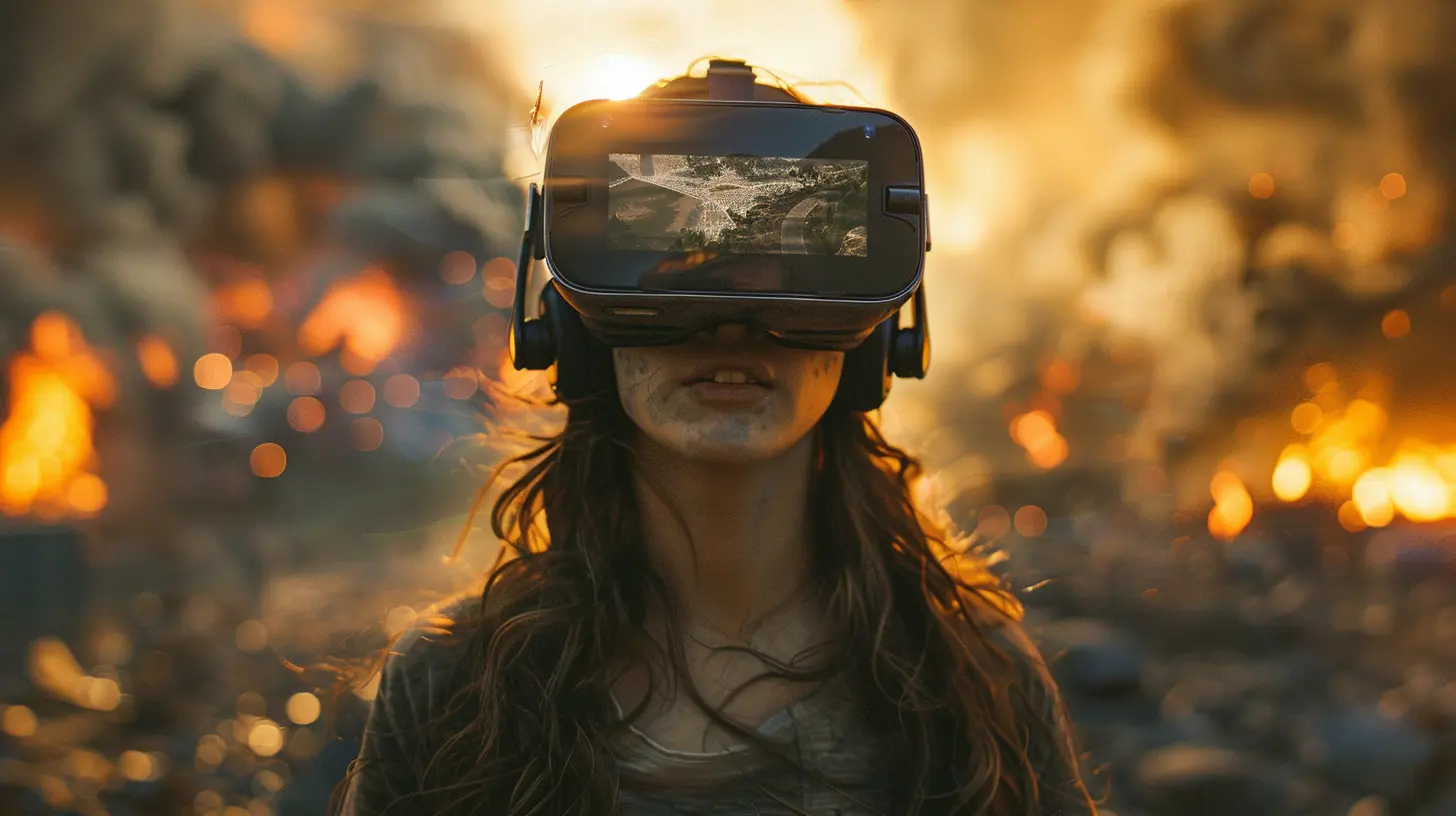
What Exactly Are VR Headsets?
Let’s start with the basics.A VR headset is a head-mounted device that covers your eyes and ears to fully immerse you in a computer-generated environment. Using sensors, motion tracking, screens, and sometimes even hand controllers, VR headsets trick your brain into thinking you’re somewhere else entirely.
Pretty wild, right?
But it's not just the visuals—it's the whole experience. You can look around, interact with virtual objects, and even feel feedback through haptic controllers. That sense of presence? That’s the magic sauce that makes VR so mind-blowing.
From Clunky to Cool: The Evolution of VR Headsets
Remember the early days of VR? Clunky, expensive, and only available for big research labs or Hollywood studios.Fast forward to today, and VR headsets have drastically evolved. Now, we’ve got sleek, affordable, and wireless devices that anybody can use—from high-school students to healthcare professionals.
A Quick Snapshot of the Journey:
- 1990s: Nintendo’s Virtual Boy flopped hard, but it planted a seed.- 2010s: Oculus Rift kickstarted the modern VR era.
- Now: Meta Quest, HTC Vive, PlayStation VR, and Apple Vision Pro are pushing boundaries daily.
And guess what? We’re just scratching the surface.
Types of VR Headsets: What's Out There?
Not all VR headsets are created equal. Some require a powerful PC. Others run entirely on their own. Let’s break them down:1. Standalone VR Headsets
These don’t need a computer, smartphone, or any external sensors. Everything’s built-in.- Examples: Meta Quest 2, Quest 3
- Pros: Portable, easy to use, wireless
- Cons: Limited processing power compared to PC-based
2. Tethered VR Headsets
These plug into your computer or gaming console to use its horsepower.- Examples: Oculus Rift S, HTC Vive Pro, PlayStation VR2
- Pros: High performance, better graphics
- Cons: Requires cable connection and external hardware
3. Mobile VR Headsets
Works by connecting your smartphone to a headset shell (Think Google Cardboard or Samsung Gear VR).- Pros: Super affordable
- Cons: Outdated tech, limited usability
Each type has its strengths—and your ideal choice depends on what you want from your VR experience.
How VR Headsets Are Changing the Game Across Industries
You’d be surprised how many areas VR has started to revolutionize.? Gaming That Feels Real
This one's a no-brainer. VR has taken gaming to a level that feels like stepping into your favorite game. Whether it's slashing beats in Beat Saber or dodging bullets in SUPERHOT VR, you're not just playing—you’re inside the game.? Healthcare That Heals
VR is being used to train surgeons, manage pain, and treat PTSD. Imagine a doctor practicing a complex surgery in VR before the actual operation. Yep, that’s happening. It’s saving lives and improving patient outcomes.? Virtual Workspaces
Remote work is here to stay, and VR is making it more interactive. Companies like Meta and Microsoft are pushing virtual collaboration tools where you can attend meetings, brainstorm ideas, or design projects—all in a 3D environment. Goodbye Zoom fatigue.? Learning Like Never Before
Why read about ancient Rome when you can walk its streets in VR? From history to chemistry to space exploration, VR is making education insanely immersive and fun.?️ Shopping in 3D
Retail's getting a makeover too. Try on clothes, check out furniture in your living room, or walk through a virtual store—all from your couch. Brands like IKEA, Nike, and even Walmart are hopping on the VR train.? Mental Health Support
From guided meditations to exposure therapy for phobias, VR is helping people manage mental health in creative ways. It’s like having a therapist in your pocket—literally.The Technology Behind VR Headsets
Ever wonder what kind of tech is packed into these sci-fi-looking devices?Display & Resolution
Better displays mean more realistic experiences. VR headsets now come with high-resolution OLED or LCD screens, offering crisp visuals and reduced screen-door effect (that pesky grid-like pattern).Field of View (FOV)
The wider the FOV, the more natural everything feels. Most modern headsets have FOVs ranging from 90° to 120°, which helps mimic human vision pretty well.Refresh Rate
Imagine a VR game lagging—it’s nausea city. Higher refresh rates (90Hz or more) ensure smoother visuals and reduce motion sickness.Tracking & Sensors
Most headsets have inside-out tracking now, meaning they use built-in cameras to track your movements—no more setting up external sensors around your room.Haptics & Controllers
Feel the tension in a bowstring or the rumble of an engine with haptic feedback. Controllers and even gloves are getting smarter at simulating touch and force.Big Players in the VR Headset Market
Let’s talk brands. Some tech giants are leading the charge in VR innovation.- Meta (formerly Oculus): Affordable and user-friendly. Quest 3 is a solid all-rounder.
- Sony: PlayStation VR2 is a gamer’s dream.
- HTC: Vive series is robust, great for pro users.
- Valve: Index offers top-tier performance and finger tracking.
- Apple: Just launched Vision Pro—premium, mixed-reality powerhouse blending VR and AR.
Each of these has its niche. Meta is great for casual users. HTC shines in enterprise. Apple’s Vision Pro? Definitely aimed at professionals, creators, and those living in the premium tech bubble.
Challenges That Still Exist
Even though VR has come a long way, it's not perfect. Here’s what’s holding it back a bit:- Price Tags: Top-tier headsets can be pricey (Apple, we see you).
- Motion Sickness: Not everyone adapts quickly to VR. Improved refresh rates help, but some folks still struggle.
- Wires & Bulk: Wireless options exist, but many setups still involve tethers or bulky gear.
- Limited Content: Not all developers have jumped on board yet.
- Social Isolation: VR can be immersive, but it can also isolate you from the real world—balance is key.
The Future of VR Headsets: Where Do We Go From Here?
So, what does the future hold? Spoiler alert: it's exciting.1. Full-Body Tracking
We’re heading toward full-body VR experiences—with motion capture suits and sensors that replicate your every move inside a digital world.2. Mixed Reality Integration
Headsets will blend virtual and real environments seamlessly. Think AR + VR = MR (Mixed Reality). Apple Vision Pro is already heading that way.3. Smaller, Lighter, Sleeker
Future VR headsets will be more like glasses than goggles. Style and comfort will finally meet.4. AI + VR
AI can personalize your VR world, adapt gameplay based on your mood, or even act like smart NPCs (non-player characters) that learn as you interact.5. Social & Metaverse-Like Worlds
Platforms like Horizon Worlds, VRChat, and others are laying the groundwork for fully interactive, persistent digital social spaces. Think of it as Facebook meets Ready Player One.Are VR Headsets Worth It?
If you're still on the fence about diving into VR, ask yourself:- Do you enjoy immersive experiences?
- Are you a gamer, creative, educator, or tech enthusiast?
- Do you want to explore new ways to connect and learn?
If you nodded even once, a VR headset might just be one of the coolest additions you can make to your tech setup.
Sure, there's an initial learning curve and maybe a dent in your wallet—but what you gain is pretty priceless. A new way to experience the world, without ever leaving your room.
Final Thoughts
VR headsets are doing more than just entertaining us—they’re redefining what’s possible in our personal and professional lives. From gaming to education, therapy to collaboration, VR is showing us that reality isn’t something we’re stuck with—it’s something we can shape, bend, and even escape.So, whether you're a newbie curious about stepping into virtual worlds or a seasoned user waiting for the next big thing—one thing's for sure: the VR revolution is just heating up.
Ready to plug in?
all images in this post were generated using AI tools
Category:
Vr HeadsetsAuthor:

Jerry Graham
Discussion
rate this article
1 comments
Casey Hill
In a realm where dreams intertwine with pixels, VR headsets invite us to dance through the unknown. Each new boundary shattered reveals wonders untold, pushing the limits of imagination. Embrace the journey, where reality bends, and the extraordinary comes alive at our fingertips.
August 2, 2026 at 4:00 AM
Jerry Graham
Thank you for capturing the essence of VR. It's an exciting time to explore these new dimensions and experience the extraordinary firsthand.