What Augmented Reality on Smartphones Could Look Like by 2027
9 September 2026
Augmented reality on smartphones has spent the better part of a decade stuck in a strange loop. Every year, a new demo shows a virtual tape measure, a floating dinosaur, or a furniture catalog that lets you place a sofa in your living room. Then the app gets uninstalled. The hardware gets faster, the software gets smarter, but the fundamental question remains: why would anyone use this daily?
By 2027, that answer will finally start to materialize. Not because of a single breakthrough, but because of a convergence of technologies that have been maturing in the background for years. The smartphone AR experience in 2027 will not be about seeing dragons on your desk. It will be about utility, context, and the quiet integration of digital information into the physical world. This article looks at the realistic trajectory, the practical constraints, and what you should actually expect from your pocket device in the next few years.
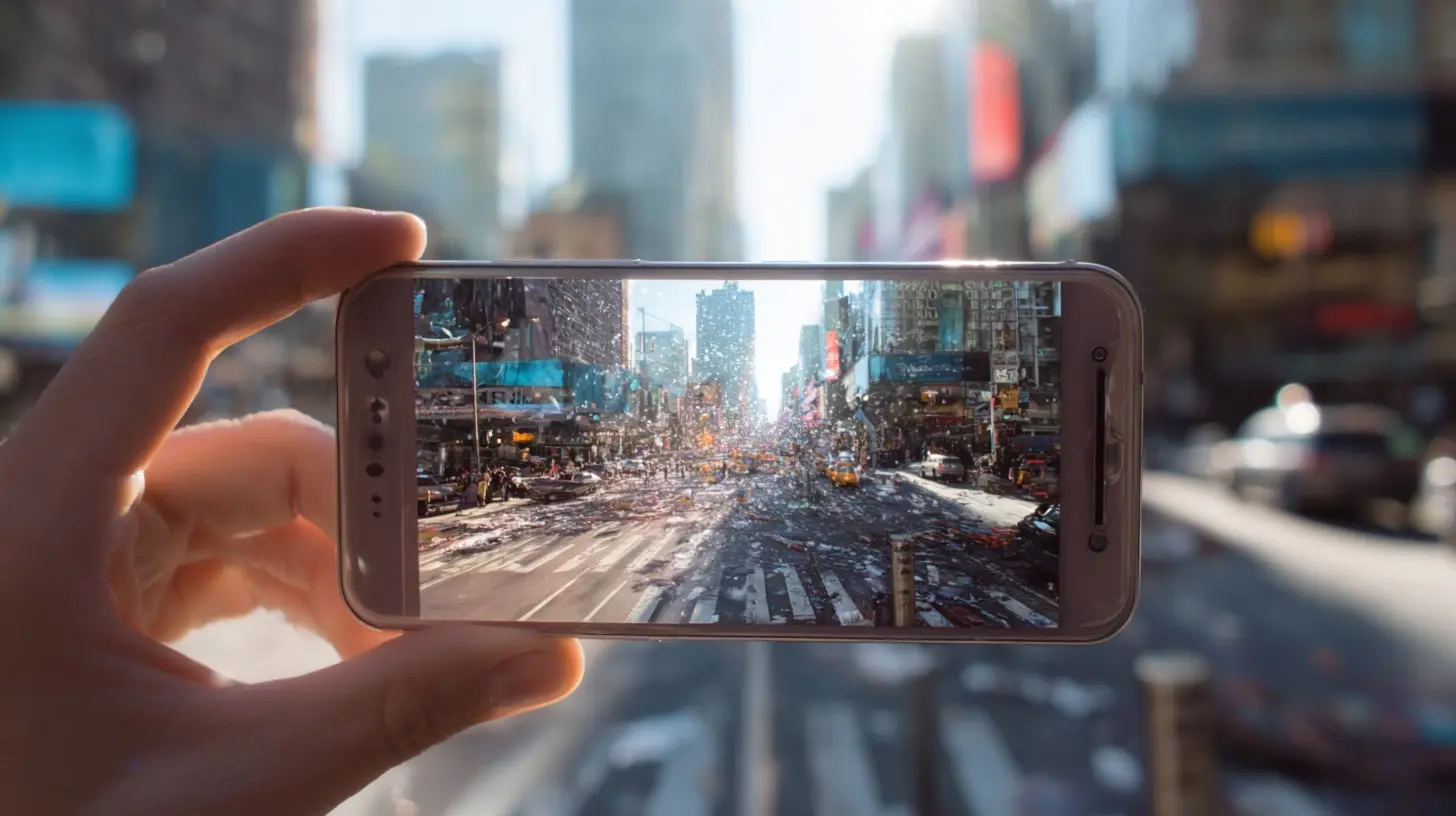
The Hardware Reality Check
Let us start with what will not happen. Smartphones will not morph into transparent glass slabs or holographic projectors by 2027. The physical form factor is here to stay, and that is fine. The real progress will happen inside the camera module and the sensors that surround it.Depth Sensing Becomes Standard
The biggest hardware shift is the widespread adoption of time-of-flight (ToF) sensors and structured light modules across mid-range and flagship devices. In 2024, these sensors existed mostly for portrait mode bokeh and face unlock. By 2027, they will be doing far heavier lifting. The smartphone will have a continuous, low-power depth map of your immediate environment. That changes everything because AR no longer needs to guess the geometry of a room. It will know the distance to your wall, the angle of your floor, and the relative position of objects in real time.This sounds simple, but it is the difference between AR that floats awkwardly and AR that sits. A virtual sticky note on your refrigerator will stay on the refrigerator even when you walk around it. A projected measurement will be accurate to millimeters, not centimeters. The phone will understand that your coffee mug is closer than your keyboard, which means virtual objects can be occluded properly. When you reach out to touch a virtual button, the phone will know your finger is in front of it.
The battery cost of continuous depth sensing is non-trivial. Expect manufacturers to solve this with dedicated low-power co-processors that handle depth data without waking the main application processor. This is not speculative. Apple and Qualcomm have been shipping neural processing units and ISP blocks designed for exactly this kind of always-on spatial awareness. By 2027, the hardware will be mature enough that the phone can run a basic spatial map in the background without draining your battery in two hours.
The Camera as a Sensor Array
The single camera is already a thing of the past. By 2027, the rear camera array will be a multi-spectral sensor suite. You will have the standard wide, ultra-wide, and telephoto lenses, but they will be joined by dedicated spectral sensors that capture lighting conditions, color temperature, and even material properties. This matters for AR because virtual objects need to be rendered with accurate lighting to feel real.Imagine pointing your phone at a matte wooden table versus a glossy white countertop. A 2027 phone will measure the ambient light, the reflective properties of the surface, and the direction of shadows. The virtual object will then be rendered with the correct diffuse and specular responses. This is the difference between a digital chair that looks pasted onto a photo and one that looks like it genuinely belongs in the room.
This is not science fiction. Companies like Lumus and Qualcomm have been working on computational photography pipelines that capture light field data and material properties. The challenge is computational cost, but with on-device AI accelerators becoming more powerful, real-time material estimation is feasible. By 2027, your phone will not just see a room. It will understand the lighting model of that room.
The Software Shift: From Apps to Persistent Layers
The biggest failure of smartphone AR so far has been the app-centric model. You have to open an app, point your camera at something, and hope the experience works. That is not how people use their phones. We use apps for specific tasks, but we expect information to be available when we need it, not when we remember to open a dedicated AR viewer.The Spatial Browser
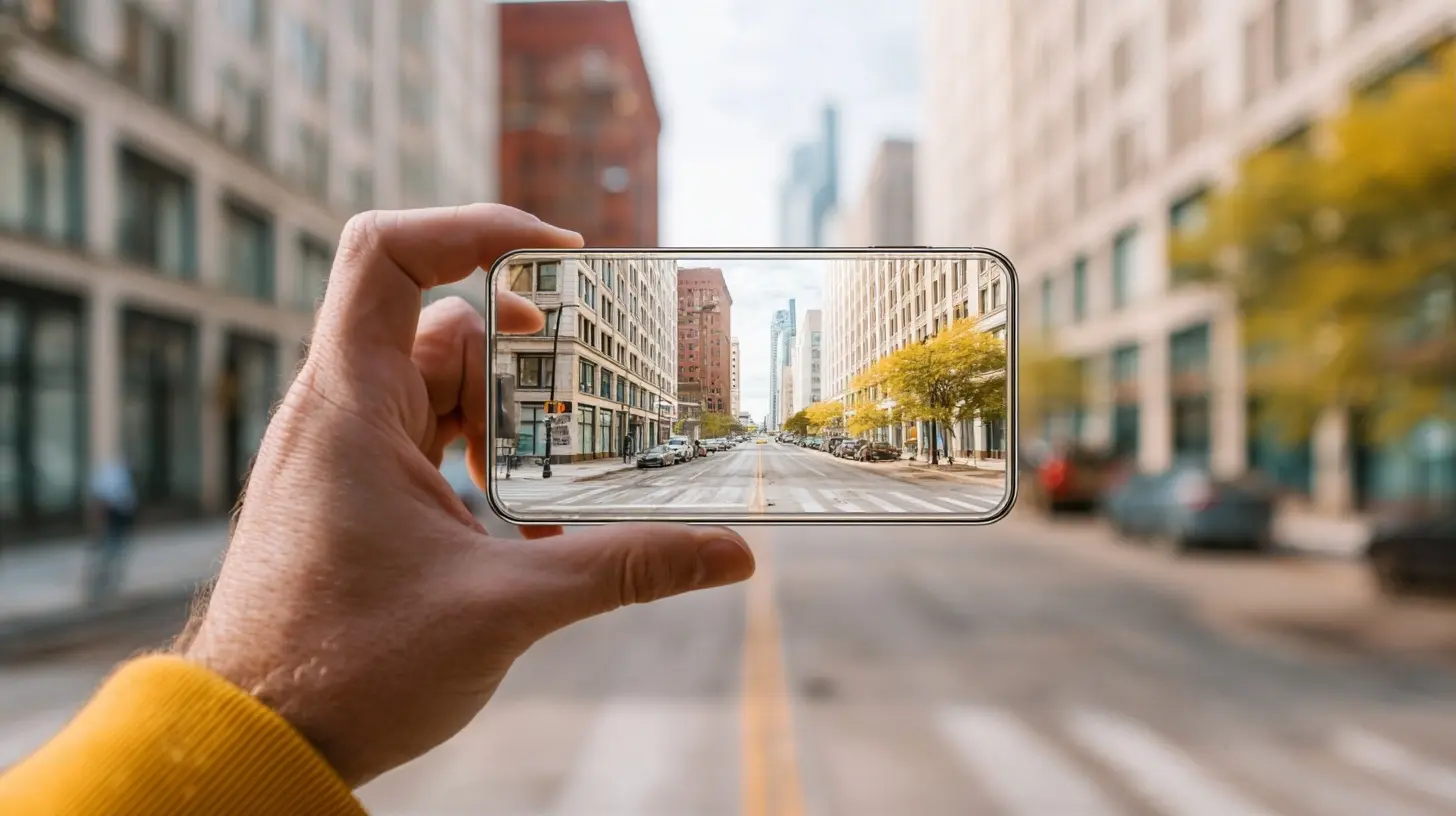
By 2027, expect a shift toward what we can call a spatial browser. Instead of opening a separate AR app, the camera viewfinder will become a search interface. You point your phone at a building, a product, a landmark, or a street, and the phone overlays relevant information. This is an evolution of Google Lens and Apple's Visual Look Up, but with a persistent spatial anchor.For example, point your phone at a restaurant. The overlay will show the menu, the current wait time, and reviews, but it will also show directional arrows to the entrance if you are walking toward it. Point at a street sign, and you get a mini-map with your walking route superimposed on the real sidewalk. Point at a piece of furniture in a friend's apartment, and you see a price comparison plus a one-tap button to order the same item.
This works because the phone is no longer relying on a single image. It is combining GPS, compass data, the depth map, and visual recognition to build a persistent understanding of where you are and what you are looking at. The AR layer becomes an ambient interface, not a destination.
Persistent Content and the Shared Map
For AR to be useful beyond novelty, virtual content must persist in a location. You leave a digital note on your desk at home. When you come back tomorrow, the note should still be there. This requires a shared spatial map that multiple devices can access and update.Big tech companies have been building this for years. Google's ARCore has had Cloud Anchors since 2018. Apple has ARKit with world maps. The problem has been adoption and fragmentation. By 2027, expect a more unified approach, likely driven by the operating system rather than individual apps. Your phone will maintain a local spatial map of places you visit frequently, and it will sync lightweight versions of that map to the cloud. When you revisit a location, the map loads instantly, and any AR content you placed there appears exactly where you left it.
This raises real questions about privacy. A cloud-synced map of your home is a sensitive data set. The practical resolution will be local-first processing. The map stays on your device, and only anonymized feature points are shared when you explicitly opt into a shared experience. This is a trade-off. Shared maps enable multiplayer AR games and collaborative design, but they require trust. Expect privacy to be the biggest barrier to widespread persistent AR adoption, not technology.
The Killer Use Cases by 2027
Furniture placement and gaming will still exist, but they will not be the reason AR becomes mainstream. The real value will be in information retrieval and task assistance.Navigation and Wayfinding
Indoor navigation is where AR will finally shine. GPS fails inside buildings, but a depth camera and visual odometry do not. By 2027, expect major airport terminals, shopping malls, hospitals, and conference centers to have digital maps that your phone can access. When you hold up your phone, you will see a translucent path on the floor, with arrows that turn as you turn. This is not a static overlay. The phone is tracking your movement relative to the environment, so the path stays glued to the real floor.The user experience will be far superior to looking at a 2D map. You will not need to mentally rotate a map to match your orientation. The phone does that for you. This is a genuinely useful application because it solves a real problem: getting lost in a complex space. The technology is already here. The missing piece is the availability of accurate indoor maps and the willingness of facility owners to provide them. By 2027, the logistics will be solved for most major public venues.
Repair and Maintenance Guidance
Another strong use case is hands-on guidance. Imagine pointing your phone at a bicycle chain, a car engine, or a home thermostat. The AR overlay will highlight the specific screw you need to remove, show a virtual arrow indicating the direction to turn it, and display a short animation of the correct motion. This is far more effective than reading a manual or watching a video, because the instructions are contextualized to the exact object you are looking at.This will be powered by on-device object recognition combined with a database of repair procedures. By 2027, expect this to be a standard feature in home improvement apps, and it will be excellent for older adults who struggle with small text and complex diagrams. The key advantage over video is interactivity. You can move your phone around the object, and the instructions adjust in real time. You can zoom in on a specific part, and the overlay shows you the torque specification for that specific bolt.
Real-Time Translation and Text Understanding
Translation apps have been around for years, but the 2027 version will be seamless. Point your phone at a menu in a foreign language, and the text is replaced in real time with your language, but the replacement will respect the physical layout. The font will match the original, the text will wrap correctly, and it will look as if the menu was printed in your language. This requires more than OCR. It requires understanding the layout of the document or sign, which the depth sensor and spatial mapping enable.The bigger leap is understanding context, not just words. Point at a warning sign on a construction site. The phone will not just translate the words. It will recognize that it is a hazard warning and provide a safety explanation in your language, including what kind of hazard it is and what precautions you should take. This is a semantic layer on top of translation, and it will be a standard feature by 2027.
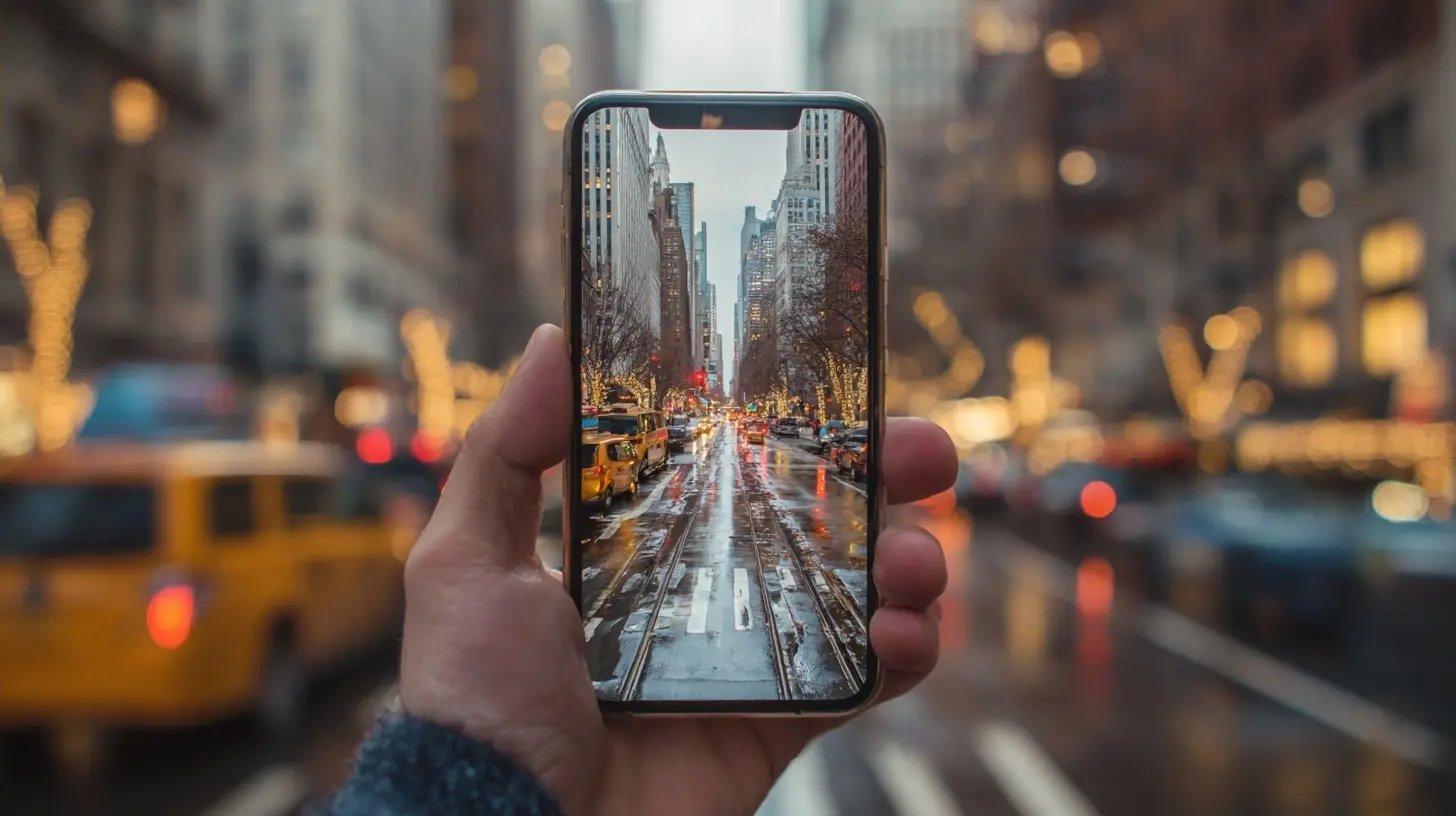
The Role of AI and On-Device Processing
All of this relies on serious computational power. By 2027, the neural processing unit in a flagship smartphone will be several times more powerful than the best desktop GPU from 2020. This matters because AR requires low latency. You cannot send your camera feed to a cloud server and wait for a response. That adds 50 to 100 milliseconds of delay, which is enough to make AR feel nauseating.On-Device Scene Understanding
The AI models will be specialized for scene understanding. They will recognize objects, estimate their physical properties, and predict their behavior. For example, if you point your phone at a door, the model will know it is a door, estimate its swing direction, and understand that it can be opened. This is not just object detection. It is functional understanding.By 2027, expect your phone to recognize thousands of common objects and their affordances. A chair is not just a chair. It is something you can sit on. A cup is something you can hold. A screen is something you can look at. This functional knowledge enables AR to provide useful actions. Point at a chair, and an overlay might show a "Buy similar" button. Point at a cup, and it might show a "Find my water bottle" reminder if the cup matches a product you own. The phone will connect the visual world to your digital life.
Generative AI and Dynamic Content
Generative AI will play a role, but not in the way you might expect. The phone will not be generating photorealistic 3D models on the fly. That is still too computationally expensive. Instead, generative AI will handle the semantic layer. It will generate contextual instructions, answer questions about what you are looking at, and create custom visualizations based on your preferences.For example, you point your phone at a complex piece of machinery. The AI will generate a simplified explanation of how it works, using arrows and labels that highlight the key components. The explanation is tailored to your level of expertise. If you are a beginner, it uses simpler terms. If you are an expert, it provides technical specifications. This dynamic generation will make AR feel intelligent rather than just informative.
Common Misconceptions and Mistakes
There are several widespread assumptions about smartphone AR that are simply wrong. Understanding these will help you make better decisions about what to expect and how to use the technology.Misconception: AR Will Replace Your Screen
Some people think that by 2027, you will walk around with your phone held up constantly, seeing the world through a digital filter. That is not happening. Holding a phone up for extended periods is uncomfortable and impractical. The phone screen will remain a secondary display. AR will be used in brief, purposeful moments. You will pull out your phone, point it at something, get the information you need, and put it away. The idea of continuous AR is a fantasy that ignores human ergonomics.Misconception: AR Is Only for Young Tech Enthusiasts
The most useful AR applications, like indoor navigation and repair guidance, are actually more valuable for older users. They have more difficulty with abstract maps and small text. AR provides direct, contextual information that reduces cognitive load. The barrier is not age. It is the learning curve of the interface. By 2027, the interface will be simple enough that pointing your phone at an object is as intuitive as taking a photo. That is a universal gesture.Mistake: Ignoring Battery Life
The biggest practical mistake developers make is assuming users will run AR apps for long sessions. They will not. A continuous AR session at 30 frames per second with depth sensing and AI processing will still drain a battery in under two hours in 2027. The best practice is to design AR experiences that are short, focused, and session-based. If an AR task takes more than two minutes, you are doing it wrong. The goal is to deliver information quickly and let the user return to the real world.Mistake: Overcomplicating the Visuals
Developers love to add shiny reflections and realistic shadows to virtual objects. This is wasted effort. Users do not need photorealism. They need clarity and utility. A simple, semi-transparent arrow is often more useful than a realistic 3D robot. By 2027, the best AR apps will be visually restrained. They will use minimal graphics that convey information without obscuring the real world. The design principle is to augment, not replace.
The Business and Ecosystem Landscape
The AR ecosystem will not be dominated by a single app. It will be a platform feature, like GPS or Bluetooth. That has profound implications for businesses.The Shift to Utility-Based Monetization
Currently, AR monetization is mostly through gimmicky marketing campaigns or paid apps. By 2027, expect AR to be a feature of existing services. A navigation app will offer AR walking directions as a premium feature. A home improvement store app will include AR-based repair guides to increase customer loyalty and reduce returns. A travel app will include AR translation and landmark recognition as part of its standard subscription.The key insight is that AR will not be a product itself. It will be a feature that makes other products more valuable. The companies that succeed will not be those that build standalone AR apps. They will be those that integrate AR into their existing workflows.
The Role of App Stores and Standards
Apple and Google will continue to control the platforms, but expect AR-specific standards to emerge. The Open AR Cloud initiative and similar efforts will push for interoperability. By 2027, you will be able to create an AR annotation on an Android phone and view it on an iPhone, provided both devices have access to the same spatial map. This is essential for shared experiences like remote assistance or collaborative design.App stores will need to address privacy concerns. User reviews will increasingly mention whether an app uploads spatial data. Expect a rating system that flags apps with aggressive data collection. This will push developers toward on-device processing and local data storage.
The Future Is Contextual, Not Spectacular
The most honest way to describe smartphone AR in 2027 is that it will be useful but unglamorous. It will not be a magical overlay of digital worlds. It will be a practical tool that helps you navigate a mall, understand a foreign sign, or fix a leaking faucet. The wow factor will fade quickly because the technology will become invisible. You will not say "I used AR today." You will say "I pointed my phone at the IKEA instructions and it showed me exactly which screw goes where."This is the sign of a mature technology. When it works well, you stop noticing the technology itself. By 2027, the hardware will be capable, the software will be integrated, and the use cases will be grounded in everyday problems. The question is not whether AR will be a hit. It is whether you will be ready to trust your phone with a persistent map of your living room.
The answer, for most people, will be a cautious yes. The convenience will outweigh the privacy concerns, as long as you have control over what is shared. And that control will be the defining feature of the 2027 AR experience. Not the graphics, not the speed, but the trust. If the industry gets that right, AR will finally become a normal part of how you use your phone.
all images in this post were generated using AI tools
Category:
Smartphone TipsAuthor:

Jerry Graham
Discussion
rate this article
2 comments
Mabel McVey
By 2027, your smartphone might just be your new best friend. Imagine swiping right on your fridge to see what's inside, or swiping left to avoid that leftover mystery meal... Talk about augmented reality and augmented appetite!
October 17, 2026 at 3:58 AM
Abram Wolfe
By 2027, smartphones might redefine reality-blurring lines between the virtual and the everyday in unexpected ways.
September 11, 2026 at 4:17 AM