How the Trump Administration Is Rewriting the Rules of Funding Technological Innovation
April 20, 2026 - 20:02

For decades, the cornerstone of U.S. technological leadership has been substantial federal investment in basic, curiosity-driven scientific research. This foundational support, often conducted through universities and national labs, has historically led to breakthrough discoveries that later spawned entire industries, from the internet to GPS.
The current administration is actively rewriting this long-standing playbook. A significant policy shift is moving federal funding away from open-ended basic research and toward more narrowly defined, goal-oriented projects. The new emphasis prioritizes applied science and technology development with immediate commercial and national security applications.
This redirection of resources is evident in recent budget proposals, which have suggested substantial cuts to agencies like the National Science Foundation and the Department of Energy’s science office, while maintaining or increasing funds for initiatives in artificial intelligence, quantum computing, and advanced manufacturing. Proponents argue this approach accelerates the translation of ideas into market-ready products and strengthens America's competitive edge against global rivals like China.
Critics, however, warn that starving basic research risks undermining the very wellspring of future innovation. They contend that today's seemingly abstract discoveries form the essential building blocks for tomorrow's unforeseen technological revolutions. The long-term impact of this fundamental change in how the government fuels innovation remains a pivotal question for America's scientific and economic future.
MORE NEWS
October 8, 2026 - 12:07
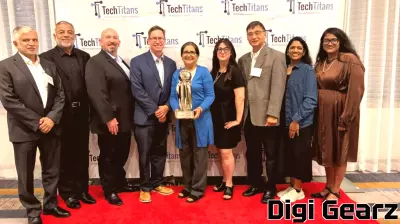
Collin College Electronic Engineering Technology Program and Dean of Academic Affairs and Workforce Programs Receive 2026 Tech Titans AwardThe Electronic Engineering Technology program at Collin College has received recognition from Tech Titans, a regional technology association. The organization presented the Tech Titans of the...

October 7, 2026 - 18:31
How a Brainless Alga Led to a Nobel-Winning Method for Controlling Neurons With LightThe ability to switch specific neurons on and off with a flash of light did not begin in a neuroscience lab. It began in a pond. Researchers studying a single-celled alga noticed it swam toward...

October 7, 2026 - 08:56
Micron Technology Is Not At Its Peak, At Least Not YetMicron Technology has secured long term commitments for a substantial share of its future production. More than 75 percent of the company`s calendar year 2027 output is already locked in through 26...

October 6, 2026 - 18:02
Hofstra University law school opens new legal technology hub through lawyer’s $1 million endowmentHofstra University`s law school has established a new center focused on legal technology, funded by a one million dollar endowment from an attorney. The institute will expand the school`s existing...