New Technologies Offer Counties New Tools for Safer, Smarter Detention Centers
July 14, 2026 - 19:56

County detention centers across the country are exploring a new wave of technology designed to improve safety and streamline operations. While much of the public conversation around artificial intelligence has focused on chatbots or image generation, local corrections officials are now looking at AI as a practical tool for managing complex jail environments.
One of the most promising applications involves predictive analytics. By analyzing patterns in inmate behavior, staff scheduling, and facility maintenance, AI systems can flag potential issues before they escalate. For example, software can identify subtle shifts in a housing unit's daily rhythm that might indicate rising tension, allowing officers to intervene earlier. This shifts the focus from reactive responses to proactive prevention.
Another area of development is in monitoring and resource allocation. Traditional security cameras require constant human attention, but AI-enhanced video systems can automatically detect unusual movements or unauthorized access. They can also track the location of staff and inmates, helping to ensure that no one is left in a locked area after a shift change. This reduces the burden on human guards, letting them focus on direct interaction and de-escalation rather than staring at screens.
However, the adoption of these tools is not without controversy. Privacy advocates raise concerns about constant surveillance and the potential for algorithmic bias, especially in a system that already disproportionately affects minority communities. Jail administrators counter that the goal is not to replace human judgment but to support it. They argue that smarter technology can lead to fewer violent incidents and better outcomes for both staff and inmates.
As counties test these systems in pilot programs, the coming years will likely reveal whether AI can live up to its promise of making detention centers safer without sacrificing civil liberties. For now, the technology remains a tool, not a solution, and its success will depend heavily on how it is implemented.
MORE NEWS
October 8, 2026 - 12:07
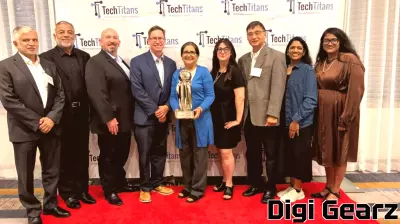
Collin College Electronic Engineering Technology Program and Dean of Academic Affairs and Workforce Programs Receive 2026 Tech Titans AwardThe Electronic Engineering Technology program at Collin College has received recognition from Tech Titans, a regional technology association. The organization presented the Tech Titans of the...

October 7, 2026 - 18:31
How a Brainless Alga Led to a Nobel-Winning Method for Controlling Neurons With LightThe ability to switch specific neurons on and off with a flash of light did not begin in a neuroscience lab. It began in a pond. Researchers studying a single-celled alga noticed it swam toward...

October 7, 2026 - 08:56
Micron Technology Is Not At Its Peak, At Least Not YetMicron Technology has secured long term commitments for a substantial share of its future production. More than 75 percent of the company`s calendar year 2027 output is already locked in through 26...

October 6, 2026 - 18:02
Hofstra University law school opens new legal technology hub through lawyer’s $1 million endowmentHofstra University`s law school has established a new center focused on legal technology, funded by a one million dollar endowment from an attorney. The institute will expand the school`s existing...