No signs of technology on exoplanet K2-18 b
March 11, 2026 - 05:56

In a significant effort to detect signs of intelligent life beyond Earth, scientists have trained powerful radio telescopes on K2-18 b, a distant exoplanet that has captivated astronomers with its potential for habitability. The world, classified as a "hycean" planet, is believed to be a vast water world with a hydrogen-rich atmosphere, orbiting within the habitable zone of its star.
The recent observations, however, revealed no detectable technosignatures—artificial signals that would indicate the presence of technology or civilization. Researchers utilized the Green Bank Telescope in West Virginia and other instruments to listen for narrow-band radio emissions, a potential hallmark of technological activity, but the scans returned only silence from the planet over 120 light-years away.
While the non-detection may be disappointing to some, the project marks a crucial advancement in methodology. The team developed sophisticated new data processing techniques to distinguish potential artificial signals from the immense background noise of the cosmos with unprecedented sensitivity. This refined approach, capable of sifting through millions of radio frequencies, sets a new standard for future searches.
The absence of evidence is not evidence of absence, scientists caution. The result narrows the search parameters but does not rule out life on K2-18 b, which may be microbial or exist without producing the specific technologies we can currently detect. The work underscores the meticulous, long-term nature of the search for extraterrestrial intelligence, where each step forward in technique is as valuable as an immediate discovery.
MORE NEWS
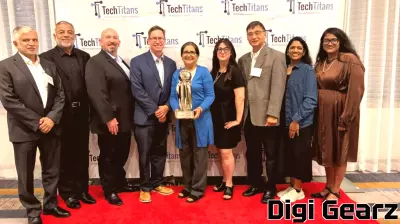
October 8, 2026 - 12:07
Collin College Electronic Engineering Technology Program and Dean of Academic Affairs and Workforce Programs Receive 2026 Tech Titans AwardThe Electronic Engineering Technology program at Collin College has received recognition from Tech Titans, a regional technology association. The organization presented the Tech Titans of the...
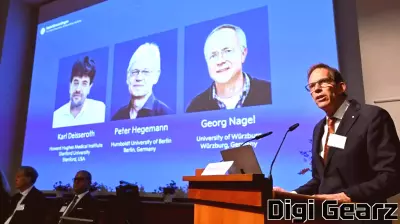
October 7, 2026 - 18:31
How a Brainless Alga Led to a Nobel-Winning Method for Controlling Neurons With LightThe ability to switch specific neurons on and off with a flash of light did not begin in a neuroscience lab. It began in a pond. Researchers studying a single-celled alga noticed it swam toward...

October 7, 2026 - 08:56
Micron Technology Is Not At Its Peak, At Least Not YetMicron Technology has secured long term commitments for a substantial share of its future production. More than 75 percent of the company`s calendar year 2027 output is already locked in through 26...

October 6, 2026 - 18:02
Hofstra University law school opens new legal technology hub through lawyer’s $1 million endowmentHofstra University`s law school has established a new center focused on legal technology, funded by a one million dollar endowment from an attorney. The institute will expand the school`s existing...