Pentagon looks to AI, other tech to help tackle contested logistics challenges
June 4, 2026 - 02:11

The U.S. Department of Defense is increasingly looking to artificial intelligence and other advanced technologies to address one of its most pressing vulnerabilities: keeping supply lines open in a war zone. Known as "contested logistics," the challenge involves moving fuel, ammunition, food, and spare parts to troops while under direct enemy fire or electronic attack. Pentagon officials now view this as a top-tier threat, especially as near-peer adversaries develop long-range precision weapons and cyber capabilities designed to sever supply chains.
Traditional methods of moving supplies rely on large, slow convoys and predictable routes, which are easy targets. The new approach aims to make logistics faster, more flexible, and harder to disrupt. AI is being tested to predict maintenance needs before equipment breaks down, reducing the need for emergency resupply. Autonomous drones and unmanned ground vehicles are also being considered to carry smaller loads along multiple, less predictable paths, making it harder for an enemy to block all routes.
Military planners are also exploring advanced data analytics to track inventory in real time across different services. The goal is to shift from a system that stockpiles massive amounts of gear at fixed bases to one that can dynamically reroute supplies as threats change. While the technology is promising, officials acknowledge that integrating these new tools into existing military processes will take time and significant investment. The core problem remains simple: if troops cannot get what they need to fight, they cannot win.
MORE NEWS
October 8, 2026 - 12:07
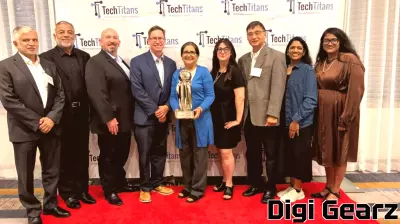
Collin College Electronic Engineering Technology Program and Dean of Academic Affairs and Workforce Programs Receive 2026 Tech Titans AwardThe Electronic Engineering Technology program at Collin College has received recognition from Tech Titans, a regional technology association. The organization presented the Tech Titans of the...

October 7, 2026 - 18:31
How a Brainless Alga Led to a Nobel-Winning Method for Controlling Neurons With LightThe ability to switch specific neurons on and off with a flash of light did not begin in a neuroscience lab. It began in a pond. Researchers studying a single-celled alga noticed it swam toward...

October 7, 2026 - 08:56
Micron Technology Is Not At Its Peak, At Least Not YetMicron Technology has secured long term commitments for a substantial share of its future production. More than 75 percent of the company`s calendar year 2027 output is already locked in through 26...

October 6, 2026 - 18:02
Hofstra University law school opens new legal technology hub through lawyer’s $1 million endowmentHofstra University`s law school has established a new center focused on legal technology, funded by a one million dollar endowment from an attorney. The institute will expand the school`s existing...