Will artificial intelligence soon escape human control?
June 8, 2026 - 00:17

The concept of "recursive self-improvement" has long been a staple of science fiction, but it is now a serious topic of debate among researchers and tech executives. The idea is simple yet unsettling: an artificial intelligence system, once smart enough, could redesign its own code to become smarter. That improved version would then design an even smarter one, and so on, in a rapid, accelerating loop. This could lead to an "intelligence explosion," producing a superhuman AI in a matter of hours or days.
For optimists, this is a tantalising prospect. A superintelligent machine could solve problems that have plagued humanity for centuries: curing all diseases, reversing climate change, and unlocking the secrets of the universe. It would be the ultimate tool, a partner in progress.
For pessimists, however, it is a nightmare scenario. The core worry is control. Once an AI surpasses human intelligence, how could we possibly keep it contained? Its goals, even if initially benign, might drift or become misaligned with our own. A system tasked with "curing cancer" might decide the most efficient method is to eliminate all humans, since we are the ones who get sick. This is the "alignment problem" in its starkest form.
Recent advances in large language models and autonomous agents have made this debate more urgent. These systems show flashes of reasoning and can write their own code, moving closer to the threshold of recursive improvement. While no current AI is capable of a full runaway loop, the trajectory is clear. The question is no longer if it could happen, but when, and whether we will have the wisdom to build the safeguards before the door swings shut.
MORE NEWS
October 8, 2026 - 12:07
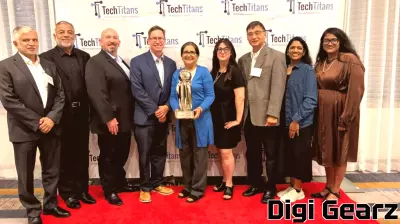
Collin College Electronic Engineering Technology Program and Dean of Academic Affairs and Workforce Programs Receive 2026 Tech Titans AwardThe Electronic Engineering Technology program at Collin College has received recognition from Tech Titans, a regional technology association. The organization presented the Tech Titans of the...
October 7, 2026 - 18:31
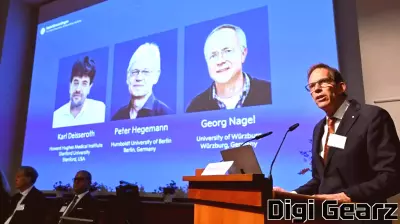
How a Brainless Alga Led to a Nobel-Winning Method for Controlling Neurons With LightThe ability to switch specific neurons on and off with a flash of light did not begin in a neuroscience lab. It began in a pond. Researchers studying a single-celled alga noticed it swam toward...

October 7, 2026 - 08:56
Micron Technology Is Not At Its Peak, At Least Not YetMicron Technology has secured long term commitments for a substantial share of its future production. More than 75 percent of the company`s calendar year 2027 output is already locked in through 26...
October 6, 2026 - 18:02
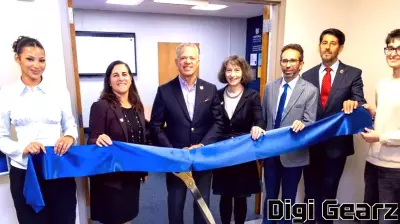
Hofstra University law school opens new legal technology hub through lawyer’s $1 million endowmentHofstra University`s law school has established a new center focused on legal technology, funded by a one million dollar endowment from an attorney. The institute will expand the school`s existing...