How AI is Shaping the Future of Mobile Games
3 April 2026
Mobile gaming has changed a lot over the last decade. We’ve gone from playing simple puzzle games like Snake and Tetris to exploring massive multiplayer universes like PUBG Mobile and Call of Duty. But if you think that was impressive, hold on tight—because Artificial Intelligence (AI) is about to take mobile games to a whole new level. It's not science fiction anymore; it's happening, and it's happening fast.
In this article, we're going to dive deep into how AI is shaping the future of mobile games. Whether you're a casual player or an indie developer, you’ll want to see what’s coming next.
AI: The Game-Changer in Mobile Gaming
Let’s be real—AI isn't just a buzzword anymore. It’s a legit game-changer. Think of AI as the invisible game master sitting behind the scenes, constantly learning, adapting, and making your gaming experience more immersive.Back in the day, game mechanics were fixed. Enemies followed predictable patterns, and storylines had a single path. But not anymore. AI has introduced a new layer of intelligence that allows games to grow smarter the more you play.
Smarter NPCs That Actually Think
You know those non-playable characters (NPCs) in games that just walk around in circles or say the same thing every time you tap them?Yeah, that’s old-school.
With AI, NPCs are getting a major upgrade. They now have personalities, memory, decision-making skills, and even emotions. Games like The Elder Scrolls: Blades and Genshin Impact are starting to incorporate smarter NPCs that react differently based on your choices.
It’s like talking to real people—well, almost.
Imagine having a sidekick in a mobile RPG that actually learns your combat style, anticipates your moves, and warns you of upcoming danger based on past gameplay. That’s not fantasy anymore; it’s AI at work.
Personalized Gaming Experiences Just for You
You know Spotify recommends songs you didn’t know you loved? That’s AI.Now, think about games doing the same thing—adjusting levels, challenges, and rewards based on how you play.
Let’s say you’re a casual player who loves exploration but hates time-limited missions. AI can notice your patterns and tweak the gameplay to give you more of what you love and less of what frustrates you.
Mobile games like Clash Royale and Candy Crush Saga use AI to keep players engaged by managing difficulty levels. They don’t want you to quit, so the game gets “easier” when you’re stuck and tougher when you’re breezing through.
That’s not cheating—that’s smart gaming.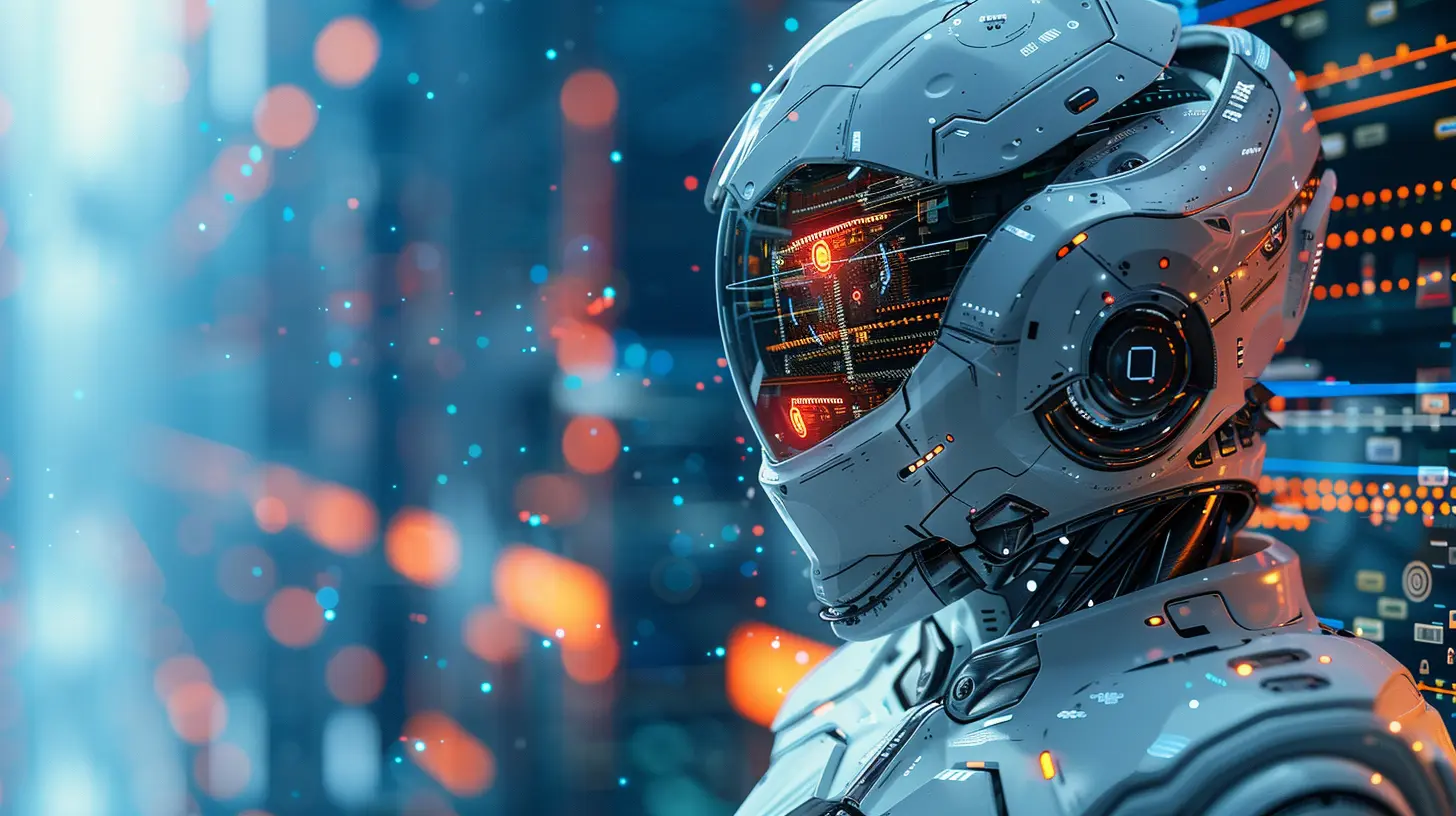
AI-Powered Game Testing and Development
Game development is hard. Like, really hard.Developers have to find bugs, balance the gameplay, optimize design, and make sure the game works smoothly across hundreds of devices. That’s where AI comes in.
AI helps developers test their games faster by simulating player behavior. It runs thousands of playthroughs in no time, finding bugs or imbalances that human testers might miss.
Think of AI as a superhuman tester that never sleeps.
AI can also help with procedural content generation—creating maps, levels, and even characters automatically. So instead of spending weeks designing a single dungeon, developers can let AI generate dozens of them in hours.
The result? More content, faster updates, and better games.
Real-Time Voice and Language Translation
Ever tried to chat with someone online who speaks a different language? It’s awkward at best.AI-powered real-time translation is changing that. Some mobile games already use AI to translate chats, voice messages, and gameplay instructions on the fly.
This means you can team up with a player from Japan while you're sitting in New York, and actually have a coherent conversation.
It's not just bridging language gaps—it's building global gaming communities.
AI and In-Game Monetization
Alright, let’s talk money.We all know mobile gaming thrives on in-app purchases. But with the wrong approach, this can feel pushy or even manipulative. AI is helping developers strike that sweet balance.
How? By analyzing how players interact with the game and customizing offers that make sense.
For example, if the algorithm notices you’re low on gems and you’ve never bought anything before, it might offer a 70% discount just for you. Another player may get a different offer based on their behavior.
Love it or hate it, this tailored monetization is a direct result of AI understanding what makes each player tick.
Enhanced Mobile Gaming Graphics Through AI
Let’s not forget the visuals.Mobile devices are powerful, but they still can’t match up to PCs and consoles. That’s where AI comes in again, helping bridge the performance gap.
AI-powered upscaling can make lower-resolution images look crisp and high-quality without needing more processing power. Think of it like Photoshop’s magic wand—but in real-time, and in your pocket.
There’s also AI-assisted rendering. It helps developers create realistic lighting, textures, and animations that run smoothly even on mid-range phones.
In short, your games are about to look better than ever—and without draining your battery or heating your phone to frying-pan levels.
Cheating Detection: AI as the Game's Watchdog
Hands up if you’ve ever rage-quit because someone obviously cheated in an online match. We’ve all been there.Cheating ruins the experience, especially in competitive games. AI is now being used to sniff out suspicious activity—whether it’s aimbots, wallhacks, or speed cheats.
It can analyze thousands of data points in real time to detect patterns that human moderators might miss.
It’s like having a robot referee who never blinks.
Immersive Storytelling and AI Narratives
Storytelling isn’t dead—it’s just evolving.Traditional mobile games followed pre-written scripts. You had limited choices and knew your actions wouldn't really change the outcome.
With AI, that’s no longer the case.
AI-driven narratives can adapt to your decisions, creating unique storylines with multiple endings. Imagine playing a mobile RPG where the story changes every time you play, based purely on your actions and dialogue choices.
It’s like a choose-your-own-adventure book, but 100 times more complex.
This also opens the door for dynamic quests, surprise events, and even user-generated content—all curated intelligently by AI.
AI and Augmented Reality (AR) in Gaming
If you thought Pokémon Go was revolutionary, get ready. The combination of AI and AR is poised to redefine what mobile gaming looks like in the real world.AI helps AR games understand the environment using computer vision. This means your mobile game can recognize real-world objects—like a couch, a tree, or a building—and interact with them meaningfully.
Imagine fighting dragons in your backyard, or finding treasures hidden in your kitchen cabinet—all possible because AI and AR are teaming up.
Emotional AI: Games That Understand How You Feel
Sounds creepy? Maybe. But also awesome.Emotional AI is a new field where games can detect your mood based on facial expressions, voice tone, or even the way you play.
Feeling frustrated? The game might lower the difficulty. Feeling bored? It might throw in a surprise challenge.
It’s like the game knows you better than your best friend. (Okay, maybe not that well… yet.)
The Future: Where Are We Headed?
Let’s not sugarcoat it—AI is still learning. It’s not perfect, and it does come with ethical concerns. Can we trust AI to make fair decisions? How much personal data should games be allowed to analyze?But here’s the silver lining: AI isn’t replacing human creativity—it’s supercharging it.
We’re heading toward a future where mobile games are more intuitive, more personal, and far more immersive. A future where every player has a unique journey, tailored by an AI that’s constantly learning and evolving.
And isn’t that what we’ve always wanted from games? To escape the ordinary and dive into experiences that feel alive?
Final Thoughts
AI isn’t just shaping the future of mobile games—it’s redefining it. From smarter characters and personalized adventures to advanced graphics and global connectivity, AI is opening doors we never knew existed.Whether you're a gamer, a developer, or just someone curious about where tech is headed, one thing’s clear: the future of mobile gaming isn’t just exciting—it’s intelligent.
Ready to play?
all images in this post were generated using AI tools
Category:
Mobile GamingAuthor:

Jerry Graham
Discussion
rate this article
2 comments
Pilar Hudson
AI in mobile games? It's like giving a magic wand to an octopus! Expect tentacle-like creativity, endless surprises, and a pinch of unpredictability. Just hope your game character doesn't get too smart and start negotiating for better loot!" 🎮🤖✨
April 6, 2026 at 3:17 AM
Jerry Graham
That's a fun way to put it! AI really does bring a wild twist to mobile gaming, making every playthrough feel fresh and exciting. Let's hope those characters stay on our side for now!
Falkor Morris
AI in mobile games: where your virtual pet might just become smarter than your actual cat!
April 5, 2026 at 11:03 AM
Jerry Graham
Exactly! AI is revolutionizing mobile games, making virtual pets more interactive and realistic, bridging the gap between gaming and real-life companionship.