Project Silica’s advances in glass storage technology featured in Nature
February 19, 2026 - 03:11

A revolutionary leap in long-term data storage has been detailed in the prestigious journal Nature. The research showcases significant advances in using simple glass as a durable archival medium, moving the technology closer to practical reality.
The core of the breakthrough lies in new, more efficient methods for encoding data within quartz glass. Scientists have developed techniques to write information by creating intricate layers of nanoscale gratings and deformations inside a palm-sized glass disc using ultrafast lasers. This approach not only enhances storage density but also dramatically simplifies the systems required to both write and read the data, a previous hurdle for commercialization.
Perhaps the most staggering claim is the medium's longevity. The inert nature of glass makes it resilient against environmental threats like water, magnets, and extreme temperatures. Researchers assert data stored in this format could remain readable for up to 10,000 years, offering a potential solution for preserving humanity's most vital cultural, scientific, and historical records for future generations.
Furthermore, these process improvements are projected to lower the overall cost of the storage media itself. By moving away from complex rare-earth materials and leveraging stable, abundant glass, the path is cleared for creating a sustainable "cold storage" archive where data, once written, remains untouched but perfectly secure for centuries.
MORE NEWS
October 8, 2026 - 12:07
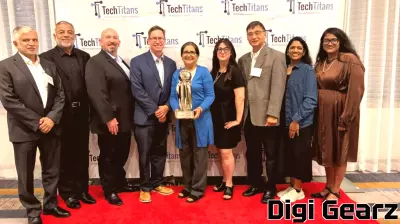
Collin College Electronic Engineering Technology Program and Dean of Academic Affairs and Workforce Programs Receive 2026 Tech Titans AwardThe Electronic Engineering Technology program at Collin College has received recognition from Tech Titans, a regional technology association. The organization presented the Tech Titans of the...

October 7, 2026 - 18:31
How a Brainless Alga Led to a Nobel-Winning Method for Controlling Neurons With LightThe ability to switch specific neurons on and off with a flash of light did not begin in a neuroscience lab. It began in a pond. Researchers studying a single-celled alga noticed it swam toward...

October 7, 2026 - 08:56
Micron Technology Is Not At Its Peak, At Least Not YetMicron Technology has secured long term commitments for a substantial share of its future production. More than 75 percent of the company`s calendar year 2027 output is already locked in through 26...

October 6, 2026 - 18:02
Hofstra University law school opens new legal technology hub through lawyer’s $1 million endowmentHofstra University`s law school has established a new center focused on legal technology, funded by a one million dollar endowment from an attorney. The institute will expand the school`s existing...